CAS 1115-20-4
:Hydroxypivalylhydroxypivalat
Beschreibung:
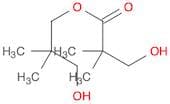
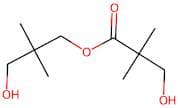
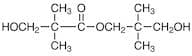
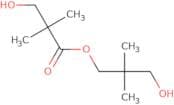
Hydroxypivalylhydroxypivalat, mit der CAS-Nummer 1115-20-4, ist eine organische Verbindung, die zur Klasse der Ester gehört. Sie wird aus Pivalinsäure abgeleitet und ist durch das Vorhandensein von Hydroxylgruppen gekennzeichnet, die zu ihrer Löslichkeit und Reaktivität beitragen. Diese Verbindung erscheint typischerweise als farblose bis blassgelbe Flüssigkeit und hat eine relativ niedrige Flüchtigkeit. Hydroxypivalylhydroxypivalat ist bekannt für seine Verwendung als Weichmacher und als Zwischenprodukt in der Synthese verschiedener chemischer Produkte. Ihre molekulare Struktur umfasst mehrere Pivalat-Einheiten, die ihre Stabilität und Verträglichkeit mit anderen Materialien erhöhen. Die Verbindung weist eine moderate Toxizität auf und sollte in Labor- und Industrieumgebungen mit Vorsicht behandelt werden. Darüber hinaus ist es wichtig, ihre Umweltauswirkungen zu berücksichtigen, wie bei vielen organischen Verbindungen, wenn man ihre Verwendung in verschiedenen Anwendungen bewertet. Insgesamt wird Hydroxypivalylhydroxypivalat für seine funktionalen Eigenschaften in chemischen Formulierungen und der Materialwissenschaft geschätzt.
Formel:C10H20O4
InChl:InChI=1S/C10H20O4/c1-9(2,5-11)7-14-8(13)10(3,4)6-12/h11-12H,5-7H2,1-4H3
InChI Key:InChIKey=SZCWBURCISJFEZ-UHFFFAOYSA-N
SMILES:C(OCC(CO)(C)C)(C(CO)(C)C)=O
Synonyme:- 1,3-Propanediol, 2,2-dimethyl-, mono(2,2-dimethylhydracrylate)
- 2,2-Dimethyl-1,3-propanediol mono(hydroxypivalate)
- 2,2-Dimethyl-3-hydroxypropyl 2,2-dimethyl-3-hydroxypropionate
- 2,2-Dimethyl-3-hydroxypropyl α,α-dimethyl-β-hydroxypropionate
- 3-(Hydroxypivaloyloxy)-2,2-dimethylpropanol
- 3-Hydroxy-2,2-Dimethylpropanoic Anhydride
- 3-Hydroxy-2,2-Dimethylpropyl 3-Hydroxy-2,2-Dimethylpropanoate
- 3-Hydroxy-2,2-dimethylpropyl 2,2-dimethylhydracrylate
- 3-Hydroxy-2,2-dimethylpropyl hydroxypivalate
- Ester Diol 204
- Hphp
- Hydracrylic acid, 2,2-dimethyl-, 3-hydroxy-2,2-dimethylpropyl ester
- Hydroxyneopentyl hydroxypivalate
- Hydroxypivalic acid neopentyl glycol ester
- Hydroxypivalic acid neopentylglycol ester
- Hydroxypivalyl hydroxypivalate
- Neopentyl glycol hydroxypivalate monoester
- Neopentyl glycol mono(hydroxypivalate)
- Neopentyl glycol monoester hydropivalicate
- Neopentyl glycol monohydroxypivalate
- Weitere Synonyme anzeigen
Sortieren nach
Reinheit (%)
0
100
|
0
|
50
|
90
|
95
|
100
5 Produkte.
3-Hydroxy-2,2-dimethylpropyl 3-hydroxy-2,2-dimethylpropanoate
CAS:Formel:C10H20O4Reinheit:98%Farbe und Form:SolidMolekulargewicht:204.26343-Hydroxy-2,2-Dimethylpropyl 3-Hydroxy-2,2-Dimethylpropanoate
CAS:3-Hydroxy-2,2-Dimethylpropyl 3-Hydroxy-2,2-DimethylpropanoateReinheit:98%Molekulargewicht:204.26g/molNeopentyl Glycol Mono(hydroxypivalate)
CAS:Formel:C10H20O4Reinheit:>97.0%(GC)Farbe und Form:White to Almost white powder to crystalMolekulargewicht:204.273-Hydroxy-2,2-dimethylpropyl 3-hydroxy-2,2-dimethylpropanoate
CAS:Reinheit:98%Molekulargewicht:204.2660065Neopentyl Glycol Mono(hydroxypivalate)
CAS:Neopentyl Glycol Mono(hydroxypivalate) (NPGMP) is an organic solvent that is used as a reactive diluent for coatings and adhesives. It is synthesized by reacting isobutyraldehyde with glycerol, which results in the formation of an alkynyl group and a hydroxyl group. The alkynyl group reacts with the copper chromite to form an organic molecule containing a functional copolymer. NPGMP is then reacted with calcium carbonate to form a functional copolymer containing hydroxyl groups. This copolymer can be used as a substrate for coatings, such as polarizers or optical filters, due to its specific chemical properties.
Formel:C10H20O4Reinheit:Min. 95%Molekulargewicht:204.27 g/mol