CAS 112-30-1
:1-Decanol
Beschreibung:
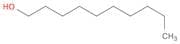
1-Decanol, mit der CAS-Nummer 112-30-1, ist ein langkettiger Fettalkohol, der aus einer zehn Kohlenstoffatome umfassenden Alkylkette mit einer Hydroxylgruppe (-OH) an einem Ende besteht. Es ist eine farblose, viskose Flüssigkeit bei Raumtemperatur, die einen milden, angenehmen Geruch hat, der an fettige Substanzen erinnert. 1-Decanol ist wenig löslich in Wasser, aber besser löslich in organischen Lösungsmitteln wie Ethanol und Ether. Seine chemische Formel ist C10H22O, und es hat einen relativ hohen Siedepunkt im Vergleich zu kürzeren Alkoholen, was seine größere Molekülgröße und hydrophobe Eigenschaften widerspiegelt. Diese Verbindung wird hauptsächlich in der Herstellung von Tensiden, Emulgatoren und als Schmiermittel verwendet. Darüber hinaus dient es als Vorläufer in der Synthese verschiedener Ester und wird in der Formulierung von Körperpflegeprodukten und Düften eingesetzt. Aufgrund seiner hydrophoben Natur kann 1-Decanol auch als Phasentransferkatalysator in bestimmten chemischen Reaktionen wirken. Sicherheitsüberlegungen umfassen das Potenzial, Hautreizungen zu verursachen, und die Notwendigkeit einer ordnungsgemäßen Handhabung, um Inhalation oder Einnahme zu vermeiden.
Formel:C10H22O
InChl:InChI=1S/C10H22O/c1-2-3-4-5-6-7-8-9-10-11/h11H,2-10H2,1H3
InChI Key:InChIKey=MWKFXSUHUHTGQN-UHFFFAOYSA-N
SMILES:C(CCCCC)CCCCO
Synonyme:- 1-Decanol
- 1-Hydroxydecane
- Alcohol C-10
- Alcohol C-10 (1-Decanol)
- Alfol 10
- Antak
- Capric alcohol
- Caprinic alcohol
- Capryl alcohol
- Conol 1098
- Conol 10N
- Decan-1-ol
- Decane-1-Ol
- Decanol
- Decylalcohol
- Epal 10
- Kalcohl 10
- Kalcohl 1098
- Kalcohl 10H
- Kalcol 1098
- Lorol C 10
- Lorol C 10-98
- N-Decanol
- Nacol 10
- Nacol 10-99
- Nafol 10
- Nafol 10D
- Nonyl acarbinol
- Nonylcarbinol
- Nsc 406313
- Royaltac
- Sipol L 10
- T 148
- n-Decyl Alcohol
- Weitere Synonyme anzeigen
Sortieren nach
Reinheit (%)
0
100
|
0
|
50
|
90
|
95
|
100
14 Produkte.
1-Decanol
CAS:Formel:C10H22OReinheit:>98.0%(GC)Farbe und Form:Colorless to Almost colorless clear liquidMolekulargewicht:158.291-Decanol, 98+%
CAS:1-Decanol is used in the production of plasticizers, lubricants, surfactants and solvents. It is also used to study the thermal properties of polymer-monolithic stationary phases. Further, it is used to enhance homomeric glycine receptor function. In addition to this, it is used in daily flavor, fooFormel:C10H22OReinheit:98+%Farbe und Form:Clear colorless, LiquidMolekulargewicht:158.29Capric Alcohol
CAS:Saturated monohydric acyclic alcohols and their halogenated, sulfonated, nitrated or nitrosated derivatives, nesoiFormel:C10H22OFarbe und Form:Colorless Pale Yellow Slightly ViscousMolekulargewicht:158.167071-Decanol
CAS:1-Decanol inhibits various bacteria and fungi, including Candida albicans, Penicillium, Aspergillus niger, Bacillus subtilis, Propionibacterium, and others.Formel:C10H22OReinheit:98%Farbe und Form:SolidMolekulargewicht:158.281-Decanol
CAS:Formel:C10H22OReinheit:≥ 98.0%Farbe und Form:Clear, colourless liquidMolekulargewicht:158.291-Decanol
CAS:Kontrolliertes ProduktApplications 1-Decanol is a long chain alcohol that has been seen to enhance homomeric glycine receptor function. In addition, the 5HT2α receptors were inhibited by the presence of 1-decanol. This action has many psychological repercussions on an individual.
Not a dangerous good if item is equal to or less than 1g/ml and there is less than 100g/ml in the package
References Mascia, M. et al.: Brit. J. Pharm., 119, 1311 (1996); Minami, K. et al.: J. Pharm. Exp. Ther., 281, 1136 (1997);Formel:C10H22OFarbe und Form:ColourlessMolekulargewicht:158.281-Decanol
CAS:1-Decanol is a fatty acid that is soluble in water and has a hydroxyl group. It is used as a raw material for the production of surfactants and other products. 1-Decanol has significant interactions with hydrogen bond, hydrochloric acid, cationic surfactants, biological products, water vapor, and surfaces. The surface methodology for 1-decanol includes surface tension measurements, contact angle measurements, and surface morphology characterization. The hydroxyl group on 1-decanol can react with oxygen or other molecules to form peroxides or other reactive intermediates. Kinetic data for 1-decanol include the rate of reaction with chlorine at various concentrations of hydrogen chloride in an inert atmosphere. Stability data for 1-decanol include thermal expansion coefficients at different temperatures from −10°C to 100°C. Caproic acid is an impurity found in 1-decanol that can form during its production or by degradation during storage.Formel:C10H22OReinheit:Min. 95%Molekulargewicht:158.29 g/molDecyl Alcohol pure, 99%
CAS:Formel:C10H22OReinheit:min. 99%Farbe und Form:Clear, Colourless, LiquidMolekulargewicht:158.29