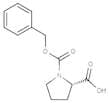
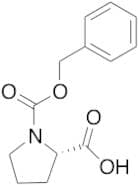
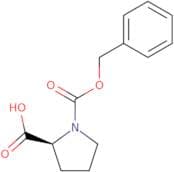
CAS 1148-11-4
:Benzyloxycarbonyl-L-Prolin
Beschreibung:
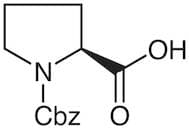
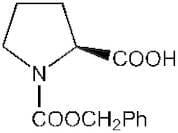
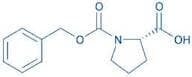
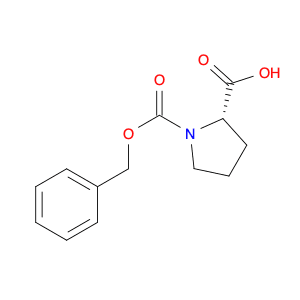
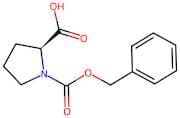
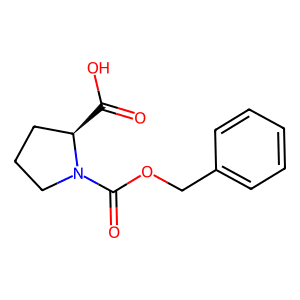
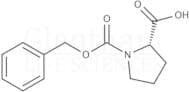
Benzyloxycarbonyl-L-Prolin, allgemein bekannt als Z-Prolin, ist ein Derivat der Aminosäure Prolin, das durch das Vorhandensein einer Benzyloxycarbonyl (Z) Schutzgruppe gekennzeichnet ist. Diese Verbindung wird typischerweise in der Peptidsynthese als Schutzgruppe für die Aminofunktionalität von Prolin verwendet, was hilft, unerwünschte Reaktionen während des Syntheseprozesses zu verhindern. Z-Prolin ist ein weißes bis schwach weißes kristallines Feststoff, das in organischen Lösungsmitteln wie Methanol und Dimethylsulfoxid löslich ist, jedoch eine begrenzte Löslichkeit in Wasser aufweist. Seine molekulare Struktur umfasst ein Prolin-Rückgrat, das zu seinen einzigartigen konformationellen Eigenschaften beiträgt und es wertvoll für das Design von Peptiden und Proteinen macht. Die Verbindung ist unter normalen Laborbedingungen stabil, kann jedoch unter sauren oder basischen Bedingungen Hydrolyse oder Deprotection unterliegen. Aufgrund seiner Rolle in der Peptidchemie ist Z-Prolin in der pharmazeutischen Forschung und der Entwicklung biologisch aktiver Verbindungen von Bedeutung. Sicherheitsdaten sollten für den Umgang konsultiert werden, wie bei jeder chemischen Substanz.
Formel:C13H15NO4
InChl:InChI=1S/C13H15NO4/c15-12(16)11-7-4-8-14(11)13(17)18-9-10-5-2-1-3-6-10/h1-3,5-6,11H,4,7-9H2,(H,15,16)/t11-/m0/s1
InChI Key:InChIKey=JXGVXCZADZNAMJ-NSHDSACASA-N
SMILES:C(OCC1=CC=CC=C1)(=O)N2[C@H](C(O)=O)CCC2
Synonyme:- (2S)-1,2-Pyrrolidinedicarboxylic acid 1-(phenylmethyl) ester
- (2S)-1-(Benzyloxycarbonyl)pyrrolidine-2-carboxylic acid
- (2S)-1-Phenylmethoxycarbonylpyrrolidine-2-carboxylic acid
- (2S)-1-[(benzyloxy)carbonyl]pyrrolidine-2-carboxylate
- (S)-1-(Benzyloxycarbonyl)pyrrolidine-2-carboxylic acid
- 1,2-Pyrrolidinedicarboxylic acid, 1-(phenylmethyl) ester, (2S)-
- 1,2-Pyrrolidinedicarboxylic acid, 1-(phenylmethyl) ester, (S)-
- 1,2-Pyrrolidinedicarboxylic acid, 1-benzyl ester, <span class="text-smallcaps">L</span>-
- 1,2-Pyrrolidinedicarboxylic acid, 1-benzyl ester, L-
- 1-(Benzyloxycarbonyl)-<span class="text-smallcaps">L</span>-proline
- 1-(Benzyloxycarbonyl)-L-proline
- 1-Carbobenzoxy-<span class="text-smallcaps">L</span>-proline
- 1-Carbobenzoxy-L-proline
- 1-[(Benzyloxy)Carbonyl]Proline
- 1-[(benzyloxy)carbonyl]-D-proline
- 1-[(benzyloxy)carbonyl]-L-proline
- <span class="text-smallcaps">L</span>-Cbz-Proline
- Benzyloxycarbonyl-<span class="text-smallcaps">L</span>-proline
- Benzyloxycarbonyl-L-proline
- Carbobenzoxy-<span class="text-smallcaps">L</span>-proline
- Carbobenzoxy-L-proline
- Carbobenzoxy-S-proline
- Carbobenzyloxy-<span class="text-smallcaps">L</span>-proline
- Carbobenzyloxy-L-proline
- Cbz-<span class="text-smallcaps">L</span>-Pro-OH
- Cbz-L-Pro-OH
- Cbz-L-proline
- N-(Benzyloxycarbonyl)-<span class="text-smallcaps">L</span>-proline
- N-(Carbobenzyloxy)-<span class="text-smallcaps">L</span>-proline
- N-Benzyloxycarbonyl-(S)-proline
- N-Benzyloxycarbonyl-L-prolin
- N-Benzyloxycarbonyl-L-proline
- N-CBZ-L-Proline N-Carbobenzyloxy-L-proline
- N-Carbobenzoxy-<span class="text-smallcaps">L</span>-proline
- N-Carbobenzoxy-L-proline
- N-Carbobenzyloxy-(S)-proline
- N-Cbz-<span class="text-smallcaps">L</span>-proline
- N-Cbz-L-Pro-OH
- N-Cbz-L-proline
- N-[(Phenylmethoxy)carbonyl]-<span class="text-smallcaps">L</span>-proline
- N-[(Phenylmethoxy)carbonyl]-L-proline
- N-benciloxicarbonil-L-prolina
- N-cbz-L-proline crystalline
- Z-L-Proline
- Z-Pro-OH
- N-CARBOBENZYLOXY-L-PROLINE
- N-ALPHA-BENZYLOXYCARBONYL-L-PROLINE
- N-ALPHA-CBZ-L-PROLINE
- (2S)-1-[(BENZYLOXY)CARBONYL]PYRROLIDINE-2-CARBOXYLIC ACID
- CBZ-PRO-OH
- N-ALPHA-CARBOBENZOXY-L-PROLINE
- (S)-N-CBZ-PYRROLIDINE-2-CARBOXYLIC ACID
- N-CBZ-L-PROLINE-OH
- Z-L-PRO-OH
- N-ALPHA-CARBOBENZOXY-L-PYRROLIDINE-2-CARBOXYLIC ACID
- L-CBZ-PROLINE
- Weitere Synonyme anzeigen
Sortieren nach
Reinheit (%)
0
100
|
0
|
50
|
90
|
95
|
100
13 Produkte.
N-Benzyloxycarbonyl-L-proline
CAS:Formel:C13H15NO4Reinheit:>98.0%(T)(HPLC)Farbe und Form:White to Almost white powder to crystalMolekulargewicht:249.27N-Benzyloxycarbonyl-L-proline, 98+%
CAS:N-(Benzyloxycarbonyl)-L-proline is a potent inhibitor of prolidase; a specific peptidase that cleaves dipeptides with a C-terminal prolyl and hydroxylprolyl residue. It is also used in the synthesis of N-(L-Prolyl)--alanine which is a derivative of the naturally occurring beta amino acid -Alanine. TFormel:C13H14NO4Reinheit:98+%Farbe und Form:Powder or crystalline powder or crystals or granules, White to creamMolekulargewicht:248.26Z-Pro-OH
CAS:Bachem ID: 4001343.
Formel:C13H15NO4Reinheit:99.1%Farbe und Form:WhiteMolekulargewicht:249.27(2S)-Pyrrolidine-2-carboxylic acid, N-CBZ protected
CAS:(2S)-Pyrrolidine-2-carboxylic acid, N-CBZ protectedFormel:C13H15NO4Reinheit:98%Farbe und Form: white solidMolekulargewicht:249.26g/molCarbobenzoxyproline
CAS:Carbobenzoxyproline (Carbobenzoxy-S-proline) is a prolidase inhibitor.Formel:C13H15NO4Reinheit:99.79%Farbe und Form:White To Light Yellow Crystal PowderMolekulargewicht:249.26Z-Pro-OH
CAS:M03066 - Z-Pro-OH
Formel:C13H15NO4Reinheit:98%Farbe und Form:SolidMolekulargewicht:249.266Z-L-Proline extrapure, 99%
CAS:Formel:C13H15NO4Reinheit:min. 99%Farbe und Form:White, Crystalline powderMolekulargewicht:249.3N-(Benzyloxycarbonyl)-L-proline
CAS:Kontrolliertes ProduktApplications N-(Benzyloxycarbonyl)-L-proline is a potent in vitro and in vivo inhibitor of prolidase; a specific peptidase that cleaves dipeptides with a C-terminal prolyl and hydroxylprolyl residue. N-(Benzyloxycarbonyl)-L-proline is also used in the synthesis of N-(L-Prolyl)-β-alanine (P756190) which is a derivative of the naturally occurring beta amino acid β-Alanine (A637320).
References Lupi, A., et al.: BBA-Mol. Cell Res., 1744, 157 (2005)Formel:C13H15NO4Farbe und Form:NeatMolekulargewicht:249.26N-Benzyloxycarbonyl-L-proline
CAS:N-Benzyloxycarbonyl-L-proline is a cationic polymerization inhibitor that has been shown to inhibit the growth of Pseudomonas aeruginosa. It inhibits bacterial growth by inhibiting the production of collagen, an important component in the cell wall. N-Benzyloxycarbonyl-L-proline is also used as a histological staining agent and has been shown to be effective against breast cancer cells resistant to tamoxifen therapy.Formel:C13H15NO4Reinheit:Min. 95%Farbe und Form:PowderMolekulargewicht:249.26 g/mol