CAS 115-80-0
:Triethylorthopropionat
Beschreibung:
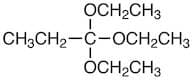
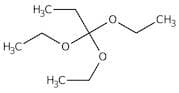
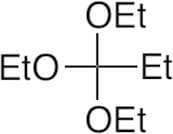
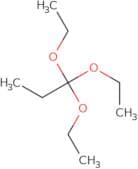
Triethylorthopropionat, mit der CAS-Nummer 115-80-0, ist eine organische Verbindung, die als Ester klassifiziert ist. Sie zeichnet sich durch ihre klare, farblose Flüssigkeitsform und einen fruchtigen Geruch aus, der für viele Ester typisch ist. Die chemische Formel von Triethylorthopropionat ist C11H22O4, was darauf hinweist, dass sie drei Ethylgruppen und eine Propionatgruppe enthält. Diese Verbindung ist in organischen Lösungsmitteln wie Ethanol und Ether löslich, hat jedoch eine begrenzte Löslichkeit in Wasser. Triethylorthopropionat wird hauptsächlich als Reagenz in der organischen Synthese und als Lösungsmittel in verschiedenen chemischen Prozessen verwendet. Sie kann auch als Aromastoff in der Lebensmittelindustrie aufgrund ihres angenehmen Aromas dienen. Darüber hinaus wird sie in der Herstellung bestimmter Polymere und als Zwischenprodukt in der Synthese von Arzneimitteln verwendet. Sicherheitsvorkehrungen sollten beim Umgang mit dieser Verbindung beachtet werden, da sie Haut- und Augenreizungen verursachen kann, und eine angemessene Belüftung wird empfohlen, um das Einatmen von Dämpfen zu vermeiden.
Formel:C9H20O3
InChl:InChI=1/C9H20O3/c1-5-9(10-6-2,11-7-3)12-8-4/h5-8H2,1-4H3
InChI Key:InChIKey=FGWYWKIOMUZSQF-UHFFFAOYSA-N
SMILES:C(OCC)(OCC)(OCC)CC
Synonyme:- 1,1,1-Triethoxypropane
- Ethyl orthopropionate
- NSC 5604
- Orthopropionic acid triethyl ester
- Propane, 1,1,1-triethoxy-
- Teop
- Triethyl orthopropanoate
- Triethyl orthopropionate
- Orthopropionic acid ethyl
- 1,1,1-triethoxy-propan
- Orthopropionic acid ethyl ester
- O-PROPIONIC ACID TRIETHYL ESTER
- triethjyl orthopropionate
- TRIETHYL ORTHOPROPRIONATE
- Triethyl orthopropionate, 98+%
- TRIETHYL-O-PROPIONATE
- Triethylorthopropionat
- Triethyl-O-propionic acid
- Triethyl orthopiopionate
- Weitere Synonyme anzeigen
Sortieren nach
Reinheit (%)
0
100
|
0
|
50
|
90
|
95
|
100
6 Produkte.
Triethyl Orthopropionate
CAS:Formel:C9H20O3Reinheit:>96.0%(GC)Farbe und Form:Colorless to Almost colorless clear liquidMolekulargewicht:176.26Triethyl orthopropionate, 97%
CAS:Used as intermediates in pharmaceutical chemical and organic synthesize. It can react with N-benzoyl-glycine in the presence of 4-(dimethylamino)pyridine and acetic anhydride to produce 4-(1-ethoxy-propylidene)-2-phenyl-4H-oxazol-5-one. It is also applied as a starting material in the synthesis ofFormel:C9H20O3Reinheit:97%Farbe und Form:Clear colorless, LiquidMolekulargewicht:176.26Triethyl Orthopropionate (Technical Grade)
CAS:Kontrolliertes ProduktStability Moisture Sensitive
Applications Triethyl orthopropionate is used as a starting material in the synthesis of Triethyl orthoacrylate. Triethyl orthopropionate is also commonly used in Claisen rearrangement reactions that yield γ,δ-unsaturated esters.
Not a dangerous good if item is equal to or less than 1g/ml and there is less than 100g/ml in the package
References Ghosh, A. & Moon, D.: Org. Lett., 9, 2425 (2007); Ito, H. & Taguchi, T.: Tetrahedron Lett., 38, 5829 (1997); Sarkar, D., et al.: Tetrahedron Lett., 50, 1431 (2009)Formel:C9H20O3Farbe und Form:NeatMolekulargewicht:176.251,1,1-Triethoxypropane
CAS:Formel:C9H20O3Reinheit:95.0%Farbe und Form:Liquid, ClearMolekulargewicht:176.256Triethyl orthopropionate
CAS:Triethyl orthopropionate is a triester derived from propionic acid and ethanol. It has been shown to have receptor activity in the toll-like receptor family, which are molecules that bind to specific molecules on the surface of cells and activate an immune response. Triethyl orthopropionate also inhibits fatty acid synthesis by binding to the pyrazole ring of the enzyme acetyl-CoA carboxylase, thereby inhibiting its activity. This inhibition leads to higher levels of free fatty acids in the bloodstream, which can lead to metabolic disorders such as diabetes mellitus and autoimmune diseases like lupus erythematosus. The molecule also has a hydroxyl group that can form hydrogen bonds with other molecules, such as methanol solvent or dinucleotide phosphate. These interactions can be used in synthesis methods involving intramolecular hydrogen transfer reactions.Formel:C9H20O3Reinheit:Min. 95%Farbe und Form:Clear LiquidMolekulargewicht:176.25 g/mol