CAS 115687-05-3
:CPNQ
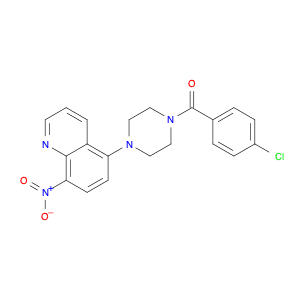
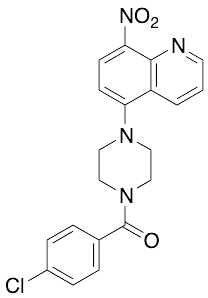
- (4-Chlorophenyl)(4-(8-nitroquinolin-5-yl)piperazin-1-yl)methanone
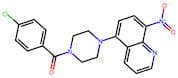
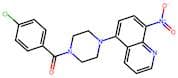
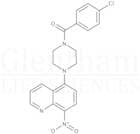
(4-Chlorophenyl)(4-(8-nitroquinolin-5-yl)piperazin-1-yl)methanone
CAS:Formel:C20H17ClN4O3Reinheit:97%Farbe und Form:SolidMolekulargewicht:396.8270(4-Chlorophenyl)(4-(8-Nitroquinolin-5-yl)Piperazin-1-yl)Methanone
CAS:(4-Chlorophenyl)(4-(8-Nitroquinolin-5-yl)Piperazin-1-yl)MethanoneReinheit:97%Molekulargewicht:396.83g/molB2
CAS:B2 (Linazolamide intermediate B impurity 2) promotes inclusion formation in cellular models of Huntington's disease and Parkinson's diseaseFormel:C20H17ClN4O3Reinheit:99.66%Farbe und Form:SolidMolekulargewicht:396.83B2
CAS:Kontrolliertes ProduktApplications B2 is a cell permeable inhibitor of SIRT2 (sirtuin 2). Multidrug resistance protein 4 (MRP4) inhibitor in tumors such as neuroblastoma and colorectal cancer.
References Cheung, L., et al.: Biochem. Pharmacol., 93, 380-388 (2015)Formel:C20H17ClN4O3Farbe und Form:NeatMolekulargewicht:396.83CPNQ
CAS:CPQ is a polyamine with biochemical properties that have been shown to promote the proliferation and differentiation of colorectal adenocarcinoma cells. CPQ has also been shown to stimulate the growth of epidermal cells in vivo. CPQ is a potential biomarker that can be used for the diagnosis of colorectal cancer, because it is detected in the serum of patients with colorectal adenocarcinoma. CPQ binds to monoclonal antibodies and is used as an analytical method to detect various biological molecules such as epidermal growth factor (EGF) and monoclonal antibodies. CPQ has also been shown to inhibit the production of inflammatory mediators by macrophages, which may be due to its ability to inhibit transcriptional regulation through protein-protein interactions.
Formel:C20H17ClN4O3Reinheit:Min. 95%Molekulargewicht:396.83 g/mol