CAS 1160514-60-2
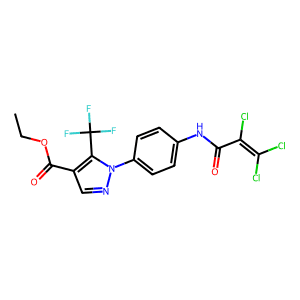
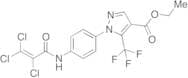
:1H-Pyrazole-4-carboxylic acid, 1-[4-[(2,3,3-trichloro-1-oxo-2-propen-1-yl)amino]phenyl]-5-(trifluoromethyl)-, ethyl ester
CAS:Formel:C16H11Cl3F3N3O3Reinheit:99%Farbe und Form:SolidMolekulargewicht:456.6310Pyr3
CAS:Kontrolliertes ProduktApplications Pyr3 is a pyrazole derivative that is used to discriminate between (transient receptor potential cation) TRPC4 mediated receptor operated calcium entry and STIM1/Ora1 mediated store operated calcium entry pathway in human embryonic kidney and rat mast cells.
References Schieifer, H., et al.: Brit. J. Pharmacol., 167, 1712 (2012); Bergsmann, J., et al.: J. Biol. Chem., 286, 31565 (2011)Formel:C16H11Cl3F3N3O3Farbe und Form:NeatMolekulargewicht:456.63TRPC3 Channel Inhibitor, Pyr3
CAS:Pyr3 is a TRPC3 channel inhibitor. It selectively blocks the TRPC3 channel, which is involved in regulating mitochondrial membrane potential and ion homeostasis. Pyr3 also has anti-inflammatory properties and may be useful for the treatment of hepatic steatosis or neurodegenerative diseases. The drug can reduce neuronal death by inhibiting the release of neurotransmitters such as neurokinin-1 receptor. Pyr3 also inhibits cardiac contractility, cyclase activity, and disulfide bond formation at low concentrations. This agent also has a potential use as an anti-tumor drug due to its ability to inhibit toll-like receptor signaling pathways that are important in tumor cell proliferation.
Formel:C16H11Cl3F3N3O3Reinheit:Min. 95%Molekulargewicht:456.63 g/molPyr3
CAS:Pyr3 selectively blocks TRPC3 channels, reducing Ca2+ influx; it's effective at 700 nM.Formel:C16H11Cl3F3N3O3Reinheit:98.04%Farbe und Form:SolidMolekulargewicht:456.63Ref: TM-T16687
1mg34,00€2mg49,00€5mg73,00€1mL*10mM (DMSO)81,00€10mg92,00€25mg203,00€50mg344,00€100mg485,00€200mg700,00€500mg1.063,00€
![1H-Pyrazole-4-carboxylic acid, 1-[4-[(2,3,3-trichloro-1-oxo-2-propen-1-yl)amino]phenyl]-5-(trifluo…](/_next/image/?url=https%3A%2Fstatic.cymitquimica.com%2Fproducts%2FIN%2Fthumb%2FDA000BGZ.jpg&w=3840&q=75)