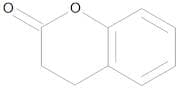
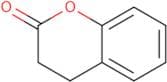
CAS 119-84-6
:Dihydrocumarin
Beschreibung:
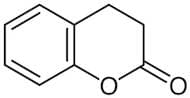
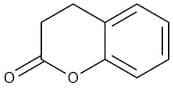
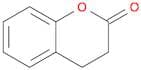
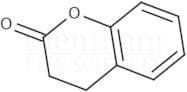
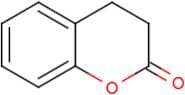
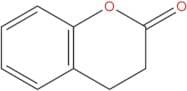
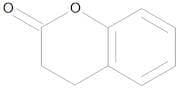
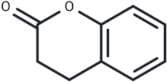
Dihydrocumarin, mit der CAS-Nummer 119-84-6, ist eine organische Verbindung, die zur Klasse der Coumarine gehört, die für ihre aromatischen Eigenschaften bekannt sind. Sie erscheint als farblose bis blassgelbe Flüssigkeit oder Feststoff, abhängig von Temperatur und Reinheit. Dihydrocumarin hat einen süßen, angenehmen Geruch, der an Vanille erinnert, was es zu einer beliebten Zutat in der Duft- und Aromabranche macht. Chemisch ist es durch seine Lactonstruktur gekennzeichnet, die zu seiner Reaktivität und Löslichkeit in organischen Lösungsmitteln beiträgt. Es ist mäßig in Wasser löslich und weist eine Vielzahl von Anwendungen auf, einschließlich der Verwendung als Aromastoff, Duftbestandteil und in der Synthese anderer chemischer Verbindungen. Darüber hinaus wurde Dihydrocumarin auf seine potenziellen biologischen Aktivitäten untersucht, einschließlich antioxidativer und antimikrobieller Eigenschaften. Sicherheitsüberlegungen sollten jedoch berücksichtigt werden, da es bei einigen Personen Hautreizungen oder allergische Reaktionen hervorrufen kann. Insgesamt ist Dihydrocumarin eine vielseitige Verbindung mit erheblicher industrieller und wissenschaftlicher Relevanz.
Formel:C9H8O2
InChl:InChI=1/C9H8O2/c10-9-6-5-7-3-1-2-4-8(7)11-9/h1-4H,5-6H2
InChI Key:InChIKey=VMUXSMXIQBNMGZ-UHFFFAOYSA-N
SMILES:O=C1OC=2C(CC1)=CC=CC2
Synonyme:- 1,2-Benzodihydropyrone
- 2,4-Dihydro-1-Benzopyran-4-One
- 2-Chromanone
- 2H-1-benzopyran-2-one,3,4-dihydro-
- 3,4-Dihydro-1-benzopyran-2-one
- 3,4-Dihydro-1H-benzopyran-2-one
- 3,4-Dihydrochromen-2-one
- 3,4-Dihydrocoumarin
- 3,4-dihydro-2H-1-benzopyran-2-one
- 3,4-dihydro-2H-chromen-2-one
- Akos 222-08
- Benzodihydropyrone
- D 1223
- Dihydrobenzenopyrone
- Dihydrobenzopyrone
- Hydrocinnamic acid, o-hydroxy-, δ-lactone
- Hydrocoumarin
- Melilotin
- Melilotin (coumarin)
- Melilotol
- FEMA 2381
- DIHYDROCOUMARIN
- 3,4-dihydro-coumari
- MELILOTINE
- CHROMAN-2-ONE
- 3,4-dihydro-2h-1-benzopyran-2-on
- 2-oxo-chroma
- Weitere Synonyme anzeigen
Sortieren nach
Reinheit (%)
0
100
|
0
|
50
|
90
|
95
|
100
14 Produkte.
3,4-Dihydrocoumarin
CAS:Formel:C9H8O2Reinheit:>98.0%(GC)Farbe und Form:White or Colorless to Light yellow powder to lump to clear liquidMolekulargewicht:148.16Dihydrocoumarin, 99%
CAS:This Thermo Scientific Chemicals brand product was originally part of the Alfa Aesar product portfolio. Some documentation and label information may refer to the legacy brand. The original Alfa Aesar product / item code or SKU reference has not changed as a part of the brand transition to Thermo SciFormel:C9H8O2Reinheit:99%Farbe und Form:Liquid, Clear colorless to pale yellowMolekulargewicht:148.162H-1-Benzopyran-2-one, 3,4-dihydro-
CAS:Formel:C9H8O2Reinheit:98%Farbe und Form:LiquidMolekulargewicht:148.1586Dihydrocoumarin
CAS:Formel:C9H8O2Reinheit:≥ 99.0%Farbe und Form:Colourless to light yellow liquidMolekulargewicht:148.16Dihydrocoumarin, 10mM (in DMSO)
CAS:Dihydrocoumarin, 10mM (in DMSO)Reinheit:≥98%Molekulargewicht:148.16g/molDihydrocoumarin
CAS:Dihydrocoumarin, in Melilotus, inhibits yeast Sir2p, human SIRT1 (IC50: 208μM), and SIRT2 (IC50: 295μM).Formel:C9H8O2Reinheit:98.46%Farbe und Form:Leaflets Room Temperature (Ntp 1992)Molekulargewicht:148.16Hydrocoumarin
CAS:Kontrolliertes ProduktApplications Hydrocoumarin can be used as a reagent to prepare splitomicin analogs as inhibitors of Sir2.
References Posakony, J., et al.: J. Med. Chem., 47, 2635 (2004); Freitag, M., et al.: Bioorg. Med. Chem., 19, 3669 (2011)Formel:C9H8O2Farbe und Form:NeatMolekulargewicht:148.16Dihydro coumarin
CAS:Dihydro coumarin is a cyclic organic compound, which is a derivative of coumarin primarily obtained through synthetic processes. It possesses the characteristic odor reminiscent of freshly mown hay, contributing to its widespread application in various industries. The primary mode of action of dihydro coumarin involves its role as a fragrance and flavoring agent, capitalizing on its aromatic profile to enhance products’ sensory attributes.Formel:C9H8O2Reinheit:Min. 95%Molekulargewicht:148.16 g/molChroman-2-one
CAS:Formel:C9H8O2Reinheit:95%Farbe und Form:Solid, Low Melting SolidMolekulargewicht:148.161