CAS 120066-38-8
:Corticotropin-Releasing-Faktor *Fragment 6-33
Beschreibung:
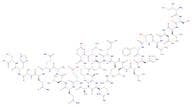
Das Fragment 6-33 des corticotropin-releasing factors (CRF) ist ein Peptid, das aus dem größeren corticotropin-releasing hormone abgeleitet ist und eine entscheidende Rolle in der Stressreaktion des Körpers spielt. Dieses spezifische Fragment besteht aus den Aminosäuren 6 bis 33 des vollständigen CRF und ist bekannt für seine Beteiligung an der Modulation der Hypothalamus-Hypophysen-Nebennieren-Achse (HPA). Die CAS-Nummer 120066-38-8 identifiziert dieses Peptid in chemischen Datenbanken. Charakteristisch zeigt das CRF-Fragment 6-33 biologische Aktivität, die mit der Stressreaktion verbunden ist, indem es die Freisetzung des adrenocorticotropen Hormons (ACTH) aus der Hypophyse beeinflusst. Es wird typischerweise durch die Festphasen-Peptidsynthese synthetisiert und kann in der Forschung verwendet werden, um stressbedingte Störungen, neuroendokrine Funktionen und potenzielle therapeutische Anwendungen zu untersuchen. Das Peptid ist in der Regel in wässrigen Lösungen löslich und kann spezifische Bindungsaffinitäten zu CRF-Rezeptoren aufweisen, was zu seinen physiologischen Effekten beiträgt. Insgesamt dient das CRF-Fragment 6-33 als wichtiges Werkzeug in der neurobiologischen und endokrinologischen Forschung.
Formel:C141H231N41O43S
Synonyme:- CRF (6-33) (human, rat)
- H-Ile-Ser-Leu-Asp-Leu-Thr-Phe-His-Leu-Leu-Arg-Glu-Val-Leu-Glu-Met-Ala-Arg-Ala-Glu-Gln-Leu-Ala-Gln-Gln-Ala-His-Ser-OH
- CORTICOTROPIN RELEASING FACTOR FRAGMENT 6-33, HUMAN, RAT
- CRF (6-33)
- 6-33-Corticotropin-releasing factor (human) (9CI)
- CRF (6-33) (human, rat) H-Ile-Ser-Leu-Asp-Leu-Thr-Phe-His-Leu-Leu-Arg-Glu-Val-Leu-Glu-Met-Ala-Arg-Ala-Glu-Gln-Leu-Ala-Gln-Gln-Ala-His-Ser-OH
- CORTICOTROPIN RELEASING FACTOR FRAGMENT 6-33, HUMA
- CRF(6-33)(human)
- ILE-SER-LEU-ASP-LEU-THR-PHE-HIS-LEU-LEU-ARG-GLU-VAL-LEU-GLU-MET-ALA-ARG-ALA-GLU-GLN-LEU-ALA-GLN-GLN-ALA-HIS-SER
- CORTICOTROPIN-RELEASING FACTOR (6-33) (HUMAN, RAT)
- Corticotropin Releasing Factor Fragment 6-33 human, rat >=97% (HPLC)
Sortieren nach
Reinheit (%)
0
100
|
0
|
50
|
90
|
95
|
100
4 Produkte.
CRF (6-33) (human, rat)
CAS:This CRF fragment may have two different beneficial effects in Alzheimer’s disease (AD). First CRF (6-33) dissociates CRF from the CRF-binding protein and may therefore be able to restore the dramatic reduction of free CRF content in AD. Second this fragment shows cognition-enhancing properties in animal models of learning and memory, without the characteristic anxiogenic effects of CRF receptor agonists, and may therefore be useful in the treatment of memory deficits seen in AD.Formel:C141H231N41O43SReinheit:96.8%Farbe und Form:WhiteMolekulargewicht:3220.7CRF(6-33)(human)
CAS:CRFBP inhibitor peptide; blocks CRF, reduces weight gain, boosts activity in obese rats.Formel:C141H231N41O43SReinheit:98%Farbe und Form:SolidMolekulargewicht:3220.68CRF (6-33) (human, rat)
CAS:CRF (6-33) is a neuropeptide that is found in the human cerebral cortex and rat liver. It has been shown to inhibit protein synthesis and sequenced by Edmond H. Fischer, who also discovered corticotropin-releasing factor (CRF). CRF (6-33) binds to its receptor CRFR1, which activates phospholipase C and generates inositol 1,4,5-triphosphate. This leads to the release of calcium from intracellular stores and the activation of protein kinase C. The release of calcium ions into the cytosol causes an increase in intracellular levels of cAMP, which activates a series of reactions responsible for the cellular effects of CRF. CRF (6-33) has been shown to be involved in depression by controlling neurotransmitter levels.br>Formel:C141H231N41O43SReinheit:Min. 95%Molekulargewicht:3,220.66 g/mol