CAS 1200828-74-5
:Ethyl-2-brom-2-cyclopropylacetat
Beschreibung:
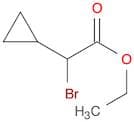
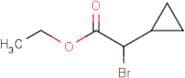
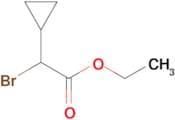
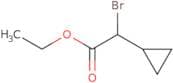
Ethyl-2-brom-2-cyclopropylacetat ist eine organische Verbindung, die durch ihre Esterfunktionalgruppe gekennzeichnet ist, die aus Essigsäure und Ethanol abgeleitet ist. Die Anwesenheit eines Bromatoms an der zweiten Kohlenstoffposition sowie einer Cyclopropylgruppe trägt zu ihrer einzigartigen Reaktivität und ihren Eigenschaften bei. Diese Verbindung erscheint typischerweise als farblose bis blassgelbe Flüssigkeit mit einem charakteristischen Geruch. Sie ist in organischen Lösungsmitteln wie Ether und Chloroform löslich, hat jedoch eine begrenzte Löslichkeit in Wasser aufgrund ihrer hydrophoben Cyclopropylgruppe. Ethyl-2-brom-2-cyclopropylacetat wird häufig in der organischen Synthese verwendet, insbesondere bei der Bildung komplexerer Moleküle durch nucleophile Substitutionsreaktionen. Ihre Reaktivität kann durch die Anwesenheit des Bromatoms beeinflusst werden, das in verschiedenen chemischen Umwandlungen als Abgangsgruppe fungieren kann. Sicherheitsvorkehrungen sollten beim Umgang mit dieser Verbindung beachtet werden, da sie gesundheitliche Risiken darstellen kann, wenn sie eingeatmet oder eingenommen wird, und geeignete Schutzausrüstung verwendet werden sollte.
Sortieren nach
Reinheit (%)
0
100
|
0
|
50
|
90
|
95
|
100
4 Produkte.
Cyclopropaneacetic acid, α-bromo-, ethyl ester
CAS:Formel:C7H11BrO2Reinheit:95%Farbe und Form:LiquidMolekulargewicht:207.0650Ethyl 2-bromo-2-cyclopropylacetate
CAS:Ethyl 2-bromo-2-cyclopropylacetateFormel:C7H11BrO2Reinheit:95%Farbe und Form: clear. pale yellow liquidMolekulargewicht:207.07g/molEthyl 2-bromo-2-cyclopropylacetate
CAS:Formel:C7H11BrO2Reinheit:97%Farbe und Form:Liquid, ClearMolekulargewicht:207.067Ethyl 2-bromo-2-cyclopropylacetate
CAS:Ethyl 2-bromo-2-cyclopropylacetate is a substrate for cross-coupling reactions, which are catalytic reactions in organic synthesis. It can be used as a reactant in the formation of organometallic compounds, pharmaceuticals and other commercially important organic molecules. The reaction mechanism has been studied extensively, with mechanistic studies showing that the reaction proceeds via an initial alkyl-metal exchange followed by nucleophilic attack of the carbonyl group on the metal carbene intermediate. This product is often used in the synthesis of quaternary carbon compounds that have four different substituents attached to a central carbon atom.Formel:C7H11BrO2Reinheit:Min. 95%Molekulargewicht:207.07 g/mol