CAS 12012-95-2
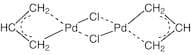
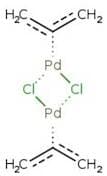
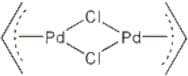
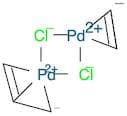
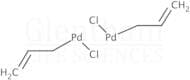
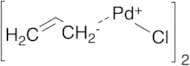
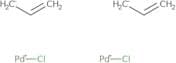
:Di-μ-chlorobis(η3-2-propenyl)dipalladium
- Allyl Palladium (Ii) Chloride Dimer
- Allylchloropalladium dimer
- Allylpalladium chloride
- Allylpalladium chloride dimer
- Allylpalladium(II) chloride dimer
- Bis((η3-allyl)(chloro)palladium)
- Bis((η<sup>3</sup>-allyl)(chloro)palladium)
- Bis((μ-chloro)(2-propenyl)palladium)
- Bis(allyl(μ-chloro)palladium)
- Bis(allyl)dichlorodipalladium
- Bis(allylchloropalladium)
- Bis(chloro(η3-2-propenyl)palladium)
- Bis(chloro(η<sup>3</sup>-2-propenyl)palladium)
- Bis(chloro(π-propenyl)palladium)
- Bis(chloro-π-allylpalladium)
- Bis(η3-allyl)bis(μ-chloro)dipalladium
- Bis(η3-allyl)dichlorodipalladium
- Bis(η<sup>3</sup>-allyl)bis(μ-chloro)dipalladium
- Bis(η<sup>3</sup>-allyl)di(μ-chloro)dipalladium
- Bis(η<sup>3</sup>-allyl)dichlorodipalladium
- Bis(μ-chloro)bis(η3-2-propenyl)dipalladium
- Bis(μ-chloro)bis(η<sup>3</sup>-2-propenyl)dipalladium
- Bis(π-allyl)dichlorodipalladium
- Bis(π-allylpalladium chloride)
- Bis(π-allylpalladium) dichloride
- Bis[(η3-allyl)-μ-chloropalladium]
- Bis[(η<sup>3</sup>-allyl)-μ-chloropalladium]
- Bis[(π-allyl)chloropalladium]
- Bis[chloro(η3-allyl)palladium]
- Bis[chloro(η<sup>3</sup>-allyl)palladium]
- Bis[μ-chloro(η3-2-propenyl)palladium]
- Bis[μ-chloro(η<sup>3</sup>-2-propenyl)palladium]
- Chloropalladium(1+) Prop-2-En-1-Ide (1:1)
- Di-Μ-Cloro-Bis(Η-Alil)Paladio
- Di-μ-chlor-bis(η-allyl)palladium
- Di-μ-chlorobis((η3-allyl)palladium)
- Di-μ-chlorobis((η<sup>3</sup>-allyl)palladium)
- Di-μ-chlorobis(allylpalladium)
- Di-μ-chlorobis(η3-2-propenyl)dipalladium
- Di-μ-chlorobis(η3-allyl)dipalladium
- Di-μ-chlorobis(η<sup>3</sup>-2-propenyl)dipalladium
- Di-μ-chlorobis(η<sup>3</sup>-allyl)dipalladium
- Di-μ-chlorobis(π-allyl)dipalladium
- Di-μ-chlorodi-π-allyldipalladium
- Di-π-Allylpalladium chloride
- Di-π-allyldi-μ-chlorodipalladium
- Diallyldichlorodipalladium
- Diallyldipalladium dichloride
- Dichloroniopalladium, Palladium, Prop-1-Ene
- Nsc 151255
- Palladium allyl chloride
- Palladium, di-μ-chlorobis(η3-2-propenyl)di-
- Palladium, di-μ-chlorobis(η<sup>3</sup>-2-propenyl)di-
- Palladium, di-π-allyldi-μ-chlorodi-
- Palladium, dichlorodi-π-allyldi-
- π-Allyl palladium chloride
- π-Allylpalladium chloride dimer
- Weitere Synonyme anzeigen
Allylpalladium(II) Chloride Dimer
CAS:Formel:C6H10Cl2Pd2Reinheit:>97.0%(T)Farbe und Form:Light yellow to Amber to Dark green powder to crystalMolekulargewicht:365.89Allylpalladium(II) chloride dimer, Pd 56.0% min
CAS:Allylpalladium(II) chloride dimer is used as an important catalyst in Heck reaction. It reacts with cyclopentadienyl anion to give cyclopentadienyl allyl palladium. It acts as a precatalyst for asymmetric and cross-coupling catalysis. Further, it is used in the preparation of 1,4-diallyl-1,2-dihydroFormel:C6H10Cl2Pd2Molekulargewicht:365.89Allylpalladium chloride dimer, min. 98%
CAS:Allylpalladium chloride dimer, min. 98%
Formel:C3H5PdClReinheit:min. 98%Farbe und Form:yellow xtl.Molekulargewicht:365.86Allylpalladium(II) chloride dimer
CAS:Formel:C6H10Cl2Pd2Reinheit:98%Farbe und Form:SolidMolekulargewicht:365.8896Allylpalladium(II)chloride dimer
CAS:Formel:C6H10Cl2Pd2Reinheit:98.0%Farbe und Form:Solid, PowderMolekulargewicht:365.89Allylpalladium(II) chloride dimer
CAS:Allylpalladium(II) chloride dimerFormel:C3H5ClPdReinheit:97%Farbe und Form: yellow crystalline solidMolekulargewicht:365.89g/molAllylpalladium(II) Chloride Dimer
CAS:Kontrolliertes ProduktApplications Allylpalladium(II) chloride dimer,98% (cas# 12012-95-2) is a useful research chemical.
Formel:C3H5ClPdFarbe und Form:NeatMolekulargewicht:182.945Allylpalladium(II) chloride dimer
CAS:Allylpalladium(II) chloride dimer is a homogeneous catalyst that can be used for the asymmetric synthesis of organosilicon compounds. It is an allylation agent and has been shown to react with certain nitrogen-containing compounds to form a palladium nitride complex. This compound is also a good transport agent, due to its high solubility in organic solvents. Allylpalladium(II) chloride dimer has been shown to be effective in the production of cancer chemotherapeutic agents, including chlorambucil, as well as anti-inflammatory drugs such as ibuprofen. This catalyst has also been used for cross-coupling reactions with alkyl bromides and iodides. A major drawback of this catalyst is that it often leads to an isolated yield of the product, which can be improved by using a solvent or by adding water or alcohols.
Formel:C6H10Cl2Pd2Reinheit:95%NmrMolekulargewicht:365.89 g/mol