CAS 12190-79-3
:Lithium-Kobalt-Oxid (CoLiO2)
Beschreibung:
Kobalt-Lithium-Oxid (CoLiO2) ist eine schichtartige Oxidverbindung, die hauptsächlich in Lithium-Ionen-Batterien als Kathodenmaterial verwendet wird. Es weist eine hohe Energiedichte und gute thermische Stabilität auf, was es für verschiedene Energiespeicheranwendungen geeignet macht. Die Struktur von CoLiO2 ist durch abwechselnde Schichten von Lithium-Ionen und Kobaltoxid gekennzeichnet, was die Interkalation und Deinterkalation von Lithium-Ionen während der Lade- und Entladezyklen erleichtert. Diese Eigenschaft ist entscheidend für die Effizienz und Langlebigkeit von Batterien. Darüber hinaus zeigt CoLiO2 eine gute elektrochemische Leistung, mit einer relativ hohen Spannung und Kapazität, obwohl es Herausforderungen wie Kapazitätsverlust im Laufe der Zeit begegnen kann. Die Verbindung ist auch für ihre relativ hohen Kosten und potenziellen Umweltbedenken im Zusammenhang mit der Kobaltgewinnung bekannt. Insgesamt spielt Kobalt-Lithium-Oxid eine bedeutende Rolle bei der Weiterentwicklung der Batterietechnologie, insbesondere in tragbaren Elektronikgeräten und Elektrofahrzeugen, wo Leistung und Zuverlässigkeit von größter Bedeutung sind.
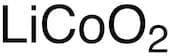
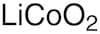
Formel:CoLiO2
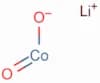
InChl:InChI=1/Co.Li.2O/q+3;+1;2*-2
InChI Key:InChIKey=IDSMHEZTLOUMLM-UHFFFAOYSA-N
SMILES:[O].[Co].[Li]
Synonyme:- C 012
- C 10
- C 10 (metal oxide)
- Cell Seed 10N
- Cell Seed 5
- Cell Seed C 10
- Cell Seed C 10N
- Cell Seed C 2
- Cell Seed C 20
- Cell Seed C 20F2
- Cell Seed C 5
- Cell Seed C 5H
- Cell Seed C 5J
- Cell Seed C 8G
- Cobalt Lithium Dioxide
- Cobalt lithium oxide (CoLiO4)
- Cobalt lithium oxide (CoLiO<sub>2</sub>)
- Cobalt lithium oxide (LiCoO2)
- Cobalt lithium oxide (LiCoO<sub>2</sub>)
- Cobaltate (CoO21-), lithium
- Cobaltate (CoO<sub>2</sub><sup>1-</sup>), lithium
- Cobaltlithiumdioxid
- D 10 (metal oxide)
- Dioxido De Cobalto Y Litio
- Dioxyde de cobalt et de lithium
- Hlc 17
- Hlc 21
- Hlc 22
- Kd 10
- Lithium cobalt oxide
- Lithium cobalt oxide (LiCoO2)
- Lithium cobalt oxide (LiCoO<sub>2</sub>)
- Lithium cobalt(III) oxide
- Lithium cobaltate (LiCoO2)
- Lithium cobaltate (LiCoO<sub>2</sub>)
- Lithium cobaltate(III) (LiCoO2)
- Lithium cobaltate(III) (LiCoO<sub>2</sub>)
- Lithium cobaltite
- Lithium colbaltite
- Nc 5N
- Selion C
- Cobalt lithium oxide (CoLiO2)
- cobaltic lithium oxygen(-2) anion
- lithium oxido(oxo)cobalt
- Lithium cobalt(III) oxide, min. 98%
- Cobaltate,lithium
- Lithium dioxocobaltate
- LITHIUM COBALT(III) OXIDE, 99.8%
- Lithium cobalt(III) oxide, 99.5% (metals basis)
- Lithium cobalt(III) oxide, 99.5% (metals basis excluding Ni), Ni <0.1%
- Lithiumcobalt(III)oxide,min.98%
- Cobalt(III) lithium oxide
- Weitere Synonyme anzeigen
Sortieren nach
Reinheit (%)
0
100
|
0
|
50
|
90
|
95
|
100
5 Produkte.
Lithium Cobalt(III) Oxide
CAS:Formel:CoLiO2Reinheit:>99.5%Farbe und Form:Black powder to crystalMolekulargewicht:97.87Lithium cobalt(III) oxide, 99.5% (metals basis)
CAS:Baking powder, medicine (cathartic), component of Fehling's solution, silvering mirrors.Potassium sodium L-tartrate tetrahydrate is used in the process of silvering mirrors. It is active ingredient in the Fehiling’s solution and Nylander’s test involved in the determination of reducing sugars. It isFormel:CoLiO2Reinheit:99.5%Farbe und Form:Blue-black or dark gray or dark blue, PowderMolekulargewicht:97.87Lithium cobalt(III) oxide, 97%
CAS:Aluminum oxide finds applications in catalyst support, chemical sensors, as an absorbent for gases and water vapors, manufacturing of abrasives, refractories, ceramics, electrical insulators and resistors, paper, crucibles, as chromatographic matrix, in fluxes, light bulbs and heat-resistant fiber.
Formel:CoLiO2Reinheit:97%Farbe und Form:Blue-black to dark grey to dark blue, PowderMolekulargewicht:97.87Lithium cobalt(III) oxide, min. 98%
CAS:Lithium cobalt(III) oxide, min. 98%
Formel:LiCoO2Reinheit:min. 98%Farbe und Form:dark gray pwdr.Molekulargewicht:97.87