CAS 122-20-3
:Triisopropanolamin
Beschreibung:
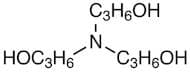
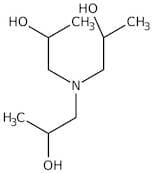
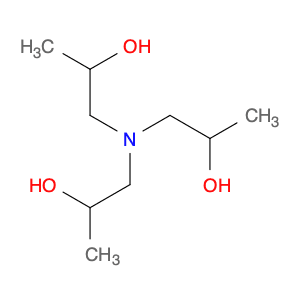
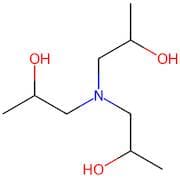
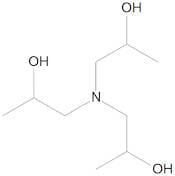
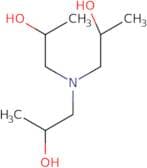
Triisopropanolamin, mit der CAS-Nummer 122-20-3, ist eine organische Verbindung, die durch ihre Struktur gekennzeichnet ist, die drei Isopropanolamingruppen umfasst. Es handelt sich um eine farblose bis blassgelbe Flüssigkeit, die hygroskopisch ist und einen milden Amin-Geruch hat. Diese Verbindung ist bekannt für ihre multifunktionalen Eigenschaften und dient als Tensid, Emulgator und Stabilisator in verschiedenen Anwendungen, einschließlich Körperpflegeprodukten, Pharmazeutika und industriellen Formulierungen. Triisopropanolamin zeigt eine gute Löslichkeit in Wasser und organischen Lösungsmitteln, was es in der Formulierungsc Chemie vielseitig macht. Es hat einen relativ hohen Siedepunkt und eine niedrige Flüchtigkeit, was zu seiner Stabilität in verschiedenen Umgebungen beiträgt. Darüber hinaus kann es als pH-Regulator und Korrosionsinhibitor wirken, was seine Nützlichkeit in Formulierungen erhöht. Allerdings kann es, wie viele Amine, potenzielle Reizwirkungen auf Haut und Augen haben, was eine angemessene Handhabung und Sicherheitsmaßnahmen während der Verwendung erforderlich macht. Insgesamt wird Triisopropanolamin für seine funktionalen Eigenschaften in Verbraucher- und Industrieanwendungen geschätzt.
Formel:C9H21NO3
InChl:InChI=1/C9H21NO3/c1-7(11)4-10(5-8(2)12)6-9(3)13/h7-9,11-13H,4-6H2,1-3H3/p+1/t7-,8-,9-/m1/s1
InChI Key:InChIKey=SLINHMUFWFWBMU-UHFFFAOYSA-N
SMILES:N(CC(C)O)(CC(C)O)CC(C)O
Synonyme:- 1,1',1''-Nitrilotri-2-propanol
- 1,1',1''-Nitrilotripropan-2-ol
- 1,1',1''-Nitrilotripropane-2-Ol
- 1,1',1''-Nitrilotris(2-propanol)
- 1,1′,1′′-Nitrilotri-2-propanol
- 1,1′,1′′-Nitrilotris[2-propanol]
- 1-[Bis(2-hydroxypropyl)amino]propan-2-ol
- 2-Propanol, 1,1',1''-nitrilotri-
- 2-Propanol, 1,1',1''-nitrolotris-
- 2-Propanol, 1,1′,1′′-nitrilotri-
- 2-Propanol, 1,1′,1′′-nitrilotris-
- CBA
- CBA (aminoalcohol)
- NTP
- Nsc 4010
- Tipa
- Tri-2-propanolamine
- Tri-iso-propanolamine
- Triisopropanolamine
- Tris(2-hydroxy-1-propyl)amine
- Tris(2-hydroxypropyl)amine
- Tris(2-propanol)amine
- Tris-(2-Hydroxypropyl)-Amin
- (2S)-2-hydroxy-N-[(2R)-2-hydroxypropyl]-N-[(2S)-2-hydroxypropyl]propan-1-aminium
- (2S)-2-hydroxy-N,N-bis[(2R)-2-hydroxypropyl]propan-1-aminium
- 1,1',1''-nitrilotripropan-2-ol 2-hydroxypropane-1,2,3-tricarboxylate (1:1)
- NITRILOTRIPROPANOL
- 2-hydroxy-N,N-bis(2-hydroxypropyl)propan-1-aminium chloride
- (2R)-2-hydroxy-N,N-bis[(2R)-2-hydroxypropyl]propan-1-aminium
- (2S,2'S,2''R)-1,1',1''-nitrilotripropan-2-ol
- 1,1',1''-NITROLOTRIPROPAN-2-OL
- AMIX TI
- 1,1’,1’’-nitrilotri-2-propano
- 1,1',1-Nitrilopropan-2-ol
- 3,3',3-Nitrilotri(2-propanol)
- 78-96-61,1’,1’’-nitrilotripropan-2-ol
- 78-96-6
- 1,1’,1’’-nitrilotris-2-propano
- 78-96-61,1’,1’’-
- Tripropanolamine
- Weitere Synonyme anzeigen
Sortieren nach
Reinheit (%)
0
100
|
0
|
50
|
90
|
95
|
100
7 Produkte.
Triisopropanolamine (mixture of isomer)
CAS:Formel:C9H21NO3Reinheit:>98.0%(T)Farbe und Form:White powder to lumpMolekulargewicht:191.27Triisopropanolamine, 95%
CAS:Major applications include water-based coating applications and agricultural products. Additional applications are antistat agents for polymers, corrosion inhibitor, electrodeposition/electrocoating, lubricants, paper, pigment dispersion, plastics, polyurethane additive, reaction intermediates, rubbFormel:C9H21NO3Reinheit:95%Farbe und Form:White to yellow, Fused solid or clear liquid as meltMolekulargewicht:191.271,1',1''-Nitrilotripropan-2-ol
CAS:Formel:C9H21NO3Reinheit:97%Farbe und Form:LiquidMolekulargewicht:191.26791,1',1''-Nitrilotris(propan-2-ol)
CAS:1,1',1''-Nitrilotris(propan-2-ol)
Reinheit:0.95Molekulargewicht:191.27g/molTris(2-hydroxy-1-propyl)amine
CAS:Kontrolliertes ProduktFormel:C9H21NO3Farbe und Form:NeatMolekulargewicht:191.268Triisopropanolamine (mixture of isomers)
CAS:Triisopropanolamine (TIPA) is a chemical that can be used as a pesticide. TIPA is used to control the growth of bacteria, fungi, and other organisms by disrupting their cell membranes. It is also used in textile industries for its ability to react with anhydrous sodium and glycol ethers to form a polymer that can be applied to fabric for water repellency. TIPA has been shown to be chemically stable at temperatures up to 150-200°C, which makes it useful in applications such as cleaning agents and paper coatings. The use of triisopropanolamine has been shown to inhibit bacterial strains resistant mutant strains of E. coli and Salmonella enterica. TIPA is also known as a precursor for the production of the neurotransmitter Ryanodine. TIPA can be converted into ryanodine via reaction with an acid in the presence of an oxidant such as hydrogen peroxide or potassium permFormel:C9H21NO3Reinheit:Min. 95%Farbe und Form:PowderMolekulargewicht:191.27 g/mol