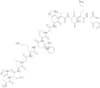
CAS 122018-58-0
:PLP (139-151)
Beschreibung:
PLP, oder Pyridoxalphosphat, ist die aktive Form von Vitamin B6 und spielt eine entscheidende Rolle als Coenzym in verschiedenen biochemischen Reaktionen, insbesondere im Aminosäurestoffwechsel. Es zeichnet sich durch seine Fähigkeit aus, an Transaminierungs-, Decarboxylierungs- und Racemierungsreaktionen teilzunehmen, wodurch die Umwandlung von Aminosäuren und die Synthese von Neurotransmittern erleichtert wird. Die Substanz ist ein gelbes kristallines Pulver, das in Wasser löslich ist und ein pH-abhängiges Stabilitätsprofil aufweist, das unter neutralen bis leicht alkalischen Bedingungen stabiler ist. PLP ist essentiell für die ordnungsgemäße Funktion von Enzymen, die am Stoffwechsel von Kohlenhydraten, Lipiden und Aminosäuren beteiligt sind, was es für zahlreiche physiologische Prozesse lebenswichtig macht. Ein Mangel an PLP kann zu verschiedenen Gesundheitsproblemen führen, einschließlich Anämie und neurologischen Störungen. Seine CAS-Nummer, 122018-58-0, identifiziert es eindeutig in chemischen Datenbanken und unterstützt die Forschung und regulatorischen Kontexte. Insgesamt ist PLP eine bedeutende biochemische Verbindung mit vielfältigen Rollen in der menschlichen Gesundheit und im Stoffwechsel.
Formel:C72H104N20O17
Synonyme:- Proteolipid Protein
- Myelin Proteolipid Protein Fragment (139-151)
- (Ser140)-Myelin Proteolipid Protein (139-151), Depalmitoylated, Human, Bovine, Dog, Mouse, Rat
- [Ser140]-Myelin Proteolipid Protein (139-151) (Human, Bovine, Dog, Mouse, Rat)
- H2N-Hslgkwlghpdkf-Oh
Sortieren nach
Reinheit (%)
0
100
|
0
|
50
|
90
|
95
|
100
7 Produkte gefunden.
(Ser¹⁴⁰)-Myelin Proteolipid Protein (139-151) (depalmitoylated) (human, bovine, dog, mouse, rat)
CAS:This fragment of myelin proteolipid protein is an encephalitogenic determinant, able to bind to diverse sets of T cell receptors.Formel:C72H104N20O17Reinheit:97.0%Farbe und Form:WhiteMolekulargewicht:1521.74[SER140]-PLP(139-151)
CAS:[SER140]-PLP(139-151) is a polypeptide fragment of the lipid protein of myelin.Formel:C72H104N20O17Reinheit:98%Farbe und Form:SolidMolekulargewicht:1521.72PLP (139-151)
CAS:PLP (139-151) is derived from Proteolipid Protein (PLP), an epitope of immunodominant encephalitogenic PLP and is involved in promoting encephalomyelitis.Formel:C72H104N20O17Reinheit:Min. 95%Farbe und Form:PowderMolekulargewicht:1,520.8 g/molMyelin PLP (139-151)
CAS:Myelin PLP (139-151) is a basic protein that belongs to the family of oligodendrocyte-myelin glycoproteins. It has been shown to activate toll-like receptor, which is a pattern recognition receptor that recognizes invading pathogens and triggers an immune response. Myelin PLP (139-151) may play a role in the development of autoimmune diseases, as it has been found to be a target for autoantibodies. It has also been shown to have antioxidative properties, which may help prevent free radical damage in the brain and other tissues. The monoclonal antibody against this protein can be used for immunohistological analysis.Formel:C72H104N20O17Reinheit:Min. 95%Molekulargewicht:1,521.72 g/molPLP (139-151)
CAS:PLP (139-151) peptide is a fragment of myelin proteolipid protein (PLP or lipophilin), from amino acid residue 139 to 151 (HCLGKWLGHPDKF – CAS 131334-43-5 ). Myelin proteolipid protein is the major myelin protein from the central nervous system. PLP (139-151) peptide is commonly used to induce experimental autoimmune encephalomyelitis (EAE) in SJL/J mice. The PLP (139-151) peptide C140S is mutant of the wild-type version where the cystein is replaced by a serine to make the peptide more stable without impacting its antigenic activity.Formel:C72H104N20O17Molekulargewicht:1,521.7 g/molMyelin PLP (139-151) acetate
CAS:Myelin PLP (139-151) acetate salt is a cyclic peptide that is derived from the sequence of human myelin basic protein and contains the sequence PLP (139-151). This peptide has shown to have antioxidative properties. It has been shown to have an inhibitory effect on the production of proinflammatory cytokines in experimental autoimmune encephalomyelitis (EAE), which is a model for multiple sclerosis. The peptide has also been shown to block signal pathways, such as toll-like receptor 4, and decrease Ca2+ overload. Clinical relevance remains unclear.
Formel:C72H104N20O17•(C2H4O2)xReinheit:Min. 95%Molekulargewicht:1,521.76 g/mol



![[SER140]-PLP(139-151)](/_next/image/?url=https%3A%2Fstatic.cymitquimica.com%2Fproducts%2FTM%2Fthumb%2FTP1312.jpg&w=3840&q=75)