CAS 127676-61-3
:2,5-ANHYDRO-D-MANNOSE OXIM
Beschreibung:
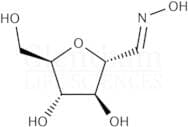
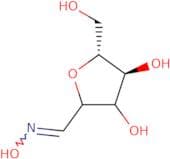
2,5-ANHYDRO-D-MANNOSE OXIM ist eine chemische Verbindung, die durch ihre Oxim-Funktionalgruppe gekennzeichnet ist, die durch die Reaktion eines Aldehyds oder Ketons mit Hydroxylamin entsteht. Diese Verbindung stammt von D-Mannose, einem natürlich vorkommenden Zucker, und weist aufgrund der anhydro-Konfiguration eine fünfgliedrige Ringstruktur auf. Sie ist typischerweise ein weißer bis off-white fester Stoff, der in Wasser und verschiedenen organischen Lösungsmitteln löslich ist, was sie in biochemischen Anwendungen nützlich macht. Die Anwesenheit der Oxim-Gruppe verleiht eine einzigartige Reaktivität, die weitere chemische Modifikationen ermöglicht. 2,5-ANHYDRO-D-MANNOSE OXIM kann in der synthetischen organischen Chemie verwendet werden und könnte potenzielle Anwendungen in der Pharmazie oder als biochemischer Sonden haben. Ihre Stabilität und Reaktivität können durch Umweltfaktoren wie pH und Temperatur beeinflusst werden. Wie bei vielen chemischen Substanzen sind eine ordnungsgemäße Handhabung und Sicherheitsvorkehrungen aufgrund der potenziellen Gefahren, die mit ihrer Verwendung verbunden sind, unerlässlich.
- 2,5-Anhydro-D-mannofuranoseoxime
Sortieren nach
Reinheit (%)
0
100
|
0
|
50
|
90
|
95
|
100
2 Produkte.
2,5-Anhydro-D-mannofuranose oxime
CAS:2,5-Anhydro-D-mannofuranose oxime is a glycosylation inhibitor that prevents the formation of glycosidic bonds. It is used in the synthesis of complex carbohydrates, such as polysaccharides and oligosaccharides. This compound can be fluorinated or methylated to produce 2,5-anhydro-D-mannofuranose oxime derivatives that are useful for click chemistry. 2,5-Anhydro-D-mannofuranose oxime has been shown to inhibit the enzymatic conversion of mannitol to mannose and fructose by blocking the enzyme alpha mannosidase. The high purity of this compound makes it suitable for use in a variety of reactions, including glycobiology studies and carbohydrate modifications.
Formel:C6H11NO5Reinheit:Min. 95%Molekulargewicht:177.16 g/mol