CAS 130348-99-1
:C-reaktives Proteinfragment 201-206
Beschreibung:
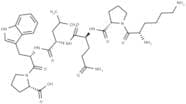
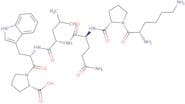
C-reaktives Proteinfragment 201-206, assoziiert mit der CAS-Nummer 130348-99-1, ist ein Peptid, das aus dem C-reaktiven Protein (CRP) abgeleitet ist, einem Akutphasenprotein, das von der Leber als Reaktion auf Entzündungen produziert wird. Dieses spezifische Fragment besteht aus einer Aminosäuresequenz, die eine Rolle in der Immunantwort und der Regulierung von Entzündungen spielt. Charakteristisch ist es hydrophil, was seine Löslichkeit in wässrigen Umgebungen beeinflusst, und es kann immunogene Eigenschaften aufweisen, die potenziell eine Immunantwort hervorrufen. Das Fragment wird häufig im Kontext von entzündlichen Erkrankungen untersucht und kann als Biomarker für verschiedene Zustände, einschließlich Infektionen und Autoimmunerkrankungen, dienen. Seine Struktur und Funktion können Einblicke in die Mechanismen der Entzündung und die Reaktion des Körpers auf Verletzungen oder Infektionen geben. Darüber hinaus sind die Wechselwirkungen des Fragments mit anderen Proteinen und Zellen im Immunsystem von großem Interesse sowohl in klinischen als auch in Forschungsumgebungen.
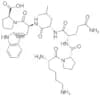
Formel:C38H57N9O8
Synonyme:- C-Reactive Protein (CRP) (201-206)
- H-Lys-Pro-Gln-Leu-Trp-Pro-OH
- C-Reactive Protein (201-206)
Sortieren nach
Reinheit (%)
0
100
|
0
|
50
|
90
|
95
|
100
2 Produkte.
C-Reactive Protein (CRP) (201-206)
CAS:C-Reactive Protein (CRP) (201-206) is the peptide fragment of C-Reactive Protein. CRP is a cardiovascular risk marker and may promote atherogenesis.Formel:C38H57N9O8Reinheit:98%Farbe und Form:SolidMolekulargewicht:767.91C-Reactive Protein (CRP) (201-206)
CAS:C-reactive protein (CRP) is a protein that is synthesized by the liver in response to inflammation. It has a variety of functions, including the regulation of energy metabolism and glycolysis. CRP also has a role in regulating production of neutrophil chemotactic factors, cytokines, and reactive oxygen species. In addition, it binds to zymosan and can be used as an inflammatory marker in medical diagnostics. The amino acid sequence for CRP was first determined in 1971. The primary structure for CRP consists of two alpha helices connected by two beta strands. Its tertiary structure consists of four alpha helices that are connected through loops and turns by three beta sheets with an additional loop connecting one helix to the other strand. CRP contains no disulfide bonds or hydrophobic interactions; instead, it relies on hydrogen bonds to maintain its shape.br>br>Formel:C38H57N9O8Reinheit:Min. 95%Molekulargewicht:767.92 g/mol