CAS 13048-99-2
:Glycin, Butylester, Hydrochlorid (1:1)
Beschreibung:
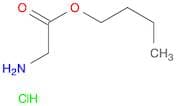
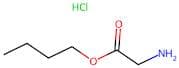
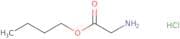
Glycin, Butylester, Hydrochlorid (1:1) ist eine chemische Verbindung, die als Derivat von Glycin, einer Aminosäure, mit einer Butylester-Funktionalgruppe und einer Hydrochlorid-Salzform dient. Diese Verbindung erscheint typischerweise als weißes kristallines Feststoff und ist in Wasser löslich, was für viele Hydrochloridsalze charakteristisch ist. Ihre molekulare Struktur umfasst eine Aminogruppe, eine Carboxylgruppe und eine Esterbindung, die zu ihren Eigenschaften als Zwitterion in Lösung beiträgt. Glycin-Derivate werden häufig in verschiedenen Anwendungen eingesetzt, einschließlich der Pharmazie, wo sie als Zwischenprodukte oder aktive Inhaltsstoffe aufgrund ihrer biologischen Aktivität fungieren können. Die Anwesenheit des Butylesthers erhöht die Lipophilie, was potenziell die Absorption und Verteilung der Verbindung in biologischen Systemen beeinflussen kann. Wie bei vielen chemischen Substanzen sollte der Umgang mit Vorsicht erfolgen, wobei die entsprechenden Sicherheitsrichtlinien beachtet werden sollten, um Risiken im Zusammenhang mit der Exposition zu mindern. Insgesamt ist Glycin, Butylester, Hydrochlorid eine vielseitige Verbindung mit Relevanz sowohl in der Forschung als auch in industriellen Kontexten.
Formel:C6H14ClNO2
InChl:InChI=1/C6H13NO2.ClH/c1-2-3-4-9-6(8)5-7;/h2-5,7H2,1H3;1H
InChI Key:InChIKey=ZPWHHLDCVYWJJO-UHFFFAOYSA-N
SMILES:C(OCCCC)(CN)=O.Cl
Synonyme:- 2-Butoxy-2-oxoethanaminium chloride
- Butyl Glycinate
- Butyl Glycinate Hydrochloride (1:1)
- Butyl glycinate hydrochloride
- Glycine, butyl ester, hydrochloride
- Glycine, butyl ester, hydrochloride (1:1)
- Glycinen-butylesterhydrochloride
- n-Butyl glycinate hydrochloride~H-Gly-OBu.HCl
- GLYCINE N-BUTYL ESTER HYDROCHLORIDE
- GlycinebutylesterHCl
- glycine,butylester,hydrochloride
- GLYCINE N-BUTYL ESTER HYDROCHLORIDE USP/EP/BP
- Einecs 235-924-5
- Weitere Synonyme anzeigen
Sortieren nach
Reinheit (%)
0
100
|
0
|
50
|
90
|
95
|
100
4 Produkte.
GLYCINE N-BUTYL ESTER HYDROCHLORIDE
CAS:Formel:C6H14ClNO2Reinheit:95%Farbe und Form:SolidMolekulargewicht:167.6339Butyl Aminoacetate hydrochloride
CAS:Butyl Aminoacetate hydrochlorideReinheit:95%Molekulargewicht:167.64g/molButyl 2-aminoacetate hydrochloride
CAS:<p>Butyl 2-aminoacetate hydrochloride (BAH) is a synthetic chemical that is used in the synthesis of pharmaceuticals, pesticides, and polymers. BAH has been shown to cause acute kidney injury in rats and mice. It is also known to be involved in the synthesis of esters, which are compounds derived from an acid and an alcohol. The piperidinecarboxylic acid metabolite of BAH is well absorbed by the intestine after oral administration but does not appear to be excreted through urine or bile. A study on pancreatitis patients found that BAH can cause pancreatic inflammation when given intravenously as a supplement. This drug may also have potential for the treatment of chronic kidney disease and Alzheimer's disease due to its ability to inhibit cholesterol biosynthesis and inhibit amyloid beta protein production.</p>Formel:C6H14ClNO2Reinheit:Min. 95%Molekulargewicht:167.63 g/mol