CAS 1331891-93-0
:Sortieren nach
Reinheit (%)
0
100
|
0
|
50
|
90
|
95
|
100
3 Produkte.
Paracetamol-cysteine TFA
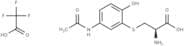
CAS:FSG67 is a GPAT and GPAM inhibitor that attenuates liver regeneration after acetaminophen overdose by altering GSK3β and Wnt/β-catenin signaling.Formel:C13H15F3N2O6SFarbe und Form:SolidMolekulargewicht:384.333-Cysteinylacetaminophen Trifluoroacetic Acid Salt
CAS:Kontrolliertes ProduktStability Hygroscopic
Applications 3-Cysteinylacetaminophen Trifluoroacetic Acid Salt is a metabolite of Acetaminophen (A161220), an analgesic and antipyretic agent used as a pain reliever to treat headache, muscle aches, and arthritis (1,2,3).
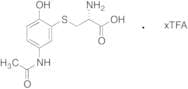
References (1) McGill, M. R. and Jaeschke, H. Pharm Res. 30, 2174 (2013)(2) Fairbrother, J.E., et al.: Anal. Profiles Drug Subs., 3, 1 (1974) (3) Hinson, J.A., et al.: Rev. Biochem. Toxicol., 2, 103 (1980)Formel:C11H14N2O4S·C2HF3O2Farbe und Form:Off-White To Dark GreyMolekulargewicht:384.333-Cysteinylacetaminophen trifluoroacetic acid salt
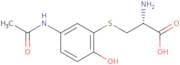
CAS:Acetaminophen is a common pain reliever and fever reducer. It is available over-the-counter in many countries. Acetaminophen is a member of the class of drugs known as analgesic, antipyretic, and anti-inflammatory drugs (APAP). The drug has been shown to be effective for acute pain relief, but not for chronic pain. Acetaminophen has also been found to be an effective analgesic when taken at high doses (above 1000 mg per day) for more than one week. In vivo studies have shown that acetaminophen inhibits mitochondrial membrane potential in hk-2 cells and cd-1 mice. This inhibition leads to apoptosis and cell death. Acetaminophen is not associated with serious side effects when used at the recommended dose, although it can lead to liver damage if taken in large quantities or on a prolonged basis.Formel:C11H14N2O4S·xC2HO2F3Reinheit:(%) Min. 95%Farbe und Form:Brown PowderMolekulargewicht:270.31 g/mol