CAS 13463-67-7
:Titania
Beschreibung:
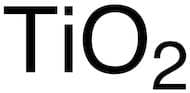
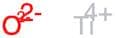
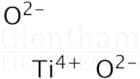
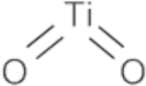
Titania, auch bekannt als Titandioxid, ist eine weit verbreitete anorganische Verbindung mit der chemischen Formel TiO2. Es zeichnet sich durch seinen hohen Brechungsindex und die starke Absorption von ultraviolettem Licht aus, was es zu einem effektiven weißen Pigment in Farben, Beschichtungen, Kunststoffen und Kosmetika macht. Titania existiert in mehreren kristallinen Formen, wobei die häufigsten Anatase und Rutil sind, die jeweils unterschiedliche Eigenschaften aufweisen. Rutil ist bekannt für seine überlegene Opazität und Haltbarkeit, während Anatase häufig in photocatalytischen Anwendungen aufgrund ihrer größeren Oberfläche und Reaktivität verwendet wird. Titania ist ungiftig und umweltfreundlich, was zu seiner Beliebtheit in verschiedenen Anwendungen, einschließlich Lebensmittelprodukten und Sonnenschutzmitteln, beiträgt. Darüber hinaus hat es halbleitende Eigenschaften, die seine Verwendung in der Photokatalyse und der Umwandlung von Solarenergie ermöglichen. Titania wird auch in der Herstellung von Keramiken und als Füllstoff in der Gummi- und Papierindustrie verwendet. Seine Stabilität, Beständigkeit gegen Verfärbung und Fähigkeit, Licht zu streuen, machen es zu einem vielseitigen Material sowohl in industriellen als auch in Konsumgütern.
Formel:O2Ti
InChl:InChI=1S/2O.Ti
InChI Key:InChIKey=GWEVSGVZZGPLCZ-UHFFFAOYSA-N
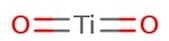
SMILES:[Ti](=O)=O
Synonyme:- 1007Mc
- 1008Si
- 1120Zs95A8
- 1385Rn59
- 1500D
- 18Nr-Ao
- 234Da
- 500Hd
- 5480Mr
- 5484Wj
- 710T
- 760T
- 7910Dl
- 7M3001N
- 8180Tc
- 9W1100
- AgriTitan
- Ajantox
- CSB
- CZ
- Cab-O-Ti
- Cg-T
- Cr-El
- Cs-C
- Csb-M
- Dif-Ab-10W
- Finntitan
- Flamenco
- Fs-A
- Hrc-Ii
- Isoflux
- It-S
- Jhnm-W
- Jrnc
- Jupiter
- Kowet
- Kronos
- MCH
- Micromarimo
- New-Sp
- Nt-C
- Nufil
- Nw-Tio-A
- R706S
- REX
- RLX
- Rayox
- Rdi-S
- Rlx-A
- Rps-V
- Rr-Bc
- Rtipbc
- Rtspnb
- Rtt-Mibk
- Rutile
- Sachtopore
- Sad-M
- Smf-Lv
- Spp-M
- Srd-K
- Srd-M
- Srd-Pgme
- Srd-W
- Ssp-M
- T-Cote
- T-Lalt
- TS
- Ti-O-N
- Ti-Pure
- Ti-W
- TiO<sub>2</sub>-SDS
- TioTio
- Titan(Iv)-Oxid
- Titandioxid
- Titania
- Titanox
- Tofix-P
- Tto-S-1
- UT-White
- UV-Titan
- Unitane
- Vhp-Dcs
- WD-Ti50
- Zxl-Cqs
- C.I. Pigment White 6
- C.I. 77891
- Titanium dioxide
- dioxotitanium
- titanium white
- Titanium dioxide,anatase
- Titanium peroxide (TiO2)
- Titanium Dioxide Anatase
- Titanium oxide (TiO2)
- Titanium dioxide,rutile
- Tilac D
- Titanium(Ⅳ)oxide
- TiLox-Black
- Titanium Dioxide food grade
- Pigment Black 35
- Rutiox CR
- Titanium(IV)oxide
- Titanium (IV) dioxide
- pigment white
- rutile titanium dioxide
- Titanium Oxide
- anatase titanium dioxide
- Titanium dioxide
- Weitere Synonyme anzeigen
Sortieren nach
Reinheit (%)
0
100
|
0
|
50
|
90
|
95
|
100
Titanium(IV) Oxide, AEROXIDE® P 25
CAS:Formel:TiO2Farbe und Form:White to Almost white powder to crystalMolekulargewicht:79.87Titanium(IV) oxide, high surface area, 99.9% (metals basis)
CAS:Photocatalyst, catalyst, catalyst supportTitanium(IV) oxide is used in paints, varnishes, paper, plastics printing inks, sun screen, fibers, rubber, cosmetic products, anti-fogging coatings, foodstuffs, pure titanium, glass, glass ceramics, memristor, electrical ceramics, catalysts, electric conductFormel:O2TiReinheit:99.9%Molekulargewicht:79.87Titanium(IV) oxide, 20-36% in H{2}O colloidal dispersion
CAS:UV protection in clear coatingsFormel:O2TiFarbe und Form:DispersionMolekulargewicht:79.87Titanium(IV) oxide, Puratronic™, 99.995% (metals basis)
CAS:Titanium(IV) oxide is used in paints, varnishes, paper, plastics printing inks, sun screen, fibers, rubber, cosmetic products, anti-fogging coatings, foodstuffs, pure titanium, glass, glass ceramics, memristor, electrical ceramics, catalysts, electric conductors and chemical intermediates. It exhFormel:O2TiReinheit:99.995%Farbe und Form:White, PowderMolekulargewicht:79.87Titanium(IV) oxide, sintered lumps, 99.5%
CAS:Titanium(IV) oxide, sintered lumps, 99.5%
Formel:TiO2Reinheit:99.5%Farbe und Form:white lumpMolekulargewicht:79.90Titanium(IV) oxide (99.99+%-Ti) PURATREM
CAS:Titanium(IV) oxide (99.99+%-Ti) PURATREM
Formel:TiO2Reinheit:(99.99+%-Ti)Farbe und Form:white pwdr.Molekulargewicht:79.90Titanium Dioxide
CAS:Titanium oxidesFormel:O2TiFarbe und Form:White PowderMolekulargewicht:79.9 g/molRef: IN-DA003AN9
25kgNachfragen5g25,00€25g28,00€100g28,00€500g73,00€6000g162,00€10000g305,00€10kg495,00€500kg12.131,00€Titanium(IV) oxide, 99+%
CAS:Titanium(IV) oxide, 99+%
Formel:TiO2Reinheit:99+%Farbe und Form:1.0-1.3 micron white pwdr.Molekulargewicht:79.90Titanium dioxide
CAS:Formel:TiO2Reinheit:≥ 98.0%Farbe und Form:White to almost white powderMolekulargewicht:79.87Titanium dioxide, 99%, Ph. Eur., BP, USP grade
CAS:Formel:TiO2Reinheit:98.0 - 100.5 % (EP)Farbe und Form:White to almost white powderMolekulargewicht:79.87Titanium(IV) oxide Powder 220 nm, 95%
CAS:Formel:TiO2Reinheit:≥ 95.0%Farbe und Form:White powderMolekulargewicht:79.90Titanium(IV) oxide, 99.999%
CAS:Formel:TiO2Reinheit:≥ 99.999%Farbe und Form:White to off-white powderMolekulargewicht:79.90Titanium(IV) oxide, 99.9%
CAS:Formel:TiO2Reinheit:≥ 99.9%Farbe und Form:White to grey solid piecesMolekulargewicht:79.90Titanium(IV) oxide, 99.5%
CAS:Formel:TiO2Reinheit:≥ 99.5%Farbe und Form:White to off-white powderMolekulargewicht:79.90NorPro(TM) Titanium(IV) oxide catalyst support
CAS:Formel:TiO2Farbe und Form:White to light-grey pelletsMolekulargewicht:79.90Titanium(IV) oxide-Nano Powder (anatase); 99.9%
CAS:Formel:TiO2Reinheit:≥ 99.9%Farbe und Form:White powderMolekulargewicht:79.90Titanium Dioxide
CAS:Kontrolliertes ProduktApplications Titanium Dioxide is an effective bacteriocide when it is irradiated with UV-light, causing lipid peroxidation. Also commonly used in paint, coating materials and cosmetics due to its low toxicity.
References Maness, P. et al.: App. Env. Microbio., 65, 4094 (1999); Wang, J. et al.: Mut. Res., 628, 99 (2007);Formel:O2TiFarbe und Form:NeatMolekulargewicht:79.87Titanium (IV) oxide - Rutile nanopowder ca. 25 nm particle size
CAS:Rutile titanium dioxide is a naturally occurring mineral that is composed of titanium (IV) oxide and oxygen. Rutile TiO2 nanopowder has shown to be an effective catalyst for the decomposition of organic matter in wastewater treatment, due to its strong reactive properties. Rutile TiO2 nanopowder can also be used as an additive in polymerase chain reactions (PCR). It has been shown to have a number of physiological effects, such as changes in the expression of genes related to the pathogenesis of certain cancers. The mechanism by which this occurs is not yet fully understood and requires further research. Rutile TiO2 nanopowder is produced by laser ablation and has been used for analytical methods such as electrochemical impedance spectroscopy. The toxicity of rutile TiO2 nanopowder has been studied extensively with regards to its effects on animals, humans, and plants.Formel:TiO2Reinheit:(%) Min. 98%Farbe und Form:White Off-White PowderMolekulargewicht:79.87 g/mol