CAS 13529-27-6
:2-Furaldehyd, Diethylacetal
Beschreibung:
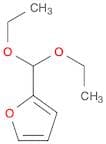
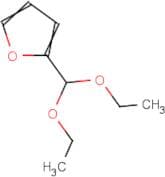
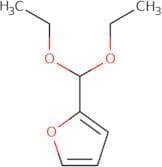
2-Furaldehyd, Diethylacetal, auch bekannt als Diethyl-2-Furoat, ist eine organische Verbindung, die durch ihre acetalische funktionelle Gruppe, die von 2-Furaldehyd abgeleitet ist, gekennzeichnet ist. Sie erscheint typischerweise als farblose bis blassgelbe Flüssigkeit mit einem angenehmen, süßen Geruch, der an Früchte erinnert. Diese Verbindung ist in organischen Lösungsmitteln wie Ethanol und Ether löslich, hat jedoch eine begrenzte Löslichkeit in Wasser aufgrund ihrer hydrophoben Natur. Sie wird hauptsächlich in der Synthese verschiedener chemischer Zwischenprodukte und als Aromastoff in der Lebensmittelindustrie verwendet. Die Verbindung ist bekannt für ihre Stabilität unter normalen Bedingungen, obwohl sie in Gegenwart von Feuchtigkeit hydrolysiert werden kann und zu 2-Furaldehyd und Ethanol zurückkehrt. Sicherheitsdaten zeigen, dass sie mit Vorsicht behandelt werden sollte, da sie Haut- und Augenreizungen verursachen kann. Insgesamt wird 2-Furaldehyd, Diethylacetal für seine aromatischen Eigenschaften und Vielseitigkeit in der organischen Synthese geschätzt.
Formel:C9H14O3
InChl:InChI=1S/C9H14O3/c1-3-10-9(11-4-2)8-6-5-7-12-8/h5-7,9H,3-4H2,1-2H3
InChI Key:InChIKey=SEILDMUKBMYIEZ-UHFFFAOYSA-N
SMILES:C(OCC)(OCC)C1=CC=CO1
Synonyme:- 2-(Diethoxymethyl)furan
- 2-Furaldehyde-diethylacetal
- 2-Furancarboxaldehyde diethyl acetal
- 2-Furfural diethyl acetal
- Furan, 2-(diethoxymethyl)-
- Furfural diethyl acetal
- 2-Furaldehyde, diethyl acetal
Sortieren nach
Reinheit (%)
0
100
|
0
|
50
|
90
|
95
|
100
5 Produkte.
2-Furaldehyde Diethyl Acetal
CAS:Formel:C9H14O3Reinheit:>98.0%(GC)Farbe und Form:Colorless to Orange to Green clear liquidMolekulargewicht:170.212-Furaldehyde diethyl acetal
CAS:2-Furaldehyde diethyl acetalReinheit:98%Molekulargewicht:170.21g/mol2-Furaldehyde diethyl acetal
CAS:Formel:C9H14O3Reinheit:98%Farbe und Form:LiquidMolekulargewicht:170.2082-Furaldehyde diethylacetal
CAS:2-Furaldehyde diethylacetal is a synthetic compound that has been used in the synthesis of calcium carbonate. It is also a potent inhibitor of p. aeruginosa and other bacteria, as well as organic acids and halogen compounds. It reacts with hydroxy groups to form aldehydes, which are then oxidized to form carboxylic acid derivatives. The reaction mechanism for this compound is not well understood, but it is thought that the activation energy for the reaction may be low due to the presence of a furfural functional group.Formel:C9H14O3Reinheit:Min. 95%Molekulargewicht:170.21 g/mol