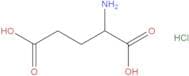
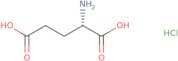
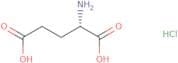
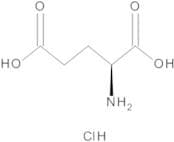
CAS 138-15-8
:L(+)-Glutaminsäurehydrochlorid
Beschreibung:
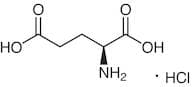
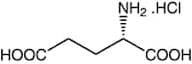
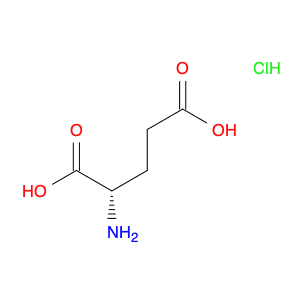
L(+)-Glutaminsäurehydrochlorid, mit der CAS-Nummer 138-15-8, ist das Hydrochlorid des L-Glutaminsäure, einer Aminosäure, die eine entscheidende Rolle im Zellstoffwechsel und in der Neurotransmission spielt. Diese Verbindung ist typischerweise ein weißes kristallines Pulver, das in Wasser löslich ist, was sie in verschiedenen Anwendungen nützlich macht, einschließlich der Aromatisierung von Lebensmitteln und als Nahrungsergänzungsmittel. L-Glutaminsäure wird als nicht-essentielle Aminosäure klassifiziert, was bedeutet, dass sie vom Körper synthetisiert werden kann. Sie ist bekannt für ihre Rolle als erregender Neurotransmitter im zentralen Nervensystem und trägt zu kognitiven Funktionen wie Lernen und Gedächtnis bei. Neben ihrer biologischen Bedeutung wird L(+)-Glutaminsäurehydrochlorid häufig in der pharmazeutischen Industrie und in Forschungseinrichtungen eingesetzt. Ihr Sicherheitsprofil ist im Allgemeinen günstig, obwohl eine übermäßige Einnahme bei empfindlichen Personen zu unerwünschten Wirkungen führen kann. Insgesamt wird diese Verbindung für ihre funktionalen Eigenschaften sowohl in biologischen als auch in industriellen Kontexten geschätzt.
Formel:C5H10ClNO4
InChl:InChI=1/C5H9NO4.ClH/c6-3(5(9)10)1-2-4(7)8;/h3H,1-2,6H2,(H,7,8)(H,9,10);1H/t3-;/m0./s1
InChI Key:InChIKey=RPAJSBKBKSSMLJ-DFWYDOINSA-N
SMILES:[C@H](CCC(O)=O)(C(O)=O)N.Cl
Synonyme:- 2-Aminopentanedioic acid hydrochloride
- <span class="text-smallcaps">L</span>(+)-Glutamic acid hydrochloride
- <span class="text-smallcaps">L</span>-Glutamic acid monohydrochloride
- <span class="text-smallcaps">L</span>-Glutamic acid, hydrochloride (1:1)
- Acidalin
- Acidogen
- Acidoride
- Acidothyn
- Acidulen
- Acidulin
- Aciglumin
- Aclor
- Acridogen
- Acridoride
- Antalka
- Gastuloric
- Glusatin
- Glutamic Acid Hydrochloride (1:1)
- Glutamic acid hydrochloride
- Glutamic acid monohydrochloride
- Glutamic acid, hydrochloride, <span class="text-smallcaps">L</span>-
- Glutamidin
- Glutan HCl
- Glutan Hydrochloric
- Glutan hydrochloride
- Glutasin
- Hydrionic
- Hypochylin
- L-Glutamic Acid HCL
- Muriamic
- NSC 9239
- Pepsdol
- Pepsidol
- Glutamic acid, hydrochloride, L-
- L-Glutamic acid, hydrochloride (1:1)
- L-(+)-Glutamic acid hydrochloride
- L-Glutamic acid, hydrochloride
- L-Glutamic acid hydrochloride
- L-(+)-Glutamic Acid Hydrochloride
- GLUTAMIC ACID HCL
- L-GLU HCL
- L-2-AMINOGLUTARIC ACID HYDROCHLORIDE
- 2-aminopentanedioicacidhydrochloride
- H-GLU-OH HCL
- [S]-2-AMINOPENTANEDIOIC ACID HYDROCHLORIDE
- (S)-2-AMINOGLUTARIC ACID HYDROCHLORIDE
- Weitere Synonyme anzeigen
Sortieren nach
Reinheit (%)
0
100
|
0
|
50
|
90
|
95
|
100
11 Produkte.
L-Glutamic Acid Hydrochloride
CAS:Formel:C5H9NO4·HClReinheit:>98.0%(T)(HPLC)Farbe und Form:White to Almost white powder to crystalMolekulargewicht:183.59L-Glutamic acid hydrochloride, 99%
CAS:L-Glutamic acid hydrochloride is used as a digestive aid. It is used in cell culture as a component of MEM non-essential amino acids solution. It has been used as a nitrogen source in the culture of Aspergillus fumigatus NRRL 2436 for fumagillin production. This Thermo Scientific Chemicals brand proFormel:C5H10ClNO4Reinheit:99%Farbe und Form:White, Crystals or powder or crystalline powderMolekulargewicht:183.59L-Glutamic Acid Hydrochloride
CAS:Glutamic acid and its saltsFormel:C5H9NO4·HCIFarbe und Form:PowderMolekulargewicht:286.96545Glutamic acid, hydrochloride
CAS:Formel:C5H10ClNO4Reinheit:98%Farbe und Form:SolidMolekulargewicht:183.5902L-Glutamic acid hydrochloride
CAS:Formel:C5H9NO4HClReinheit:(Titration) ≥ 99.0%Farbe und Form:White to almost white powderMolekulargewicht:183.59L-Glutamic acid hydrochloride
CAS:L-Glutamic acid hydrochloride is a high quality reagent that is used as an intermediate in the production of fine chemicals. It is also used as a useful scaffold for the synthesis of valuable compounds and as a useful building block for research chemicals. L-Glutamic acid hydrochloride can be used in reactions to produce versatile building blocks, reaction components, and other speciality chemicals.Formel:C5H10ClNO4Reinheit:Min. 98 Area-%Molekulargewicht:183.59 g/molL-(+)-Glutamic acid HCl
CAS:L-(+)-Glutamic acid HCl is a monosodium salt that belongs to the group of water-soluble organic acids. It has been used as a food additive and in wastewater treatment, as well as for the production of polymers and pharmaceuticals. Glutamate can be converted to glutamic acid by hydrolysis with sodium hydroxide or other strong bases. Glutamic acid is an important biochemical precursor in the synthesis of proteins, peptides, and nucleic acids. It also functions as a neurotransmitter in the central nervous system. L-(+)-glutamic acid HCl has been shown to induce apoptosis in human HL-60 cells by increasing reactive oxygen species (ROS) levels and activating caspase-3 activity in these cells. The crystalline cellulose used in this study was obtained from cellulose powder (Avicel PH101).Formel:C5H9NO4·HClReinheit:Min. 95%Farbe und Form:White PowderMolekulargewicht:183.59 g/molL-Glutamic Acid Hydrochloride
CAS:Kontrolliertes ProduktFormel:C5H9NO4·ClHFarbe und Form:NeatMolekulargewicht:183.59