CAS 138-52-3
:Salicin
Beschreibung:
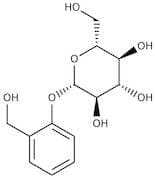
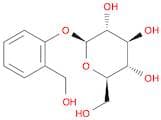
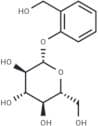
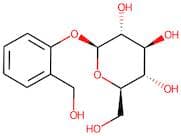
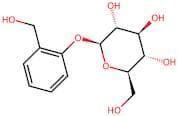
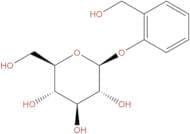
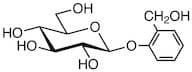
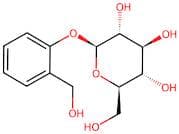
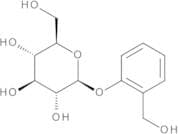
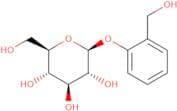
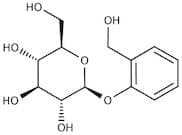
Salicin ist eine natürlich vorkommende Verbindung, die als phenolisches Glycosid klassifiziert ist und hauptsächlich in der Rinde von Weidenbäumen und anderen Pflanzen vorkommt. Seine chemische Struktur besteht aus einem Glukosemolekül, das mit Salicylalkohol verbunden ist, was zu seinen medizinischen Eigenschaften beiträgt. Salicin ist bekannt für seine schmerzlindernden und entzündungshemmenden Wirkungen und ist ein Vorläufer für die Synthese von Salicylsäure, einem wichtigen Bestandteil von Aspirin. Die Substanz ist typischerweise ein weißes, kristallines Pulver, das in Wasser und Alkohol löslich ist und einen leicht bitteren Geschmack hat. Salicin wird häufig in der Kräutermedizin verwendet und wurde auf seine potenziellen Vorteile bei der Behandlung von Zuständen wie Schmerzen und Fieber untersucht. Darüber hinaus hat es antioxidative Eigenschaften, die zu seinen therapeutischen Wirkungen beitragen können. Obwohl es in moderaten Mengen allgemein als sicher gilt, kann übermäßiger Konsum zu Nebenwirkungen führen, die denen von Salicylaten ähnlich sind, einschließlich gastrointestinaler Beschwerden. Insgesamt stellt Salicin eine wichtige Verbindung sowohl in der traditionellen als auch in der modernen Pharmakologie dar.
Formel:C13H18O7
InChl:InChI=1S/C13H18O7/c14-5-7-3-1-2-4-8(7)19-13-12(18)11(17)10(16)9(6-15)20-13/h1-4,9-18H,5-6H2/t9-,10-,11+,12-,13-/m1/s1
InChI Key:InChIKey=NGFMICBWJRZIBI-UJPOAAIJSA-N
SMILES:O([C@@H]1O[C@H](CO)[C@@H](O)[C@H](O)[C@H]1O)C2=C(CO)C=CC=C2
Synonyme:- 1-β-<span class="text-smallcaps">D</span>-Glucosyloxy-2-hydroxymethylbenzene
- 1-β-D-Glucosyloxy-2-hydroxymethylbenzene
- 2-(Hydroxymethyl)Phenyl Hexopyranoside
- 2-(Hydroxymethyl)phenyl β-<span class="text-smallcaps">D</span>-glucopyranoside
- 2-(Hydroxymethyl)phenyl-β-D-glucopyranoside
- 2-(hydroxymethyl)phenyl beta-D-altropyranoside
- 2-(hydroxymethyl)phenyl beta-D-glucopyranoside
- 2-(hydroxymethyl)phenyl beta-L-glucopyranoside
- <span class="text-smallcaps">D</span>-Salicin
- D-Salicin (1.05055)
- Nsc 5751
- Salicin
- Salicine
- Salicoside
- Salicyl alcohol glucoside
- Saligenin β-<span class="text-smallcaps">D</span>-glucopyranoside
- Saligenin β-D-glucopyranoside
- White Willow Bark Extract
- White Willow Bark P.E.
- alpha-hydroxy-o-tolyl beta-D-glucopyranoside
- o-(Hydroxymethyl)phenyl β-<span class="text-smallcaps">D</span>-glucopyranoside
- o-(Hydroxymethyl)phenyl β-D-glucopyranoside
- α-Hydroxy-o-tolyl-β-D-glucopyranosid
- α-hydroxy-o-tolyl β-D-glucopyranoside
- β-<span class="text-smallcaps">D</span>-Glucopyranoside, 2-(hydroxymethyl)phenyl
- β-D-Glucopyranoside d'α-hydroxy-o-tolyle
- β-D-Glucopyranoside, 2-(hydroxymethyl)phenyl
- β-D-glucopiranosido de α-hidroxi-o-tolilo
- Weitere Synonyme anzeigen
Sortieren nach
Reinheit (%)
0
100
|
0
|
50
|
90
|
95
|
100
20 Produkte.
D-(-)-Salicin, 99%
CAS:Salicin is used as an analgesic and antipyretic. It is also used as a substrate for beta-glucosidase and an inhibitor of Cox. It finds application as an anti-inflammatory agent. It is involved in antipyretic action without causing gastric injury. This Thermo Scientific Chemicals brand product was orFormel:C13H18O7Reinheit:99%Farbe und Form:Crystals or powder or crystalline powder, White to pale creamMolekulargewicht:286.28D-(-)-Salicin
CAS:D-(-)-Salicin analytical standard provided with w/w absolute assay, to be used for quantitative titration.Formel:C13H18O7Reinheit:(HPLC) ≥99%Farbe und Form:PowderMolekulargewicht:286.28SALICIN CRS
CAS:SALICIN CRSFormel:C13H18O7Farbe und Form:Crystalline Powder. White. Powder.Molekulargewicht:286.2778D-Salicin
CAS:Other glycosides, natural or reproduced by synthesis, and their salts, ethers, esters and other derivativesFormel:C13H18O7Farbe und Form:White Off-White PowderMolekulargewicht:286.10525β-D-Glucopyranoside, 2-(hydroxymethyl)phenyl
CAS:Formel:C13H18O7Reinheit:98%Farbe und Form:SolidMolekulargewicht:286.2778Salicin
CAS:Salicin (Salicine), a phenol β-glycoside produced from willow bark, shows anti-inflammatory functions.Formel:C13H18O7Reinheit:98.2% - 99.86%Farbe und Form:White Crystals Or PowderMolekulargewicht:286.28D-Salicin
CAS:Formel:C13H18O7Reinheit:≥ 98.0%Farbe und Form:White to off-white powder or crystalsMolekulargewicht:286.28Salicin
CAS:Formel:C13H18O7Reinheit:>98.0%(HPLC)Farbe und Form:White to Almost white powder to crystalMolekulargewicht:286.28Salicin
CAS:Natural glycosideFormel:C13H18O7Reinheit:≥ 98.0 % (HPLC)Farbe und Form:PowderMolekulargewicht:286.28D-Salicin
CAS:Applications Salicin is an anti-inflammatory agent produced by the bark of a willow tree. Analgesic.
References Schmid, B. et al.: Eur J Pharmacol., 57, 387 (2001);Formel:C13H18O7Farbe und Form:WhiteMolekulargewicht:286.28D-Salicin
CAS:D-Salicin is a naturally occurring compound, classified as a biologically active glycoside. It is acquired from the bark of willow trees, primarily species within the genus Salix. The primary mode of action of D-Salicin involves its metabolic conversion into salicylic acid within the human body. This conversion occurs in the gastrointestinal tract and bloodstream, ultimately displaying effects similar to non-steroidal anti-inflammatory drugs (NSAIDs).Formel:C13H18O7Reinheit:Min. 98 Area-%Farbe und Form:White Off-White PowderMolekulargewicht:286.28 g/molD-Salicin, natural
CAS:D-Salicin is a naturally occurring anti-inflammatory compound, which is derived from the bark of willow trees, primarily of the genus Salix. As a prodrug, D-Salicin is metabolized into salicylic acid in the body, where it acts by inhibiting the cyclooxygenase (COX) enzymes. This inhibition leads to a reduction in the synthesis of pro-inflammatory prostaglandins and thromboxanes, thereby exerting its anti-inflammatory and analgesic effects.
Formel:C13H18O7Reinheit:Min. 90.0 Area-%Molekulargewicht:286.28 g/molRef: 3D-S-1498
-Unit-kgkgNachfragen1kgNachfragen5kgNachfragen250gNachfragen500gNachfragen2500gNachfragenD-(-)-Salicin extrapure
CAS:Formel:C13H18O7Farbe und Form:White, Crystalline powder, Clear, ColourlessMolekulargewicht:286.28(2R,3S,4S,5R,6S)-2-(Hydroxymethyl)-6-(2-(hydroxymethyl)phenoxy)tetrahydro-2H-pyran-3,4,5-triol
CAS:Formel:C13H18O7Reinheit:95.0%Farbe und Form:Solid, White to grey powderMolekulargewicht:286.28