CAS 141-53-7
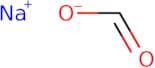
:Natriumformiat
Beschreibung:
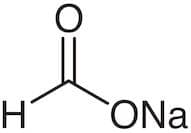
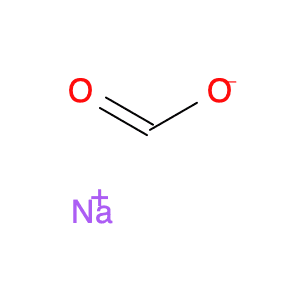
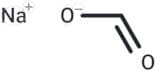
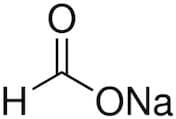
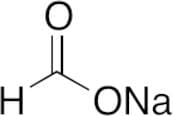
Natriumformiat, mit der chemischen Formel HCOONa und der CAS-Nummer 141-53-7, ist das Natriumsalz der Ameisensäure. Es erscheint als weißes, hygroskopisches Kristallpulver, das in Wasser löslich ist und einen leicht salzigen Geschmack hat. Natriumformiat wird häufig in verschiedenen Anwendungen eingesetzt, darunter als Puffer in der biochemischen Forschung, als Konservierungsmittel in der Lebensmittelindustrie und als Enteisungsmittel für Straßen. Es kann auch als Quelle für Ameisensäure in der chemischen Synthese dienen. Die Substanz wird allgemein als ungiftig angesehen, sollte jedoch mit Vorsicht behandelt werden, um Haut- und Augenreizungen zu vermeiden. In Bezug auf seine chemischen Eigenschaften kann Natriumformiat bei erhöhten Temperaturen einer thermischen Zersetzung unterliegen, wobei Gase wie Kohlendioxid freigesetzt werden. Seine Fähigkeit, als Reduktionsmittel zu wirken, macht es in bestimmten industriellen Prozessen nützlich. Insgesamt ist Natriumformiat eine vielseitige Verbindung mit erheblichem Nutzen in mehreren Bereichen, einschließlich Chemie, Lebensmittelwissenschaft und Umweltanwendungen.
Formel:CH2O2·Na
InChl:InChI=1S/CH2O2.Na/c2-1-3;/h1H,(H,2,3);
InChI Key:InChIKey=ZDPALFHDPFYJDY-UHFFFAOYSA-N
SMILES:C(O)=O.[Na]
Synonyme:- Formate, Sodium
- Formiate de sodium
- Formiato De Sodio
- Formic acid, sodium salt (1:1)
- NA-Amasil
- Natriumformiat
- Natriumformiat, Techn.
- Sodium Formate
- Formic acid, sodium salt
Sortieren nach
Reinheit (%)
0
100
|
0
|
50
|
90
|
95
|
100
12 Produkte.
Sodium Formate
CAS:Formel:CHNaO2Reinheit:>97.0%(T)Farbe und Form:White to Almost white powder to crystalMolekulargewicht:68.01Sodium formate, ACS, 99.0% min
CAS:Reducing agent, buffering agent, complexing agent, Noble metal precipitantSodium formate is used in analytical chemistry to precipitate noble metals. It is used for tanning leather, for dyeing and printing fabrics. It acts as an electroplating agent, an acidulant in the textile industry, a reducingFormel:CHNaO2Reinheit:99.0%Molekulargewicht:68.01Sodium formate, 98%
CAS:Sodium formate is used in analytical chemistry to precipitate noble metals. It is used for tanning leather, for dyeing and printing fabrics. It acts as an electroplating agent, an acidulant in the textile industry, a reducing agent, a mordant, a complexing agent. Further, it is used in photographicFormel:CHNaO2Reinheit:98%Farbe und Form:White or pale cream, Crystals or powder or crystalline powderMolekulargewicht:68.01Formic acid, sodium salt (1:1)
CAS:Formel:CHNaO2Reinheit:98%Farbe und Form:SolidMolekulargewicht:68.0072Sodium formate
CAS:Formel:NaOOCHReinheit:≥ 97.0% (dried basis)Farbe und Form:White to off-white crystalline poweder or crystalsMolekulargewicht:68.01Sodium formate
CAS:Sodium formate has antiviral and antifungal properties, can inhibit carbonic anhydrase, and can also be used as a biochemical buffer.Formel:CHNaO2Farbe und Form:SolidMolekulargewicht:68.01Sodium Formate
CAS:Formel:CHNaO2Reinheit:97%Farbe und Form:Solid, Crystalline Powder or PowderMolekulargewicht:68.007Sodium Formate extrapure AR, ACS
CAS:Formel:HCOONaReinheit:min. 99%Farbe und Form:White, Crystalline powder, Clear, ColourlessMolekulargewicht:68.01Sodium Formate pure, 98%
CAS:Formel:CHNaO2Reinheit:min. 98%Farbe und Form:White, Crystalline powder, Clear, ColourlessMolekulargewicht:68.01Formic acid sodium salt
CAS:Formic acid is a carboxylic acid that is found in the form of calcium formate. Formic acid has synergistic effects with many other drugs, including calcium, and it is often used as a model system for studying the effects of various drugs on biological systems. The constant pressure analytical method was developed to determine the concentration of formic acid in blood samples and can be used as an analytical tool for biocompatible polymers. Formic acid has been shown to inhibit bowel disease by inhibiting certain enzymes involved in the disease process. It also has inhibitory properties against complex enzymes such as lipases and proteases. Formic acid undergoes a phase transition from liquid to gas at a temperature of about -76°C (-108°F).
Formel:HCOONaReinheit:Min. 95%Farbe und Form:White PowderMolekulargewicht:68.01 g/mol