CAS 14197-60-5
:Ginsenosid Rg3
Beschreibung:
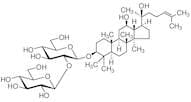
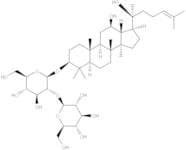
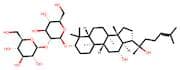
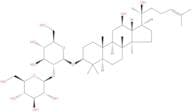
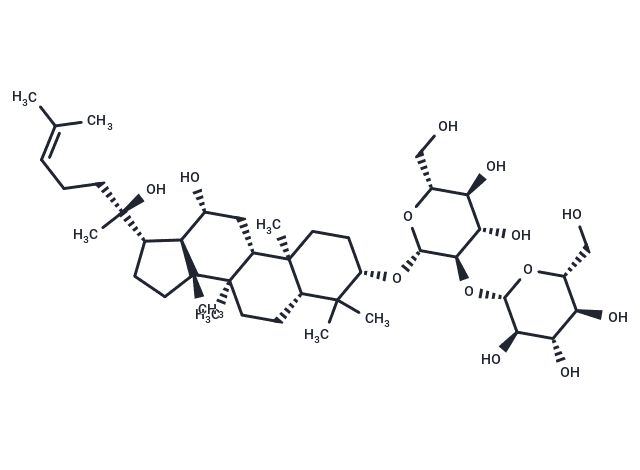
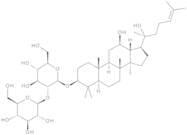
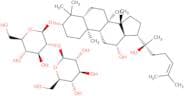
Ginsenosid Rg3 ist eine natürliche Verbindung, die als Triterpenoid-Saponin klassifiziert ist und hauptsächlich in Ginseng, insbesondere in Panax ginseng, vorkommt. Es ist bekannt für seine potenziellen pharmakologischen Eigenschaften, einschließlich entzündungshemmender, antioxidativer und krebsbekämpfender Wirkungen. Ginsenosid Rg3 existiert in zwei isomeren Formen, Rg3(S) und Rg3(R), die unterschiedliche biologische Aktivitäten aufweisen können. Die Verbindung hat eine komplexe molekulare Struktur, die durch ein steroides Rückgrat mit mehreren Hydroxylgruppen gekennzeichnet ist, was zu ihrer Löslichkeit und Reaktivität beiträgt. Ginsenosid Rg3 wird häufig auf seine Rolle bei der Verbesserung der Immunfunktion und seine potenziellen neuroprotektiven Wirkungen untersucht. Darüber hinaus wurde es auf seine Fähigkeit untersucht, verschiedene Signalwege zu modulieren, was es zu einem interessanten Thema sowohl in der traditionellen Medizin als auch in der modernen Pharmakologie macht. Sein Sicherheitsprofil und therapeutisches Potenzial werden weiterhin in klinischen und präklinischen Studien untersucht, was seine Relevanz für Gesundheit und Wohlbefinden unterstreicht.
Formel:C42H72O13
InChl:InChI=1S/C42H72O13/c1-21(2)10-9-14-42(8,51)22-11-16-41(7)29(22)23(45)18-27-39(5)15-13-28(38(3,4)26(39)12-17-40(27,41)6)54-37-35(33(49)31(47)25(20-44)53-37)55-36-34(50)32(48)30(46)24(19-43)52-36/h10,22-37,43-51H,9,11-20H2,1-8H3/t22-,23+,24+,25+,26-,27+,28-,29-,30+,31+,32-,33-,34+,35+,36-,37-,39-,40+,41+,42-/m0/s1
InChI Key:InChIKey=RWXIFXNRCLMQCD-JBVRGBGGSA-N
SMILES:C[C@]12[C@@]3(C)[C@@]([C@@]([C@@](CCC=C(C)C)(C)O)(CC3)[H])([C@H](O)C[C@@]1([C@]4(C)[C@@](CC2)(C(C)(C)[C@@H](O[C@H]5[C@H](O[C@@H]6O[C@H](CO)[C@@H](O)[C@H](O)[C@H]6O)[C@@H](O)[C@H](O)[C@@H](CO)O5)CC4)[H])[H])[H]
Synonyme:- (20S)-Propanaxadiol
- (2S,3R,4S,5S,6R)-2-[(2R,3R,4S,5S,6R)-4,5-dihydroxy-2-[[(10R,12S,13R,14R,17S)-12-hydroxy-17-[(2R)-2-hydroxy-6-methylhept-5-en-2-yl]-4,4,10,13,14-pentamethyl-2,3,5,6,7,8,9,11,12,15,16,17-dodecahydro-1H-cyclopenta[a]phenanthren-3-yl]oxy]-6-(hydroxymethyl)oxa
- (3Beta,12Beta)-12,20-Dihydroxydammar-24-En-3-Yl 2-O-Beta-D-Glucopyranosyl-Beta-D-Glucopyranoside
- (3β,12β)-12,20-Dihydroxydammar-24-en-3-yl 2-O-β-<span class="text-smallcaps">D</smallcap>-glucopyranosyl-β-<smallcap>D</span>-glucopyranoside
- (3β,12β)-12,20-Dihydroxydammar-24-en-3-yl O-β-<span class="text-smallcaps">D</smallcap>-glucopyranosyl-(1→2)-β-<smallcap>D</span>-glucopyranoside
- (5xi,8xi,9xi,12alpha,14beta,20R)-12,20-dihydroxylanost-24-en-3-yl 2-O-beta-D-glucopyranosyl-beta-D-glucopyranoside
- (8xi,9xi,12alpha,14beta,17alpha)-12-hydroxy-17-[(2S)-2-hydroxy-6-methylhept-5-en-2-yl]-4,4,10,14-tetramethylgonan-3-yl 2-O-[3-deoxy-3-(hydroxymethyl)-beta-D-glucopyranosyl]-beta-D-glucopyranoside
- 20(R)-Propanaxadiol
- 20(S)-Ginsenoside-Rg3
- 20(S)-Ginsenoside-Rg<sub>3</sub>
- 20(S)-Rg3
- 20S-Ginsenoside Rg3
- 3-O-β-<span class="text-smallcaps">D</smallcap>-Glucopyranosyl-(1→2)-β-<smallcap>D</span>-glucopyranosyldammar-24-ene-3β,12β,20S-triol
- Beta-D-Glucopyranoside,(3-Beta,12-Beta)-12,20-Dihydroxydammar-24-En-3-Yl2-O-B
- Dammar-24-Ene-12-Beta,20-Diol,3-Beta-((2-O-Beta-D-Glucopyranosyl-Beta-D-Gluc
- Dammar-24-ene-12β,20-diol, 3β-[(2-O-β-<span class="text-smallcaps">D</smallcap>-glucopyranosyl-β-<smallcap>D</span>-glucopyranosyl)oxy]-
- Dammar-24-ene-12β,20-diol, 3β-[(2-O-β-D-
- Dammarane, β-<span class="text-smallcaps">D</span>-glucopyranoside deriv.
- Eta-D-Glucopyranosyl-
- Ginsenoside 20-Rg3
- Ginsenoside Rg3s
- Ginsenoside Rg<sub>3</sub>
- Opyransoyl)Oxy)-
- S-Ginsenoside Rg<sub>3</sub>
- beta-D-Glucopyranoside,(3beta,12beta)-12,20-dihydroxydammar-24-en-3-yl 2-O-beta-D-glucopyranosyl
- β-<span class="text-smallcaps">D</smallcap>-Glucopyranoside, (3β,12β)-12,20-dihydroxydammar-24-en-3-yl 2-O-β-<smallcap>D</span>-glucopyranosyl-
- Dammar-24-ene-12β,20-diol, 3β-[(2-O-β-D-glucopyranosyl-β-D-glucopyranosyl)oxy]-
- Dammarane, β-D-glucopyranoside deriv.
- (3β,12β)-12,20-Dihydroxydammar-24-en-3-yl 2-O-β-D-glucopyranosyl-β-D-glucopyranoside
- Weitere Synonyme anzeigen
Sortieren nach
Reinheit (%)
0
100
|
0
|
50
|
90
|
95
|
100
12 Produkte.
20(S)-Ginsenoside Rg3
CAS:Formel:C42H72O13Reinheit:>95.0%(HPLC)Farbe und Form:White to Light yellow powder to crystalMolekulargewicht:785.03Ginsenoside Rg3
CAS:Ginsenoside Rg3 analytical standard provided with w/w absolute assay, to be used for quantitative titration.Formel:C42H72O13Reinheit:(HPLC) ≥98%Farbe und Form:PowderMolekulargewicht:785.03Ginsenoside Rg3
CAS:Ginsenoside-Rg3, possess an ability to inhibit the lung metastasis of tumor cells, and the mechanism of their antimetastatic effect is related to inhibition of the adhesion and invasion of tumor cells, and also to anti-angiogenesis activity.Formel:C42H72O13Reinheit:95%~99%Farbe und Form:White powderMolekulargewicht:785.02520(S)-Ginsenoside Rg3
CAS:20(S)-Ginsenoside Rg3 (Rg3) possess an ability to inhibit the lung metastasis of tumor cells via inhibition of the adhesion and invasion of tumor cells.Formel:C42H72O13Reinheit:98.11% - 99.93%Farbe und Form:SolidMolekulargewicht:785.01Ginsenoside Rg3
CAS:Formel:C42H72O13Reinheit:≥ 98.0%Farbe und Form:White to beige powderMolekulargewicht:785.01Ginsenoside rg3
CAS:Natural glycosideFormel:C42H72O13Reinheit:≥ 90.0 % (HPLC)Farbe und Form:PowderMolekulargewicht:785.03Ginsenoside Rg3
CAS:Kontrolliertes ProduktApplications Ginsenoside Rg3 shows a synergistic antitumor effect with cisplatin in cisplatin-resistant bladder tumor cell lines and is considered to be an anti-tumor agent.
References Lee, Y; et al.: Onc. Rep., 32, 1803 (2014); Ge, X. et al.: J. Int. Med. Res., 42, 628 (2014)Formel:C42H72O13Farbe und Form:NeatMolekulargewicht:785.01(20S)-Ginsenoside Rg3
CAS:(20S)-Ginsenoside Rg3 is a bioactive saponin compound derived from the root of Panax ginseng. It is a naturally occurring component in ginseng, a traditional medicinal plant extensively studied for its diverse health benefits. The mode of action of (20S)-Ginsenoside Rg3 primarily involves the modulation of cellular pathways, such as the inhibition of tumor growth through apoptosis induction and anti-angiogenic effects. Additionally, it interacts with various signaling molecules, leading to its anti-inflammatory, antioxidant, and neuroprotective activities.Formel:C42H72O13Reinheit:Min. 98 Area-%Farbe und Form:White PowderMolekulargewicht:785.01 g/mol