CAS 149-74-6
:Dichlormethylphenylsilan
Beschreibung:
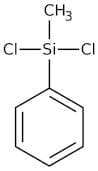
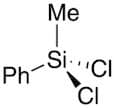
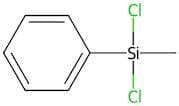
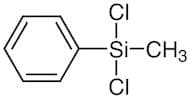
Dichlormethylphenylsilan, mit der CAS-Nummer 149-74-6, ist eine organosiliciumverbindung, die durch das Vorhandensein eines Siliziumatoms, das an eine Phenylgruppe, eine Methylgruppe und zwei Chloratome gebunden ist, gekennzeichnet ist. Diese Verbindung erscheint typischerweise als farblose bis blassgelbe Flüssigkeit und ist bekannt für ihre Reaktivität, insbesondere in nucleophilen Substitutionsreaktionen aufgrund der Anwesenheit der chlorierten funktionellen Gruppen. Sie wird häufig als Silan-Kopplungsagent verwendet, um die Haftung zwischen anorganischen Materialien und organischen Polymeren zu verbessern. Darüber hinaus kann Dichlormethylphenylsilan als Zwischenprodukt in der Synthese verschiedener siliziumhaltiger Verbindungen dienen. Zu ihren chemischen Eigenschaften gehören ein relativ niedriger Siedepunkt und eine moderate Löslichkeit in organischen Lösungsmitteln, was sie für verschiedene Anwendungen in der Materialwissenschaft und organischen Synthese geeignet macht. Sie sollte jedoch mit Vorsicht behandelt werden, da sie potenziell toxisch und reaktiv ist, insbesondere in Gegenwart von Feuchtigkeit, was zu Hydrolyse und der Freisetzung von Salzsäure führen kann. Angemessene Sicherheitsmaßnahmen und -protokolle sind beim Arbeiten mit dieser Verbindung unerlässlich.
Formel:C7H8Cl2Si
InChl:InChI=1S/C7H8Cl2Si/c1-10(8,9)7-5-3-2-4-6-7/h2-6H,1H3
InChI Key:InChIKey=GNEPOXWQWFSSOU-UHFFFAOYSA-N
SMILES:[Si](C)(Cl)(Cl)C1=CC=CC=C1
Synonyme:- (Dichloromethylsilyl)benzene
- Benzene, (dichloromethylsilyl)-
- Benzyl(Dichloro)Silane
- Dichlor(methyl)(phenyl)silan
- Dichloro(methyl)(phenyl)silane
- Dichlorophenylmethylsilane
- Dicloro(Fenil)(Metil)Silano
- Ls 1490
- Methylphenyldichlorosilane
- Nsc 96621
- Phenyldichloro(methyl)silane
- Phenylmethyldichlorosilane
- Silane, Methylphenyldichloro-
- Silane, dichloromethylphenyl-
- Tsl 8067
- [(Dichloro)methylsilyl]benzene
- Weitere Synonyme anzeigen
Sortieren nach
Reinheit (%)
0
100
|
0
|
50
|
90
|
95
|
100
4 Produkte gefunden.
Dichloromethylphenylsilane, 98%
CAS:Dichloromethylphenylsilane is used as a monomer (‘building block’) in the production of silicone polymers or silicone resins. Silicone polymers may be oils, greases and rubbers. It is also used as an intermediate (starting material) in the production of other organosilicon substances. It is a bifuncFormel:C7H8Cl2SiReinheit:98%Farbe und Form:Liquid, Clear colorless to pale pinkMolekulargewicht:191.13Methylphenyldichlorosilane, min. 97%
CAS:Methylphenyldichlorosilane, min. 97%
Formel:(CH3)(C6H5)SiCl2Reinheit:min. 97%Farbe und Form:colorless liq.Molekulargewicht:191.11Dichloro(methyl)phenylsilane
CAS:Formel:C7H8Cl2SiReinheit:>98.0%(GC)Farbe und Form:Colorless to Almost colorless clear liquidMolekulargewicht:191.13