CAS 149-91-7
:Gallussäure
Beschreibung:
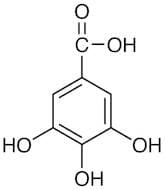
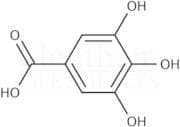
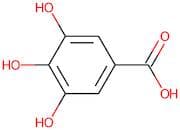
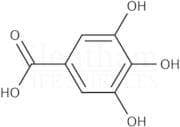
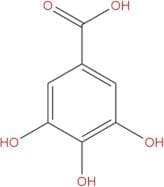
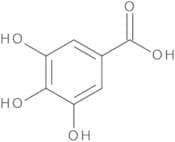
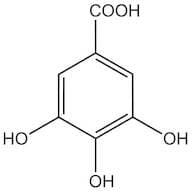
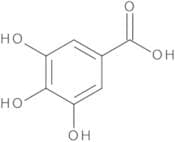
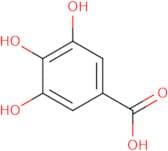
Gallussäure, mit der CAS-Nummer 149-91-7, ist eine natürlich vorkommende phenolische Verbindung, die in verschiedenen Pflanzen weit verbreitet ist, insbesondere in Galläpfeln, Teeblättern und bestimmten Früchten. Es erscheint als weißes bis blassgelbes kristallines Pulver und ist in Wasser, Alkohol und Ether löslich. Gallussäure ist bekannt für seine antioxidativen Eigenschaften, die es ihm ermöglichen, freie Radikale zu beseitigen und Zellen vor oxidativem Stress zu schützen. Es hat eine chemische Formel von C7H6O5 und weist drei Hydroxylgruppen auf, die zu seiner Säure und Reaktivität beitragen. Neben seiner Rolle in der traditionellen Medizin und in pflanzlichen Heilmitteln wird Gallussäure in der Lebensmittelindustrie als Konservierungsmittel und in der Produktion von Tinten und Farbstoffen verwendet, da es in der Lage ist, Komplexe mit Metallionen zu bilden. Darüber hinaus hat es potenzielle Anwendungen in der Pharmazie, insbesondere bei der Entwicklung von entzündungshemmenden und antimikrobiellen Wirkstoffen. Insgesamt ist Gallussäure eine vielseitige Verbindung mit erheblicher biologischer und industrieller Relevanz.
Formel:C7H6O5
InChl:InChI=1S/C7H6O5/c8-4-1-3(7(11)12)2-5(9)6(4)10/h1-2,8-10H,(H,11,12)
InChI Key:InChIKey=LNTHITQWFMADLM-UHFFFAOYSA-N
SMILES:C(O)(=O)C1=CC(O)=C(O)C(O)=C1
Synonyme:- 3,4,5-Hydroxybenzoic acid
- 3,4,5-Trihydroxybenzoesaure
- 3,4,5-Trihydroxybenzoic acid
- A 1925-04
- Acide 3,4,5-trihydroxybenzoique
- Acido 3,4,5-Trihidroxibenzoico
- Benzoic acid, 3,4,5-trihydroxy-
- Gallic Acid Anhydrous
- Gallussaeure
- Nsc 20103
- Nsc 674319
- Pyrogallol-5-carboxylic acid
- Weitere Synonyme anzeigen
Sortieren nach
Reinheit (%)
0
100
|
0
|
50
|
90
|
95
|
100
19 Produkte gefunden.
Gallic Acid
CAS:Formel:C7H6O5Reinheit:>98.0%(T)(HPLC)Farbe und Form:White to Light yellow powder to crystalMolekulargewicht:170.123,4,5-Trihydroxybenzoic acid, 98%
CAS:Organic acid is used as a standard for determining phenols in the Folin-Ciocalteau assay3,4,5-Trihydroxybenzoic acid is used as a cyclooxygease inhibitor substance, which is found in plants. In analytical chemistry, it is used as a standard to determine phenol content in various analytes. It acts aFormel:C7H6O5Reinheit:98%Farbe und Form:White to cream or pale yellow, PowderMolekulargewicht:170.12Gallic acid
CAS:Gallic acid analytical standard provided with w/w absolute assay, to be used for quantitative titration.Formel:C7H6O5Reinheit:(HPLC) ≥99%Farbe und Form:PowderMolekulargewicht:170.13Gallic acid
CAS:Gallic acid (Benzoic acid) is found in almost all plants. Plants known for their high gallic acid content include gallnuts,grapes,tea,hops and oak bark.Formel:C7H6O5Reinheit:99.38% - 99.57%Farbe und Form:White Solid Solid Particulate/PowderMolekulargewicht:170.12Gallic acid, anhydrous
CAS:Formel:C7H6O5Reinheit:≥ 99.0%Farbe und Form:White to off-white powderMolekulargewicht:170.123,4,5-Trihydroxybenzoic acid, anhydrous
CAS:3,4,5-Trihydroxybenzoic acid, anhydrousFormel:C7H6O5Reinheit:99%Farbe und Form: white powderMolekulargewicht:170.11954g/molGallic acid, anhydrous, ACS grade
CAS:Formel:C7H6O5Reinheit:(Titration) ≥ 98.0%Farbe und Form:White, off-white or beige powderMolekulargewicht:170.12Gallic acid
CAS:Gallic acid and curcumin are natural phenolic compounds, both have cytotoxic activity in relation to their radical modulating activity, induce apoptosis by different mechanisms, and gallic acid produces higher amounts of radicals and more efficiently scavenged the superoxide anion radical.Formel:C7H6O5Reinheit:95%~99%Farbe und Form:PowderMolekulargewicht:170.12Gallic acid (Standard)
CAS:Gallic acid (Standard) is the standard substance of Gallic acid, and it is applicable for quantitative analysis, quality control, and related research in biochemical experiments. Gallic acid (Benzoic acid) is a natural polyhydroxyphenol, which can inhibit the free radical scavenging effect of COX-2. Gallic acid has a wide range of physiological activities such as antioxidant, anti-inflammatory, anti-tumor and antibacterial.Formel:C7H6O5Farbe und Form:White Solid Solid Particulate/PowderMolekulargewicht:170.12Gallic acid
CAS:Carboxylic acid with phenol functionFormel:C7H6O5Reinheit:≥ 98.0 % (HPLC)Farbe und Form:PowderMolekulargewicht:170.12Gallic Acid
CAS:Kontrolliertes ProduktApplications Gallic Acid exhibits a number of cellular effects including apoptosis and inhibits the growth of calf pulmonary arterial endothelial cell (CPAEC);Also, it is a polyphenol widely found in numerous fruits and vegetables that has been reported to exert anticancer effects, including apoptosis, against cancer cell lines.
References Park, W. H.: Mol. Med. Rep., 16, 7805-7812 (2017); Yang, C., et al.: RSC Adv., 8, 12449-12458 (2018)Formel:C7H6O5Farbe und Form:NeatMolekulargewicht:170.123,4,5-trihydroxybenzoic acid
CAS:Formel:C7H6O5Reinheit:98%Farbe und Form:SolidMolekulargewicht:170.12Gallic acid anhydrous
CAS:Gallic acid anhydrous is a compound that is found in plants and has antioxidant properties. Gallic acid anhydrous can be used as a model system for the study of electrochemical impedance spectroscopy. It has shown to have anti-cancer activity in vitro, but not in vivo, against squamous carcinoma cells. In addition, gallic acid anhydrous has been shown to inhibit oral pathogens and to scavenge anion radicals. Gallic acid anhydrous may have structural similarities to procyanidin B4, which is important for its antioxidant activity.Formel:C7H6O5Reinheit:Min. 99 Area-%Farbe und Form:White PowderMolekulargewicht:170.12 g/mol