CAS 149385-65-9
:Beta-Amyloid-Proteinfragment 31-35*acetat
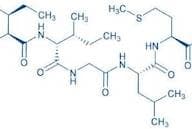
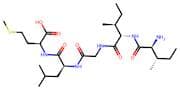
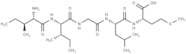
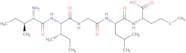
- H-Ile-Ile-Gly-Leu-Met-Oh
Amyloid β-Protein (31-35)
CAS:The neurotoxicity of the short fragment IIGLM is similar to that of amyloid β-protein (1-42). Aβ 31-35 induced apoptosis in undifferentiated PC 12 cells.Formel:C25H47N5O6SReinheit:98.5%Farbe und Form:White PowderMolekulargewicht:545.74β-Amyloid (31-35)
CAS:β-Amyloid (31-35) (β-Amyloid 31-35) is the shortest sequence of native Amyloid-β peptide.Formel:C25H47N5O6SReinheit:>99.99%Farbe und Form:SolidMolekulargewicht:545.74Amyloid beta-Protein (31-35)
CAS:Amyloid beta protein is a peptide that is a major component of the amyloid plaques found in the brain of patients with Alzheimer's disease. Amyloid beta protein (Aβ) has been shown to form fibers and fibrils, which are aggregates of polymerized Aβ peptides. These fibrils can be imaged using a fluorescent dye called dansyl. The dansyl-labeled Aβ fibrils have been shown to have a morphology similar to that seen in electron micrographs of amyloid plaques. The quantum yield for luminescence was found to be 0.1% for the Aβ fibrils but only 0.001% for the monomeric form of Aβ peptides (Aβ 1-40). This suggests that the Aβ peptides are undergoing aggregation into amyloid beta protein fibrils before they can emit light as fluorescence or phosphorescence.
Formel:C25H47N5O6SReinheit:Min. 95%Molekulargewicht:545.74 g/mol