CAS 15009-91-3
:Pyridin, 2-nitro-
Beschreibung:
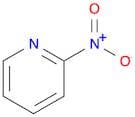
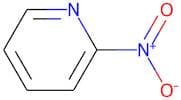
Pyridin, 2-Nitro- (CAS 15009-91-3) ist eine aromatische heterocyclische Verbindung, die durch einen sechsatomigen Ring gekennzeichnet ist, der fünf Kohlenstoffatome und ein Stickstoffatom enthält, mit einer Nitrogruppe (-NO2), die am zweiten Kohlenstoff des Pyridinrings angebracht ist. Diese Verbindung ist typischerweise eine gelbe bis braune Flüssigkeit oder ein Feststoff, abhängig von ihrer Reinheit und Form. Sie ist bekannt für ihren ausgeprägten, stechenden Geruch und ist in organischen Lösungsmitteln wie Ethanol und Ether löslich, hat jedoch eine begrenzte Löslichkeit in Wasser. Pyridin-Derivate, einschließlich 2-Nitropyridin, werden häufig in der Synthese von Arzneimitteln, Agrochemikalien und Farbstoffen aufgrund ihrer Reaktivität und Fähigkeit, an verschiedenen chemischen Reaktionen teilzunehmen, wie nucleophile Substitutionen und elektrophile aromatische Substitutionen, verwendet. Darüber hinaus kann 2-Nitropyridin als Zwischenprodukt bei der Herstellung anderer chemischer Verbindungen dienen. Es ist jedoch wichtig, diese Substanz mit Vorsicht zu behandeln, da sie Gesundheitsrisiken darstellen kann, einschließlich Haut-, Augen- und Atemwegsreizungen.
Formel:C5H4N2O2
InChl:InChI=1/C5H4N2O2/c8-7(9)5-3-1-2-4-6-5/h1-4H
SMILES:c1ccnc(c1)N(=O)=O
Synonyme:- Pyridine, 2-nitro- (8CI)(9CI)
- 2-Nitropyridine
- Nsc 159025
Sortieren nach
Reinheit (%)
0
100
|
0
|
50
|
90
|
95
|
100
4 Produkte.
2-Nitropyridine
CAS:<p>2-Nitropyridine is a nitro group that can be found in the molecule of nitroglycerin. It has been shown to be carcinogenic in rats and mice. 2-Nitropyridine reacts with sodium carbonate to form 2-nitropyrimidine-5-carbonitrile, which then reacts with water to form 2-nitropyrimidine-5-carboxylic acid. This reaction mechanism is similar to the reaction mechanism for the synthesis of nitroglycerin from glycerol and nitric acid. In addition, 2-nitropyridine is also used as an intermediate in the synthesis of some drugs, such as nifedipine and nimodipine. This chemical has been shown to have antiinflammatory properties and may be useful for treating inflammatory diseases such as myocardial infarct (heart attack) or hypoxic tumor (tumor caused by low oxygen).</p>Formel:C5H4N2O2Reinheit:Min. 97 Area-%Farbe und Form:PowderMolekulargewicht:124.1 g/mol