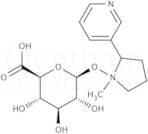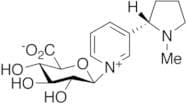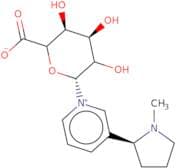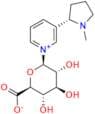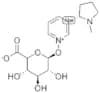
CAS 153536-53-9
:Nicotin-N-b-glucuronid
- NNG
- Nicotine-N--glucuronide Hydrate
Nicotine N-β-D-Glucuronide
CAS:Stability Very Hygroscopic
Applications Nicotine N-β-D-Glucuronide is a Nicotine (N412420) metabolite in rat brain. Nicotine N-β-D-Glucuronide is used as a Nicotine biomarker in rat brain.
Not a dangerous good if item is equal to or less than 1g/ml and there is less than 100g/ml in the package
References Alexandrov, K., et al.: Toxicol. Lett., 198, 63 (2010), Huang, L., et al.: J. Neurochem., 109, 826 (2009), Quik, M., et al.: Biochem. Pharmacol., 78, 677 (2009), Weems, J., et al.: Chem. Res. Toxicol., 23, 696 (2010),Formel:C16H22N2O6Farbe und Form:Off-White To YellowMolekulargewicht:338.36Nicotine-N-b-D-glucuronide hydrate
CAS:Nicotine-N-b-D-glucuronide hydrate is a metabolite of nicotine that is excreted in the urine as an organic anion. It has been shown to have anticancer activity against a variety of human cancer cell lines, including lung, stomach, colon, and prostate. Nicotine-N-b-D-glucuronide hydrate has also been shown to inhibit protein synthesis in vitro by interfering with the ability of cells to import amino acids such as tryptophan and phenylalanine. The same study also showed that this metabolite can cause symptoms similar to those caused by nicotine withdrawal.
Formel:C16H22N2O6·xH2OReinheit:Min. 95%Molekulargewicht:338.36 g/mol