CAS 153813-70-8
:3-Nitroisonicotinaldehyd
Beschreibung:
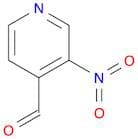
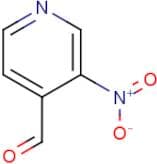
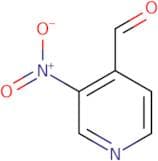
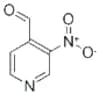
3-Nitroisonicotinaldehyd ist eine organische Verbindung, die durch ihre Struktur gekennzeichnet ist, die eine Nitrogruppe und eine Aldehydfunktionalgruppe umfasst, die an ein isonicotinisches Gerüst gebunden ist. Diese Verbindung erscheint typischerweise als gelb bis orangefarbener kristalliner Feststoff und ist in organischen Lösungsmitteln löslich. Sie ist bekannt für ihre potenziellen Anwendungen in der medizinischen Chemie, insbesondere in der Entwicklung von Arzneimitteln aufgrund ihrer Fähigkeit, mit biologischen Zielen zu interagieren. Das Vorhandensein der Nitrogruppe kann ihre Reaktivität und biologische Aktivität beeinflussen, was sie zu einem interessanten Thema in verschiedenen chemischen Forschungsbereichen macht. Darüber hinaus kann 3-Nitroisonicotinaldehyd Eigenschaften wie Fluoreszenz aufweisen, die in analytischen Anwendungen nützlich sein können. Sicherheitsdaten zeigen, dass, wie bei vielen Nitroverbindungen, Vorsicht geboten ist, da potenzielle Toxizität und Umweltbedenken bestehen. Insgesamt stellt 3-Nitroisonicotinaldehyd eine vielseitige Verbindung mit erheblichen Implikationen sowohl in der synthetischen als auch in der angewandten Chemie dar.
Formel:C6H4N2O3
InChl:InChI=1S/C6H4N2O3/c9-4-5-1-2-7-3-6(5)8(10)11/h1-4H
InChI Key:InChIKey=CPHKHQSASVFAHL-UHFFFAOYSA-N
SMILES:c1cncc(c1C=O)N(=O)=O
Synonyme:- 3-Nitro-4-Pyridinecarboxaldehyde
- 3-Nitropyridine-4-Carbaldehyde
- 3-Nitropyridine-4-Carboxaldehyde
- 4-Pyridinecarboxaldehyde, 3-nitro-
Sortieren nach
Reinheit (%)
0
100
|
0
|
50
|
90
|
95
|
100
4 Produkte.
3-Nitroisonicotinaldehyde
CAS:Formel:C6H4N2O3Reinheit:98%Farbe und Form:SolidMolekulargewicht:152.10763-Nitroisonicotinaldehyde
CAS:Formel:C6H4N2O3Reinheit:98%Farbe und Form:Liquid, ClearMolekulargewicht:152.1093-Nitroisonicotinaldehyde
CAS:3-Nitroisonicotinaldehyde is a kinase inhibitor that binds to the ATP binding site of receptor tyrosine kinases. It inhibits the activation of these receptors and prevents the phosphorylation of tyrosine residues on the receptor. 3-Nitroisonicotinaldehyde has been shown to inhibit VEGFR-2, ABCG2, and efflux in human cancer cells. This drug has been shown to inhibit tumor growth in mice by inhibiting angiogenesis, which is a process that involves the formation of new blood vessels from pre-existing ones. 3-Nitroisonicotinaldehyde also inhibits tumor growth by blocking the production of vascular endothelial growth factor (VEGF) from angiogenic cells.
Formel:C6H4N2O3Reinheit:Min. 95%Molekulargewicht:152.11 g/mol