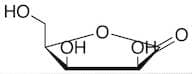
CAS 15384-34-6
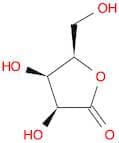
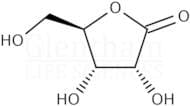
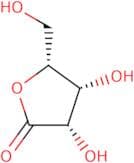
:(3R,5R)-3,4-dihydroxy-5-(hydroxymethyl)tetrahydrofuran-2-on
Beschreibung:
Die chemische Substanz, die als (3R,5R)-3,4-dihydroxy-5-(hydroxymethyl)tetrahydrofuran-2-on bekannt ist, mit der CAS-Nummer 15384-34-6, ist ein zyklisches Zuckerdérivat, das durch seine Tetrahydrofuran-Ringstruktur gekennzeichnet ist. Diese Verbindung weist mehrere Hydroxylgruppen auf, die zu ihrer hydrophilen Natur und ihrem Potenzial für Wasserstoffbrückenbindungen beitragen, was ihre Löslichkeit in Wasser und anderen polaren Lösungsmitteln beeinflusst. Das Vorhandensein von Stereozentren an den Positionen 3 und 5 verleiht Chiralität, was zu einer spezifischen optischen Aktivität führt. Diese Verbindung wird häufig wegen ihrer biologischen Aktivität untersucht, insbesondere in Bezug auf ihre Rolle in Stoffwechselwegen oder als potenzieller Vorläufer in der synthetischen organischen Chemie. Ihre strukturellen Merkmale deuten darauf hin, dass sie an verschiedenen chemischen Reaktionen, einschließlich Oxidation und Veresterung, teilnehmen kann, was sie sowohl für die pharmazeutische als auch für die biochemische Forschung von Interesse macht. Insgesamt positionieren ihre einzigartigen strukturellen Merkmale und funktionellen Gruppen sie als wertvolle Verbindung im Studium der Kohlenhydratchemie und verwandter Bereiche.
Formel:C5H8O5
InChl:InChI=1/C5H8O5/c6-1-2-3(7)4(8)5(9)10-2/h2-4,6-8H,1H2/t2-,3?,4-/m1/s1
SMILES:C([C@@H]1C([C@H](C(=O)O1)O)O)O
Sortieren nach
Reinheit (%)
0
100
|
0
|
50
|
90
|
95
|
100
7 Produkte.
D-Lyxono-1,4-lactone
CAS:D-Lyxono-1,4-lactone is a 4-deoxy-l-fucose derivative that is a potent inhibitor of bacterial growth. It is a highly effective antibiotic with a broad spectrum of activity against Gram-positive and Gram-negative bacteria. D-Lyxono-1,4-lactone has been shown to be active against multivorans, including Escherichia coli and Salmonella enterica serovar Typhimurium. This compound was found to be more active than antibiotics such as penicillin and streptomycin. The structure of D-Lyxono-1,4-lactone includes two hydroxamic acid groups that are connected by an acetal linkage to form the benzylidene acetal moiety. The optical enantiomers of this molecule have been characterized using high resolution NMR spectroscopy and magnetic resonance spectroscopy techniques.BR> Dosis: 250Formel:C5H8O5Reinheit:Min. 95.0 Area-%Molekulargewicht:148.11 g/molRef: 3D-W-201380
-Unit-ggNachfragen5gNachfragen10gNachfragen25gNachfragen50gNachfragen2500mgNachfragenD-Lyxono-1,4-lactone
CAS:D-Lyxono-1,4-lactone is an inhibitor of the enzyme fucosidase. It competitively inhibits the enzyme, but does not inhibit other hydroxamic acids such as enantiomers of D-lyxono-1,4-lactone. D-Lyxono-1,4-lactone has been used to treat HIV and AIDS because it prevents viral replication by blocking the synthesis of glycoproteins in the virus's envelope. It also has inhibitory effects on tumor cells that are not dependent on fucosidase activity. Magnetic resonance spectroscopy (NMR) studies have shown that d-lyxono-1,4-lactone binds to human liver cells and blocks the binding site for cytotoxic molecules in these cells. The molecular modelling study has demonstrated that d-lyxono 1,4 lactone binds to a specific site on human HLA class II molecule and reduces itsFormel:C5H8O5Reinheit:(%) Min. 97%Farbe und Form:PowderMolekulargewicht:148.11 g/mol(3S,4R,5R)-3,4-Dihydroxy-5-(hydroxymethyl)dihydrofuran-2(3H)-one
CAS:Formel:C5H8O5Reinheit:95%Molekulargewicht:148.114D-Lyxono-1,4-lactone
CAS:Kontrolliertes ProduktApplications D-Lyxono-1,4-lactone is used for synthesis of 1,4-dideoxy-1,4-imino-L-arabinitol, a glucosidase inhibitor with in vitro antiviral activity.
References Mitrakou, A., et al.: Diab. Med., 15, 657 (1998), Scott, L., et al.: Drugs, 59, 521 (2000), Vasella, A., et al.: Curr. Opin. Chem. Biol., 6, 619 (2002), Kato, A., et al.: J. Med. Chem., 48, 2036 (2005),Formel:C5H8O5Farbe und Form:NeatMolekulargewicht:148.11