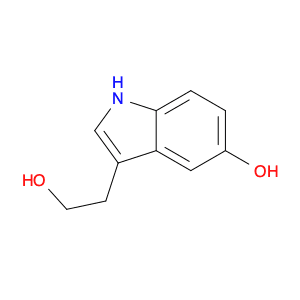
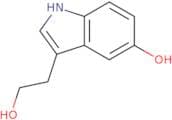
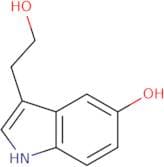
CAS 154-02-9
:5-Hydroxytryptophol
- 1H-Indole-3-ethanol, 5-hydroxy-
- 3-(2-hydroxyethyl)-1H-indol-5-ol
- 5-Hydroxy-1H-indole-3-ethanol
- 5-Hydroxy-3-(2-hydroxyethyl)indole
- 5-Hydroxyindole-3-(2-hydroxy)ethyl
- 5-Hydroxytryptophol
- Indole-3-ethanol, 5-hydroxy-
- NSC 84416
- Tryptophol, 5-hydroxy-
5-Hydroxytryptophol
CAS:5-HydroxytryptopholReinheit:100.0% (gc) (Typical Value in Batch COA)Farbe und Form: off-white crystalline powderMolekulargewicht:177.20g/mol5-Hydroxytryptophol
CAS:5-Hydroxytryptophol is a metabolite of tryptophan. It is used as a biomarker for recent alcohol consumption and causes sleeping sicknessFormel:C10H11NO2Reinheit:95.49%Farbe und Form:SolidMolekulargewicht:177.25-Hydroxy Tryptophol
CAS:Kontrolliertes ProduktApplications A metabolite of Tryptophan (T947200).
References da Prada, M., et al.: Biochem. Pharmacol., 14, 1721 (1965), Curzon, G., et al.: Br. J. Pharmacol., 63, 627 (1978), Fukumori, R., et al.: J. Pharm. Pharmacol., 33, 586 (1981), Aasmoe, L., et al.: Biochem. Pharmacol., 57, 1067 (1999), Karamanakos, P., et al.: Pharmacol. Toxicol., 88, 106 (2001),Formel:C10H11NO2Farbe und Form:NeatMolekulargewicht:177.25-Hydroxytryptophol
CAS:5-Hydroxytryptophol is a fine chemical that can be used as a versatile building block, useful intermediate, or reaction component. It is a speciality chemical with high purity and quality. 5-Hydroxytryptophol has been shown to react with benzaldehyde in the presence of sodium hydroxide to form a complex compound. This product has been used as a research chemical, which can be used to make other chemicals such as serotonin and melatonin.Formel:C10H11NO2Reinheit:Min. 99.0 Area-%Molekulargewicht:177.20 g/mol5-Hydroxy tryptophol
CAS:5-Hydroxy tryptophol is a quinone derivative that has been used as a pharmacological treatment for the carcinoid syndrome. It inhibits the conversion of 5-hydroxytryptophol to serotonin, and it can be used in the diagnosis of carcinoid syndrome. 5-HTP is also an important precursor of serotonin in vivo and its concentrations are increased in the skin cells of patients with carcinoid syndrome. Chronic exposure to ethanol or other drugs may cause excessive production of serotonin, which leads to symptoms such as anxiety, nausea, diarrhea, flushing, headache, and insomnia. As a result of this chronic exposure, 5-HTP concentrations are increased in skin cells because it is an important precursor for serotonin synthesis. 5-HTP concentrations are also increased in erythrocytes and platelets due to chronic exposure to ethanol or other drugs. Finally, chronic exposure to ethanol or other drugs causes oxidative stress by increasing reactive oxygen species production. This causes changes in enzyme
Formel:C10H11NO2Reinheit:Min. 98 Area-%Farbe und Form:White PowderMolekulargewicht:177.2 g/mol