CAS 156-83-2
:2,4-Diamino-6-chlorpyrimidin
Beschreibung:
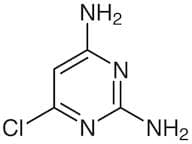
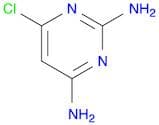
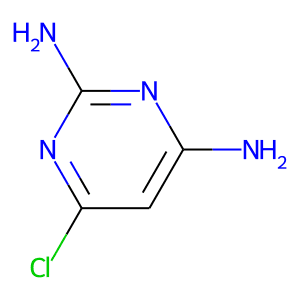
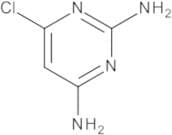
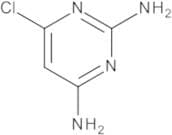
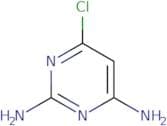
2,4-Diamino-6-chlorpyrimidin ist eine organische Verbindung, die durch ihre Pyrimidinringstruktur gekennzeichnet ist, die zwei Aminogruppen an den Positionen 2 und 4 und ein Chloratom an der Position 6 aufweist. Diese Verbindung ist typischerweise ein weißes bis off-white kristallines Feststoff und ist in Wasser und verschiedenen organischen Lösungsmitteln löslich, was sie vielseitig für verschiedene Anwendungen macht. Sie wird hauptsächlich in der Synthese von Arzneimitteln und Agrochemikalien verwendet, insbesondere als Zwischenprodukt in der Herstellung von Herbiziden und anderen biologisch aktiven Verbindungen. Die Anwesenheit von Aminogruppen trägt zu ihrer Reaktivität bei und ermöglicht weitere chemische Modifikationen. Darüber hinaus kann der Chlorersatz die biologische Aktivität und Stabilität der Verbindung beeinflussen. Aufgrund ihrer chemischen Struktur kann 2,4-Diamino-6-chlorpyrimidin Eigenschaften wie antimikrobielle Aktivität aufweisen, und es ist wichtig, sie mit Vorsicht zu behandeln und die entsprechenden Sicherheitsprotokolle zu befolgen, wie bei vielen chemischen Substanzen.
Formel:C4H5ClN4
InChl:InChI=1/C4H5ClN4/c5-2-1-3(6)9-4(7)8-2/h1H,(H4,6,7,8,9)
InChI Key:InChIKey=QJIUMVUZDYPQRT-UHFFFAOYSA-N
SMILES:ClC=1C=C(N)N=C(N)N1
Synonyme:- 2,4-Diamino-6-Chloro Pyridine
- 2,4-Diamino-6-Chloro Pyrimidine
- 2,4-Diamino-6-chloropyrimidine
- 2,4-Pyrimidinediamine, 6-chloro-
- 2,6-Diamino-4-chloropyrimidine
- 4-Chloro-2,6-diaminopyrimidin
- 4-Chloro-2,6-pyrimidinediamine
- 6-Chloro-2,4-diaminopyrimidine
- 6-Chloro-2,4-pyrimidinediamine
- 6-Chloropyrimidine-2,4-diamine
- NSC 8818
- Pyrimidine, 2,4-diamino-6-chloro-
- 2-AMINO-6-CHLORO-4-PYRIMIDINYLAMINE
- 4-CHLORO-2,6-DIAMINOPYRIMIDINE
- 6-Chlor-2,4-diaminopyrimidin(4-2,6)
- 2,6-DIAMINO-4-CHLORO PYRIMIDINE
- 2,4-Pyrimidinediamine, 6-chloro-(9CI)
- 6-CHLORO-PYRIMIDINE-2,4-DIYLDIAMINE
- 6-CHLORO-PYRIMIDINE-2,4-DIAMINE
- 6-chloro-4-pyrimidinediamine
- 6-Chloro-pyrimidine-2,4-diyldiamine, 4-Chloro-2,6-diaminopyrimidine
- 4-Chloro-2-6-Diaminopyrimide
- TIMTEC-BB SBB004123
- Weitere Synonyme anzeigen
Sortieren nach
Reinheit (%)
0
100
|
0
|
50
|
90
|
95
|
100
11 Produkte.
6-Chloro-2,4-diaminopyrimidine
CAS:Formel:C4H5ClN4Reinheit:>98.0%(GC)(T)Farbe und Form:White to Light yellow powder to crystalMolekulargewicht:144.56Minoxidil Pyrimidine Analog (6-Chloropyrimidine-2,4-diamine)
CAS:Compounds containing a pyrimidine ring, whether or not hydrogenated, or piperazine ring in the structure, nesoiFormel:C4H5ClN4Farbe und Form:White SolidMolekulargewicht:144.020272,4-Pyrimidinediamine, 6-chloro-
CAS:Formel:C4H5ClN4Reinheit:98%Farbe und Form:SolidMolekulargewicht:144.5623Minoxidil EP Impurity B
CAS:Formel:C4H5ClN4Farbe und Form:White To Off-White SolidMolekulargewicht:144.566-Chloropyrimidine-2,4-diamine
CAS:6-Chloropyrimidine-2,4-diamineReinheit:≥95%Farbe und Form:Tan SolidMolekulargewicht:144.56g/mol6-Chloropyrimidine-2,4-diamine
CAS:Kontrolliertes ProduktFormel:C4H5ClN4Farbe und Form:NeatMolekulargewicht:144.566-Chloro-pyrimidine-2,4-diamine
CAS:Kontrolliertes ProduktImpurity Minoxidil EP Impurity B
Applications 6-Chloro-pyrimidine-2,4-diamine (cas# 156-83-2) is a compound useful in organic synthesis.Formel:C4H5ClN4Farbe und Form:WhiteMolekulargewicht:144.564-Chloro-2,6-diaminopyrimidine
CAS:Formel:C4H5ClN4Reinheit:98%Farbe und Form:SolidMolekulargewicht:144.56Minoxidil impurity B
CAS:Minoxidil impurity B is a product of the reaction between minoxidil and an acid. It has been shown to inhibit tyrosinase activity in vitro by nucleophilic attack on the phenolic hydroxyl group of the substrate. It also has a constant inhibitory effect on tyrosinase activity, with no activation energy required for this inhibition. The inhibitory effect of this compound is reversible and can be prevented by addition of magnesium salt. This compound has also been shown to have a reactive nature and can undergo a number of reactions that lead to different products.Formel:C4H5ClN4Reinheit:Min. 95%Molekulargewicht:144.56 g/mol