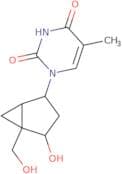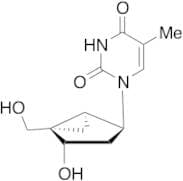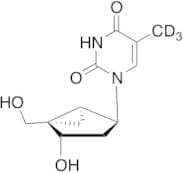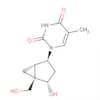
CAS 156126-12-4
:n-MCT
Beschreibung:
n-MCT, oder mittelkettige Triglyceride, bezieht sich spezifisch auf eine Art von Fett, das aus Kokosnussöl oder Palmöl gewonnen wird und durch seine mittellangen Fettsäureketten gekennzeichnet ist, die typischerweise 6 bis 12 Kohlenstoffatome enthalten. Die CAS-Nummer 156126-12-4 identifiziert eine spezifische Formulierung dieser Triglyceride. n-MCT ist bekannt für seine einzigartigen metabolischen Eigenschaften, da es schnell vom Körper aufgenommen und in der Leber metabolisiert wird, was eine schnelle Energiequelle bietet. Diese Substanz wird häufig in Nahrungsergänzungsmitteln, Sporternährung und medizinischen Formulierungen verwendet, da sie potenzielle Vorteile bei der Gewichtskontrolle und der Energieverbesserung bietet. Darüber hinaus ist n-MCT geschmacklos und geruchlos, was es geeignet macht, in verschiedene Lebensmittelprodukte integriert zu werden. Es wird auch für seine antimikrobiellen Eigenschaften und sein Potenzial zur Unterstützung der kognitiven Funktion anerkannt. Insgesamt dient n-MCT als vielseitige Zutat in Gesundheits- und kulinarischen Anwendungen und spricht diejenigen an, die nach alternativen Energiequellen oder diätetischen Fetten suchen.
Formel:C12H16N2O4
InChl:InChI=1S/C12H16N2O4/c1-6-4-14(11(18)13-10(6)17)8-2-9(16)12(5-15)3-7(8)12/h4,7-9,15-16H,2-3,5H2,1H3,(H,13,17,18)/t7-,8+,9+,12+/m1/s1
InChI Key:InChIKey=NOWRLNPOENZFHP-ARHDFHRDSA-N
SMILES:C(O)[C@]12[C@](C1)([C@H](C[C@@H]2O)N3C(=O)NC(=O)C(C)=C3)[H]
Synonyme:- (North)-methanocarbathymidine
- 2,4(1H,3H)-Pyrimidinedione, 1-[(1S,2S,4S,5R)-4-hydroxy-5-(hydroxymethyl)bicyclo[3.1.0]hex-2-yl]-5-methyl-
- n-MCT
- 1-[(1S,2S,4S,5R)-4-Hydroxy-5-(hydroxymethyl)bicyclo[3.1.0]hex-2-yl]-5-methyl-2,4(1H,3H)-pyrimidinedione
- 2,4(1H,3H)-Pyrimidinedione, 1-[4-hydroxy-5-(hydroxymethyl)bicyclo[3.1.0]hex-2-yl]-5-methyl-, [1S-(1α,2α,4β,5α)]-
Sortieren nach
Reinheit (%)
0
100
|
0
|
50
|
90
|
95
|
100
3 Produkte.
N-MCT
CAS:<p>N-MCT is an analog of a naturally occurring protein found in human urine that has been shown to have potent anticancer properties. It works by inhibiting specific kinases involved in cancer cell growth and promoting apoptosis, or programmed cell death, in cancer cells. N-MCT has been studied extensively for its potential as a medicinal inhibitor of tumor growth and has shown promising results in preclinical trials. This compound has the ability to disrupt the cell cycle of cancer cells, preventing them from dividing and spreading throughout the body. Its unique mechanism of action makes it a promising candidate for future cancer therapies.</p>Formel:C12H16N2O4Reinheit:Min. 95%Molekulargewicht:252.27 g/moln-MCT
CAS:Kontrolliertes Produkt<p>Applications n-MCT is an antiviral agent that is used against herpesvirus and orthopoxvirus infections.<br>References Prichard, M. N., et al.: Antimicrob. Agents. Chemother., 50, 1336 (2006);<br></p>Formel:C12H16N2O4Farbe und Form:NeatMolekulargewicht:252.266n-MCT-d3
CAS:Kontrolliertes Produkt<p>Applications n-MCT-d3 is the isotope labelled analog of n-MCT. n-MCT is an antiviral agent that is used against herpesvirus and orthopoxvirus infections.<br>References Prichard, M. N., et al.: Antimicrob. Agents. Chemother., 50, 1336 (2006);<br></p>Formel:C12D3H13N2O4Farbe und Form:NeatMolekulargewicht:255.285