CAS 15883-20-2
:2′,6′-Pipecoloxylidid
Beschreibung:
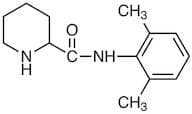
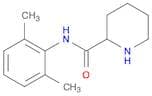
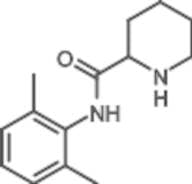
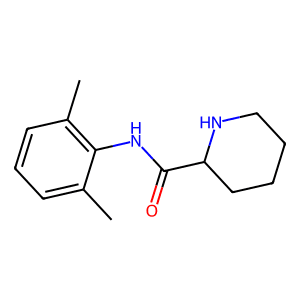
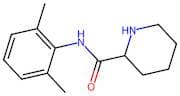
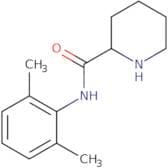
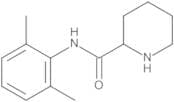
2′,6′-Pipecoloxylidid, mit der CAS-Nummer 15883-20-2, ist eine chemische Verbindung, die zur Klasse der Lokalanästhetika gehört. Sie zeichnet sich durch ihre strukturellen Merkmale aus, zu denen ein Derivat der Pipelsäure und ein substituiertes aromatisches Ring gehören, die zu ihren pharmakologischen Eigenschaften beitragen. Diese Verbindung weist eine relativ hohe Lipophilie auf, die ihre Fähigkeit verbessert, biologische Membranen zu durchdringen, was sie effektiv macht, um die Nervenleitung zu blockieren. Ihr Wirkmechanismus beinhaltet die Hemmung von spannungsabhängigen Natriumkanälen, was zu einer Abnahme der neuronalen Erregbarkeit und der Schmerzwahrnehmung führt. Darüber hinaus ist 2′,6′-Pipecoloxylidid bekannt für sein relativ niedriges Toxizitätsprofil im Vergleich zu anderen Lokalanästhetika, was es zu einem Kandidaten für verschiedene medizinische Anwendungen macht. Die Verbindung wird typischerweise durch Injektion verabreicht und wird in Verfahren eingesetzt, die eine lokale Schmerzlinderung erfordern. Wie bei allen Anästhetika ist eine sorgfältige Berücksichtigung der Dosierung und möglicher Nebenwirkungen für eine sichere und effektive Anwendung in klinischen Einrichtungen unerlässlich.
Formel:C14H20N2O
InChl:InChI=1S/C14H20N2O/c1-10-6-5-7-11(2)13(10)16-14(17)12-8-3-4-9-15-12/h5-7,12,15H,3-4,8-9H2,1-2H3,(H,16,17)
InChI Key:InChIKey=SILRCGDPZGQJOQ-UHFFFAOYSA-N
SMILES:N(C(=O)C1CCCCN1)C2=C(C)C=CC=C2C
Synonyme:- 2',6'-Pipecolinoxylidide
- 2',6'-Pipecoloxylidide
- 2,6-Pipecoloxylidide
- 2-Pipecolinoxylidide
- 2-Piperidinecarboxamide, N-(2,6-dimethylphenyl)-
- 2′,6′-Pipecolylxylidine
- Debutylbupivacaine
- Desbutylbupivacaine
- N-(2',6'-dimethylphenyl)-piperidine-2-carboxylic amide
- N-(2,6-Dimethylphenyl)-2-piperidinecarboxamide
- N-(2,6-dimethylphenyl)piperidine-2-carboxamide
- N-Desbutylbupivacaine
- Weitere Synonyme anzeigen
Sortieren nach
Reinheit (%)
0
100
|
0
|
50
|
90
|
95
|
100
15 Produkte.
N-(2,6-Dimethylphenyl)piperidine-2-carboxamide
CAS:Formel:C14H20N2OReinheit:>98.0%(T)(HPLC)Farbe und Form:White to Almost white powder to crystalMolekulargewicht:232.33debutylbupivacaine
CAS:Debutylbupivacaine is the intermediate of ropivacaine hydrochloride and bupivacaine.
Formel:C14H20N2OReinheit:99.50%Farbe und Form:Off-White To Light Yellow PowderMolekulargewicht:232.32N-(2,6-Dimethylphenyl)piperidine-2-carboxamide
CAS:N-(2,6-Dimethylphenyl)piperidine-2-carboxamideReinheit:≥95%Farbe und Form:SolidMolekulargewicht:232.32g/molBupivacaine EP Impurity B (Bupivacaine USP Related Compound B (Free Form))
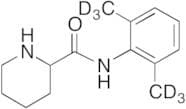
CAS:Formel:C14H20N2OFarbe und Form:White To Off-White SolidMolekulargewicht:232.33Bupivacaine EP Impurity B-d6 (Bupivacaine USP Related Compound B-d6 (Free Form))
CAS:Formel:C14H14D6N2OFarbe und Form:White To Off-White SolidMolekulargewicht:238.36(RS)-N-(2,6-Dimethylphenyl)piperidine-2-carboxamide
CAS:Kontrolliertes ProduktFormel:C14H20N2OFarbe und Form:White To Light BeigeMolekulargewicht:232.32N-Desbutyl Bupivacaine-d6
CAS:Kontrolliertes ProduktFormel:C14H14D6N2OFarbe und Form:NeatMolekulargewicht:238.36N-Desbutyl Bupivacaine
CAS:Kontrolliertes ProduktImpurity Bupivacaine USP Related Compound B
Applications N-Desbutyl Bupivacaine (Bupivacaine USP Related Compound B) is a major metabolite of Bupivacaine.
Not a dangerous good if item is equal to or less than 1g/ml and there is less than 100g/ml in the package
References Bargetzi, M.J., et al.: Clin. Pharmacol. Ther., 46, 521 (1989), Shimada, T., et al.: J. Pharmacol. Exp. Ther., 270, 414 (1994), Attolini, L., et al.: Fundam. Clin. Pharmacol., 11, 152 (1997),Formel:C14H20N2OFarbe und Form:White To Light BeigeMolekulargewicht:232.32N-Desbutyl bupivacaine
CAS:N-Desbutyl bupivacaine is a local anaesthetic that is metabolized by the human body to produce bupivacaine. It has been shown to be effective in the treatment of pain. N-Desbutyl bupivacaine binds to the α1-acid glycoprotein, which decreases its clearance from the blood and prolongs its duration of action. This agent is metabolized by the liver into an active form, which has been shown to be effective in inhibiting pain. The plasma concentration of N-Desbutyl bupivacaine can be measured using liquid chromatography, with a kinetic study showing that it takes about 1 hour for this agent to reach peak levels in serum. The effective dose for N-Desbutyl bupivacaine is typically 2 mg/kg, although this may vary based on individual factors such as weight and age.Formel:C14H20N2OReinheit:Min. 98 Area-%Farbe und Form:PowderMolekulargewicht:232.32 g/molN-(2,6-Dimethylphenyl)piperidine-2-carboxamide
CAS:Formel:C14H20N2OReinheit:95%Farbe und Form:SolidMolekulargewicht:232.327