CAS 1592-20-7
:4-Vinylbenzylchlorid
Beschreibung:
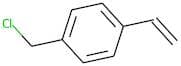
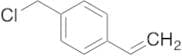
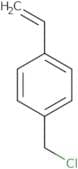
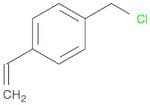
4-Vinylbenzylchlorid, mit der CAS-Nummer 1592-20-7, ist eine organische Verbindung, die durch ihre Vinyl- und Benzylgruppen gekennzeichnet ist. Sie erscheint als farblose bis blassgelbe Flüssigkeit und ist bekannt für ihre Reaktivität aufgrund der Anwesenheit beider Gruppen, der Vinylgruppe, die polymerisieren kann, und der Benzylchlorid-Einheit, die eine gute Abgangsgruppe in nucleophilen Substitutionsreaktionen ist. Diese Verbindung wird hauptsächlich als Zwischenprodukt in der Synthese verschiedener Polymere und Harze verwendet, insbesondere bei der Herstellung von vernetzten Materialien. Sie wird auch in der Vorbereitung funktionalisierter Oberflächen und als Baustein in der organischen Synthese eingesetzt. 4-Vinylbenzylchlorid ist empfindlich gegenüber Feuchtigkeit und sollte mit Vorsicht behandelt werden, da es bei Hydrolyse Salzsäure freisetzen kann. Sicherheitsvorkehrungen sind erforderlich, wenn mit dieser Verbindung gearbeitet wird, da sie Haut- und Augenreizungen verursachen kann und potenzielle Gesundheitsgefahren birgt, wenn sie eingeatmet oder verschluckt wird. Es sollten geeignete Lager- und Handhabungsprotokolle befolgt werden, um die mit ihrer Verwendung verbundenen Risiken zu mindern.
Formel:C9H9Cl
InChl:InChI=1S/C9H9Cl/c1-2-8-3-5-9(7-10)6-4-8/h2-6H,1,7H2
InChI Key:InChIKey=ZRZHXNCATOYMJH-UHFFFAOYSA-N
SMILES:C(=C)C1=CC=C(CCl)C=C1
Synonyme:- 1-(Chlormethyl)-4-vinylbenzol
- 1-(Chloromethyl)-3-Ethenylbenzene-1-(Chloromethyl)-4-Ethenylbenzene (1:1)
- 1-(Chloromethyl)-4-Ethenyl-Benzen
- 1-(Chloromethyl)-4-ethenyl-Benzene
- 1-(Chloromethyl)-4-vinylbenzene
- 1-(Clorometil)-4-Vinilbenceno
- 4-Chloromethyl styrene
- 4-Chloromethylstyrene
- 4-Vinylbenzyl chloride
- 4-Vinylbenzylchloride
- Benzene, 1-(chloromethyl)-4-ethenyl-
- Benzyl Chloride, 4-Vinyl-
- Chloromethyl styrene
- Chloromethylstyrene
- Chloromethylstyrene (m- and p-mixture) (stabilized with TBC)
- Cms 14
- Styrene, p-(chloromethyl)-
- VBC
- Vinylbenzyl Chloride, Mixture Of Isomers
- p-(Chloromethyl)styrene
- p-Vinylbenzyl chloride
- Weitere Synonyme anzeigen
Sortieren nach
Reinheit (%)
0
100
|
0
|
50
|
90
|
95
|
100
7 Produkte.
4-Vinylbenzyl chloride
CAS:4-Vinylbenzyl chlorideFormel:C9H9ClReinheit:98%Farbe und Form: light yellow to yellow to yellow-green liquidMolekulargewicht:152.62g/mol4-(Chloromethyl)styrene (~0.1% TBC stabilizer)
CAS:Kontrolliertes ProduktStability Light Sensitive
Applications 4-(Chloromethyl)styrene, 90%, stabilized (cas# 1592-20-7) is a useful research chemical.
Not a dangerous good if item is equal to or less than 1g/ml and there is less than 100g/ml in the packageFormel:C9H9ClFarbe und Form:NeatMolekulargewicht:152.621-(Chloromethyl)-4-vinylbenzene, 500 ppm t-Butylcatechol inhibitor
CAS:Formel:C9H9ClReinheit:98% (stabilized with TBC)Farbe und Form:Clear yellow liquidMolekulargewicht:152.624-(Chloromethyl)styrene (stabilized with TBC + ONP + 2-Nitro-p-cresol)
CAS:Formel:C9H9ClReinheit:>90.0%(GC)Farbe und Form:Light yellow to Yellow to Orange clear liquidMolekulargewicht:152.624-Vinylbenzyl chloride
CAS:4-Vinylbenzyl chloride is a vinyl monomer that reacts with divinylbenzene to form polyvinyl chloride. The reaction is carried out in the presence of potassium hexafluorophosphate and water. 4-Vinylbenzyl chloride has an average molecular weight of 168.98 g/mol and a melting point of -97°C. It is soluble in water, but not in organic solvents such as alcohols, ethers, or chlorinated hydrocarbons. 4-Vinylbenzyl chloride can be used as a precursor for other compounds. For example, it can be reacted with hydrogen fluoride to yield 4-vinylphenol, which can then be converted into phenol using sodium hydroxide or trifluoromethanesulfonic acid.Formel:C9H9ClReinheit:Min. 95%Farbe und Form:Clear LiquidMolekulargewicht:152.62 g/mol