CAS 1633-83-6
:1,4-Butansulton
Beschreibung:
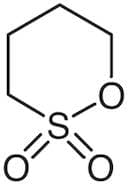
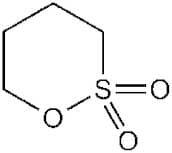
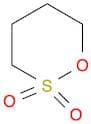
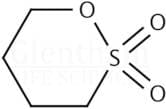
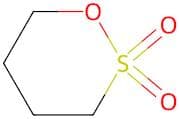
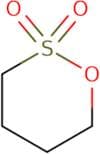
1,4-Butansulton, mit der CAS-Nummer 1633-83-6, ist ein zyklisches Sulfonsäureester, der durch seine fünfgliedrige Ringstruktur mit einer Sulfonylgruppe gekennzeichnet ist. Diese Verbindung ist typischerweise eine farblose bis blassgelbe Flüssigkeit mit einem schwachen Geruch. Sie ist in Wasser und verschiedenen organischen Lösungsmitteln löslich, was sie vielseitig in chemischen Anwendungen macht. 1,4-Butansulton ist bekannt für seine Reaktivität, insbesondere in nucleophilen Substitutionsreaktionen, wo es aufgrund der Anwesenheit der Sulfonylgruppe als Elektrophil wirken kann. Es wird häufig als Reagenz in der organischen Synthese verwendet, insbesondere bei der Herstellung von Sulfonamiden und anderen Sulfonatderivaten. Darüber hinaus hat es Anwendungen in der Produktion von Tensiden und als Zwischenprodukt in der Synthese von Arzneimitteln. Es ist jedoch wichtig, diese Verbindung mit Vorsicht zu behandeln, da sie reizend für Haut und Augen sein kann, und angemessene Sicherheitsvorkehrungen während ihrer Verwendung beachtet werden sollten.
Formel:C4H8O3S
InChl:InChI=1/C4H8O3S/c5-8(6)4-2-1-3-7-8/h1-4H2
InChI Key:InChIKey=MHYFEEDKONKGEB-UHFFFAOYSA-N
SMILES:O=S1(=O)CCCCO1
Synonyme:- 1,2-Oxathiane 2,2-Dioxide
- 1,2λ6-Oxathiane-2,2-dione
- 1,4-Butane Sulfone
- 1,4-Butanesultone
- 1,4-Butyl sultone
- 1,4-Butylene sulfone
- 1-Butanesulfonic acid, 4-hydroxy-, δ-sultone
- 4-Hydroxy-1-butanesulfonic acid delta-sultone
- 4-Hydroxy-1-butanesulphonic acid sultone
- Butane sultone
- Butanesultone
- NSC 71999
- δ-Butane sultone
- δ-Valerosultone
- 1,4-Butane sultone
- butanesulfone
- delta-butanesultone
- -Sultone
- 1,4-Bs1,4-ButaneSultone
- 4-hydroxy-1-butanesulfonic acid sultone
- 4-Hydroxy-1-butanesulfonicacid
- 1,4-BUTANESULTONE 98+%
- delta-valerosultone
- 1,4-Butane
- 1,4-BUTANE SULTON
- 1,4-butylenesulfone
- 4-hydroxybutane-1-sulfonic acid δ-sultone
- 1,4-BUTANESULPHONE
- 1,4-BUTANE SULTONE, 99+%
- 1,4-Butylsultone
- 2,2-Dioxide-1,2-oxathiane
- Weitere Synonyme anzeigen
Sortieren nach
Reinheit (%)
0
100
|
0
|
50
|
90
|
95
|
100
11 Produkte.
1,4-Butanesultone
CAS:Formel:C4H8O3SReinheit:>99.0%(GC)Farbe und Form:White or Colorless to Almost white or Almost colorless powder to lump to clear liquidMolekulargewicht:136.171,4-Butanesultone, 99%
CAS:This Thermo Scientific Chemicals brand product was originally part of the Alfa Aesar product portfolio. Some documentation and label information may refer to the legacy brand. The original Alfa Aesar product / item code or SKU reference has not changed as a part of the brand transition to Thermo SciFormel:C4H8O3SReinheit:99%Farbe und Form:Clear colorless to pale yellow, LiquidMolekulargewicht:136.171,2-Oxathiane, 2,2-dioxide
CAS:Formel:C4H8O3SReinheit:97%Farbe und Form:LiquidMolekulargewicht:136.16951,4-Butane sultone
CAS:Formel:C4H8O3SReinheit:≥ 99.0%Farbe und Form:Colourless to pale yellow liquidMolekulargewicht:136.171,4-Butane Sultone
CAS:Applications 1,4-Butane Sultone is an alkylating agent with weak carcinogenic activity.
References Van Duuren, B.L. et al.: J. Nat. Cancer Inst., 53, 696 (1974); Druckrey, H. et al.: Zeitsch. Krebsforsch.,75, 69 (1970);Formel:C4H8O3SFarbe und Form:Colourless ViscousMolekulargewicht:136.171,4-Butane sultone
CAS:1,4-Butanesultone is a strong acid that is commonly used as a chemical intermediate in organic synthesis. It has been shown to be stable at room temperature and can be stored for up to one year. 1,4-Butanesultone's proton reacts with the langmuir adsorption isotherm, which is used in the determination of the surface area of a solid adsorbent. This reaction solution can be analysed using phosphotungstic acid or acidic methods, such as gravimetric analysis or FTIR spectroscopy. The hydroxyl group on 1,4-butanesultone reacts with hydrochloric acid and trifluoroacetic acid in order to form an alcohol molecule and an ester molecule respectively. The dehydration reaction mechanism of 1,4-butanesultone involves the removal of water molecules from the molecule by breaking the hydrogen bonds between oxygen and hydrogen atoms.Formel:C4H8O3SReinheit:Min. 98%Farbe und Form:Colorless Clear LiquidMolekulargewicht:136.17 g/mol