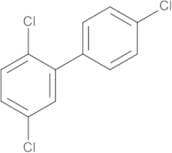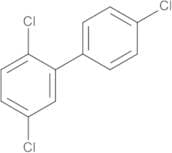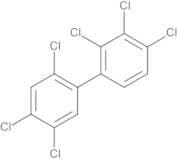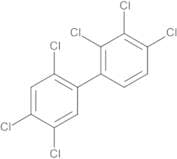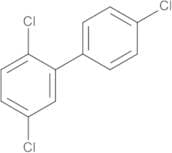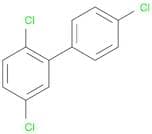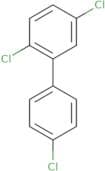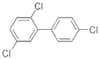
CAS 16606-02-3
:PCB 31
Beschreibung:
PCB 31, oder polychloriertes Biphenyl 31, ist ein Mitglied der Familie der polychlorierten Biphenyle (PCB), die aus synthetischen organischen Chemikalien besteht, die für ihre Umweltbeständigkeit und potenzielle Toxizität bekannt sind. Mit der CAS-Nummer 16606-02-3 ist PCB 31 durch seine chlorierte aromatische Struktur gekennzeichnet, die zu seiner Stabilität und Widerstandsfähigkeit gegen Abbau beiträgt. Diese Verbindung zeigt typischerweise hydrophobe Eigenschaften, was sie in Wasser weniger löslich, aber in organischen Lösungsmitteln und Fetten besser löslich macht. PCBs, einschließlich PCB 31, sind bekannt für ihre elektrischen Isoliereigenschaften, die sie historisch in industriellen Anwendungen, wie in Kondensatoren und Transformatoren, wertvoll machten. Aufgrund ihrer Umwelt- und Gesundheitsrisiken, einschließlich potenzieller krebserregender Wirkungen und endokriner Störungen, ist die Verwendung von PCBs in vielen Ländern stark reguliert oder verboten worden. PCB 31 kann, wie andere PCBs, in der Nahrungskette bioakkumulieren, was zu langfristigen ökologischen und gesundheitlichen Bedenken führt. Eine ordnungsgemäße Handhabung und Entsorgung sind entscheidend, um die mit dieser Chemikalie verbundenen Risiken zu mindern.
Formel:C12H7Cl3
InChl:InChI=1S/C12H7Cl3/c13-9-3-1-8(2-4-9)11-7-10(14)5-6-12(11)15/h1-7H
InChI Key:InChIKey=VAHKBZSAUKPEOV-UHFFFAOYSA-N
SMILES:ClC1=C(C=C(Cl)C=C1)C2=CC=C(Cl)C=C2
Synonyme:- 1,1'-Biphenyl, 2,4',5-trichloro-
- 1,1′-Biphenyl, 2,4′,5-trichloro-
- 2,4',5-Pcb
- 2,4',5-Trichlorbiphenyl
- 2,4’,5-Trichloro-1’-Biphenyl
- 2,4’,5-Trichloro-Bipheny
- 2,4′,5-Trichloro-1,1′-biphenyl
- 2,4′,5-Trichlorobiphenyl
- 4,2',5'-Trichlorobiphenyl
- 4,2′,5′-Trichlorobiphenyl
- Ballschmiter No 31
- Biphenyl, 2,4',5-trichloro-
- Biphenyl, 2,4′,5-trichloro-
- Bz No 31
- Delor 103
- Pcb No 31
- Weitere Synonyme anzeigen
Sortieren nach
Reinheit (%)
0
100
|
0
|
50
|
90
|
95
|
100
20 Produkte.
PCB No. 31 10 µg/mL in Isooctane
CAS:Kontrolliertes ProduktFormel:C12H7Cl3Farbe und Form:Single SolutionMolekulargewicht:257.54PCB No. 31 10 µg/mL in Cyclohexane
CAS:Kontrolliertes ProduktFormel:C12H7Cl3Farbe und Form:Single SolutionMolekulargewicht:257.54PCB No. 31 100 µg/mL in Isooctane
CAS:Kontrolliertes ProduktFormel:C12H7Cl3Farbe und Form:Single SolutionMolekulargewicht:257.54PCB-Mix 8 10 µg/mL in Isooctane
CAS:Kontrolliertes ProduktFormel:C12H4Cl6Farbe und Form:MixtureMolekulargewicht:360.88PCB-Mix 19 10 µg/mL in Isooctane
CAS:Kontrolliertes Produkt- 16606-02-3
- 2051-24-3
- 31508-00-6
- 35065-27-1
- 35065-28-2
- 35065-29-3
- 35065-30-6
- 35693-99-3
- 35694-08-7
- 37680-65-2
- 37680-73-2
- 38380-04-0
- 41464-39-5
- 7012-37-5
Formel:C12H4Cl6Farbe und Form:MixtureMolekulargewicht:360.88PCB-Mix 19 10 µg/mL in Isooctane
CAS:Kontrolliertes Produkt- 16606-02-3
- 2051-24-3
- 31508-00-6
- 35065-27-1
- 35065-28-2
- 35065-29-3
- 35065-30-6
- 35693-99-3
- 35694-08-7
- 37680-65-2
- 37680-73-2
- 38380-04-0
- 41464-39-5
- 7012-37-5
Formel:C12H4Cl6Farbe und Form:MixtureMolekulargewicht:360.88WHO/Europe ISS PCB Mixture 319 10 µg/mL in Isooctane
CAS:Kontrolliertes Produkt- 16606-02-3
- 31508-00-6
- 32598-13-3
- 32598-14-4
- 32774-16-6
- 35065-27-1
- 35065-28-2
- 35065-29-3
- 35065-30-6
- 35693-99-3
- 37680-65-2
- 37680-73-2
- 38379-99-6
- 38380-01-7
- 38380-03-9
- 38380-04-0
- 38380-07-3
- 38380-08-4
- 39635-31-9
- 41464-39-5
- 51908-16-8
- 52663-63-5
- 52663-68-0
- 52663-69-1
- 52663-70-4
- 52663-72-6
- 57465-28-8
- 65510-44-3
- 69782-90-7
- 7012-37-5
- 70362-50-4
- 74472-37-0
Farbe und Form:MixturePCB-Mix 20 10 µg/mL in Isooctane
CAS:Kontrolliertes Produkt- 16606-02-3
- 31508-00-6
- 32598-13-3
- 32598-14-4
- 32774-16-6
- 35065-27-1
- 35065-28-2
- 35065-29-3
- 35065-30-6
- 35693-99-3
- 37680-73-2
- 38380-07-3
- 38380-08-4
- 57465-28-8
- 7012-37-5
Formel:C12H4Cl6Farbe und Form:MixtureMolekulargewicht:360.88PCB Congeners Mixture 981 100 µg/mL in Isooctane
CAS:Kontrolliertes Produkt- 16605-91-7
- 16606-02-3
- 2051-60-7
- 32598-10-0
- 35065-27-1
- 35065-28-2
- 35065-29-3
- 35065-30-6
- 35693-99-3
- 37680-65-2
- 37680-73-2
- 38380-02-8
- 38380-03-9
- 40186-72-9
- 41464-39-5
- 52663-63-5
- 52663-68-0
- 52663-69-1
- 52712-04-6
Formel:C12H4Cl6Farbe und Form:MixtureMolekulargewicht:360.88PCB-Mix 20 10 µg/mL in Isooctane
CAS:Kontrolliertes Produkt- 16606-02-3
- 31508-00-6
- 32598-13-3
- 32598-14-4
- 32774-16-6
- 35065-27-1
- 35065-28-2
- 35065-29-3
- 35065-30-6
- 35693-99-3
- 37680-73-2
- 38380-07-3
- 38380-08-4
- 57465-28-8
- 7012-37-5
Formel:C12H4Cl6Farbe und Form:MixtureMolekulargewicht:360.88PCB-Mix 12 10 µg/mL in Isooctane
CAS:Kontrolliertes ProduktFormel:C12H4Cl6Farbe und Form:MixtureMolekulargewicht:360.88EN 12766/CEN EN 61619 PCB Calibration Mixture 10 µg/mL in Isooctane
CAS:Kontrolliertes Produkt- 16606-02-3
- 2051-24-3
- 31508-00-6
- 35065-27-1
- 35065-28-2
- 35065-29-3
- 35065-30-6
- 35693-99-3
- 35694-08-7
- 37680-65-2
- 37680-73-2
- 38380-04-0
- 41464-39-5
- 7012-37-5
Formel:C12H4Cl6Farbe und Form:MixtureMolekulargewicht:360.88PCB-Mix 21 10 µg/mL in Cyclohexane
CAS:Kontrolliertes ProduktFormel:C12H4Cl6Farbe und Form:MixtureMolekulargewicht:360.88PCB-Mix 7 10 µg/mL in Isooctane
CAS:Kontrolliertes Produkt- 16606-02-3
- 32598-11-1
- 32598-14-4
- 34883-43-7
- 35065-27-1
- 35065-28-2
- 35065-29-3
- 35693-99-3
- 35694-08-7
- 37680-65-2
- 37680-73-2
- 41464-39-5
- 52663-63-5
- 52663-78-2
- 7012-37-5
Formel:C12H4Cl6Farbe und Form:MixtureMolekulargewicht:360.882,4',5-Trichlorobiphenyl
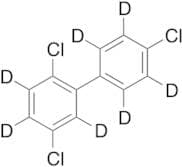
CAS:Kontrolliertes ProduktFormel:C12H7Cl3Farbe und Form:Off-WhiteMolekulargewicht:257.542,4',5-Trichlorobiphenyl-d7
CAS:Kontrolliertes ProduktFormel:C12D7Cl3Farbe und Form:NeatMolekulargewicht:264.592,4',5-Trichlorobiphenyl
CAS:Kontrolliertes Produkt2,4',5-Trichlorobiphenyl is a polychlorinated biphenyl that has been shown to have a high toxicity. It has been detected in human serum and wastewater samples at high levels. 2,4',5-Trichlorobiphenyl inhibits mitochondrial membrane potential, which causes a decrease in ATP production and leads to cell death. This chemical also induces the activity of cytochrome P450 enzymes, leading to increased lipid peroxidation and acid formation. This chemical is metabolized by the liver to produce many other metabolites including 2,3',4',5'-tetrachlorobiphenyl and 2,3',4',6'-tetrachlorobiphenyl. These metabolites are then excreted through urine or bile into the environment where they can be found in water or soil.
Formel:C12H7Cl3Reinheit:Min. 95%Molekulargewicht:257.54 g/molRef: 3D-RAA60602
Ausgelaufenes produkt