![P-[1-(Butylamino)-1-methylethyl]phosphinic acid](/_next/image/?url=https%3A%2Fstatic.cymitquimica.com%2Fcas-image%2Fthumb-webp%2F68709-butafosfan.webp&w=3840&q=75)
CAS 17316-67-5
:P-[1-(Butylamino)-1-methylethyl]phosphinsäure
Beschreibung:
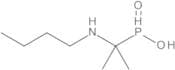
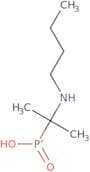
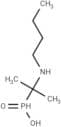
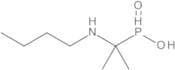
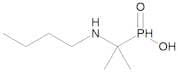
P-[1-(Butylamino)-1-methylethyl]phosphinsäure, mit der CAS-Nummer 17316-67-5, ist ein Derivat der Phosphinsäure, das durch das Vorhandensein einer phosphinischen funktionellen Gruppe (-P(=O)(OH)R) gekennzeichnet ist, wobei R eine butylamino-Gruppe ist, die an eine verzweigte Alkylkette gebunden ist. Diese Verbindung zeigt typischerweise Eigenschaften, die mit Phosphinsäuren assoziiert sind, wie z.B. ein schwaches Acid zu sein und potenzielle Anwendungen in der Landwirtschaft als Herbizid oder Pflanzenwachstumsregulator zu haben. Ihre Struktur deutet darauf hin, dass sie mit biologischen Systemen interagieren kann, was potenziell metabolische Wege oder Enzymaktivitäten beeinflussen könnte. Die butylamino-Substituente kann ihre Löslichkeit in organischen Lösungsmitteln erhöhen und könnte ihre biologische Aktivität beeinflussen. Darüber hinaus deutet das Vorhandensein der phosphinischen Säuregruppe darauf hin, dass sie an verschiedenen chemischen Reaktionen teilnehmen kann, einschließlich nucleophiler Substitutionen und Koordination mit Metallionen. Sicherheits- und Handhabungsvorschriften sollten beachtet werden, wie bei vielen chemischen Substanzen, aufgrund potenzieller Toxizität oder Umweltauswirkungen. Insgesamt tragen die einzigartige Struktur und die funktionellen Gruppen dieser Verbindung zu ihrer potenziellen Nützlichkeit in verschiedenen chemischen und landwirtschaftlichen Anwendungen bei.
Formel:C7H18NO2P
InChl:InChI=1/C7H16NO2P/c1-4-5-6-8-7(2,3)11(9)10/h8H,4-6H2,1-3H3/p+1
InChI Key:InChIKey=WCXWARPXYQCRPP-UHFFFAOYSA-N
SMILES:C(NCCCC)(P(=O)O)(C)C
Synonyme:- (1-Butylamino-1-methyl-ethyl)-phosphinic acid
- 1-(Butylamino)-1-methylethylphosphonous acid
- Butaphosphan
- P-[1-(Butylamino)-1-methylethyl]phosphinic acid
- Phosphinic acid, P-[1-(butylamino)-1-methylethyl]-
- Phosphinic acid, [1-(butylamino)-1-methylethyl]-
- [1-(Butylamino)-1-Methylethyl](Hydroxy)Oxophosphonium
- [2-(Butylamino)propan-2-yl]phosphinic acid
- [1-Butylamino-1-methylethyl]phosphinic acid
- BUTAFOSFAN
- BUTAPHOSPHAN(BUTAFOSFAN)
- Weitere Synonyme anzeigen
Sortieren nach
Reinheit (%)
0
100
|
0
|
50
|
90
|
95
|
100
9 Produkte.
1-(Butylamino)-1-methylethylphosphonous acid
CAS:Formel:C7H18NO2PReinheit:99%Farbe und Form:SolidMolekulargewicht:179.1971Butafosfan
CAS:Formel:C7H18NO2PReinheit:≥ 98.0%Farbe und Form:White to almost white powderMolekulargewicht:179.79Butafosfan
CAS:Butafosfan, often with cyanocobalamin, boosts lipid metabolism in livestock to prevent/treat deficiencies and ketosis.Formel:C7H18NO2PFarbe und Form:SolidMolekulargewicht:179.2[1-(Butylamino)-1-methyl-ethyl]phosphinic acid
CAS:[1-(Butylamino)-1-methyl-ethyl]phosphinic acidReinheit:98%Molekulargewicht:179.20g/molButafosfan
CAS:Kontrolliertes ProduktStability Hygroscopic
Applications Butafosfan, a component of Catosal, is licensed for the treatment of metabolic disorders or as a tonic in swine. It reduces the stress-induced cortisol (C696302, d4 labelled) response after mixing of unfamiliar pigs. It can also increase milk production in Holstein cows in combination with cyanocobalamin.
References De Groot, J., et al.: J. Vet. Pharmacol. Ther., 26, 222 (2003); Pereira, R., et al.: Animal, 7, 1143 (2013)Formel:C7H18NO2PFarbe und Form:White To Off-WhiteMolekulargewicht:179.2Butaphosphan
CAS:Butaphosphan is a drug that has been shown to have clinical relevance for the treatment of metabolic disorders. It is a prodrug that is converted into butaprost-diol, which has been shown to improve insulin sensitivity and reduce aminotransferase activity in rats. Butaphosphan can be used as an alternative to aminotransferase inhibitors such as ursodeoxycholic acid and cholestyramine for the treatment of patients with primary biliary cirrhosis. This drug has also been shown to have a protective effect on fatty acid metabolism, which may be due to its ability to inhibit the activity of enzymes involved in fatty acid synthesis. Butaphosphan is metabolized by cytochrome P450 enzymes and hydroxylases and can be detected using LC-MS/MS methods. The drug has also been shown to have beneficial effects on cortisol concentrations and liver histology when administered orally.Formel:C7H18NO2PReinheit:Min. 95%Farbe und Form:White PowderMolekulargewicht:179.2 g/mol








![[1-(Butylamino)-1-methyl-ethyl]phosphinic acid](/_next/image/?url=https%3A%2Fstatic.cymitquimica.com%2Fproducts%2F54%2Fthumb%2FOR907240.jpg&w=3840&q=75)