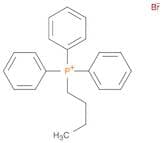
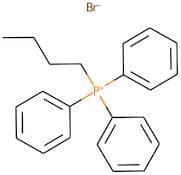
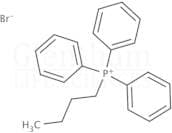
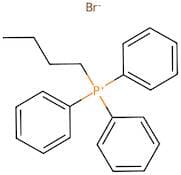
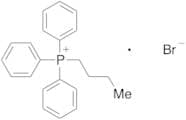
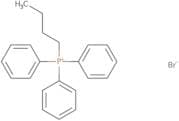
CAS 1779-51-7
:Butyltriphenylphosphoniumbromid
- (1-Butyl)triphenylphosphonium bromide
- B 0970
- Btppbr
- BuTPPBr
- Butyl Triphenyl Phosphonium Bromide
- Butyl Triphenyl Phosphorium BromideBUTPPBR: BUTYLTRIPHENYLPHOSPHONIUM BROMIDE
- Butyl Triphenyl Phosphorous Bromide
- Butyl bromide triphenylphosphine salt
- Butyl(Triphenyl)Phosphonium Iodide
- Butyl-Triphenyl-Phosphorane Hydrobromide
- Butylriphenylphosphonium Bromide
- Butyltripheny-Phosphoniubromide
- Butyltriphenylbromophosphine
- Butyltriphenylphosphonium Bromide
- Hishicolin BTPPBr
- N-Butyltriphenylphosphonium Bromide
- NSC 59684
- Phosphonium, butyltriphenyl-, bromide (1:1)
- Phosphonium,butyltriphenyl-,bromide
- Weitere Synonyme anzeigen
Butyltriphenylphosphonium Bromide
CAS:Formel:C22H24BrPReinheit:>98.0%(T)(HPLC)Farbe und Form:White to Almost white powder to crystalMolekulargewicht:399.31Phosphonium, butyltriphenyl-, bromide (1:1)
CAS:Formel:C22H24BrPReinheit:97%Farbe und Form:SolidMolekulargewicht:399.3037Butyltriphenylphosphonium bromide
CAS:Formel:C22H24BrPReinheit:98.5 - 101.5 %Farbe und Form:White to off-white crystalline powderMolekulargewicht:399.32Butyltriphenylphosphonium bromide
CAS:Butyltriphenylphosphonium bromide
Reinheit:98+%Molekulargewicht:399.31g/molButyltriphenylphosphonium bromide
CAS:Formel:C22H24BrPReinheit:95%Farbe und Form:SolidMolekulargewicht:399.312n-Butyltriphenylphosphonium Bromide
CAS:Kontrolliertes ProduktApplications n-Butyltriphenylphosphonium Bromide is used in the synthesis of inhibitors of tubulin polymerization thus expressing antimitotic and antitubulin properties. Also used in the synthesis of 3-phenylpropanoic acids as peroxisome proliferator-activated receptor dual agonists affecting the mitochondrial carnitine system.
References Cushman, M. et al.: J. Med. Chem., 38, 2041 (1995); Laghezza, A. et al.: J. Med. Chem., 56, 60 (2013);Formel:C22H24BrPFarbe und Form:NeatMolekulargewicht:399.3n-Butyltriphenylphosphonium bromide
CAS:n-Butyltriphenylphosphonium bromide is a potent inhibitor of the enzyme phosphodiesterase-3, which hydrolyzes cGMP. This inhibition leads to increased levels of cGMP in cells, which causes an increase in renal blood flow and apoptotic cell death. This compound has been shown to have hemolytic activity and to be toxic to molybdenum. It also has optical properties that are sensitive to changes in pH. n-Butyltriphenylphosphonium bromide has been shown to be a polymerization initiator when used with covid-19 pandemic and hydrogen ions. It also is known for its potent antagonistic activity against phosphodiesterase-3, low energy requirements, and high selectivity and potency.
Formel:C22H24BrPReinheit:Min. 95%Farbe und Form:PowderMolekulargewicht:399.3 g/molRef: 3D-FB36892
Ausgelaufenes produkt