

![Dibenzo[a,l]pyrene](/_next/image/?url=https%3A%2Fstatic.cymitquimica.com%2Fcas-image%2Fthumb-webp%2F321826-dibenzo-a-l-pyrene.webp&w=3840&q=75)
CAS 191-30-0
:Dibenzo[a,l]pyren
- 1,2,9,10-Dibenzopyrene
- 1,2:3,4-Dibenzopyrene
- 2,3:4,5-Dibenzpyrene
- 4,5,6,7-Dibenzpyrene
- 7A,10A-Dihydronaphtho[1,2,3,4-Pqr]Tetraphene
- Ba 51-090462
- Dibenzo(A,L)Pyrene
- Dibenzo[a,l]pyrene (purity)
- Dibenzo[def,p]chrysene
- NSC 90324
- Naphtho[1,2,3,4-Pqr]Tetraphene
Dibenzo[a,l]pyrene 10 µg/mL in Acetonitrile
CAS:Formel:C24H14Farbe und Form:Single SolutionMolekulargewicht:302.37Dibenzo[a,l]pyrene 10 µg/mL in Cyclohexane
CAS:Formel:C24H14Farbe und Form:Single SolutionMolekulargewicht:302.37Dibenzo[def,p]chrysene
CAS:Kontrolliertes ProduktApplications An active metabolite from inhalation and dermal exposure to polycyclic aromatics hydrocarbons found in hot mix asphalt paving workers. DBC is the most potent tumorigen that has been identified to date. Dibenzo[def,p]chrysene (DBC) is a carcinogen and should be handled with caution.
References Anderson, L., et al.: Toxicol. Appl. Pharmacol., 199, 85 (2004), Yu, Z., et al.: Cancer Res., 66, 755 (2006), Shen, J., et al.: Toxicol. Sci., 95, 313 (2007),Formel:C24H14Farbe und Form:NeatMolekulargewicht:302.37Dibenzo[def,p]chrysene-d14 (Major)
CAS:Kontrolliertes ProduktApplications Labelled Dibenzo[a,l]pyrene (D416945). An active metabolite from inhalation and dermal exposure to polycyclic aromatics hydrocarbons in hot mix asphalt paving workers. DBC is the most potent tumorigen that has been identified to date. Dibenzo[def,p]chrysene (DBC) is a carcinogen and should be handled with appropriate caution.
References Anderson, L., et al.: Toxicol. Appl. Pharmacol., 199, 85 (2004), Yu, Z., et al.: Cancer Res., 66, 755 (2006), Shen, J., et al.: Toxicol. Sci., 95, 313 (2007),Formel:C24D14Farbe und Form:NeatMolekulargewicht:316.45Dibenzo[def,p]chrysene-d8 (Major)
CAS:Kontrolliertes ProduktApplications Labelled Dibenzo[a,l]pyrene (D416945). An active metabolite from inhalation and dermal exposure to polycyclic aromatics hydrocarbons in hot mix asphalt paving workers. DBC is the most potent tumorigen that has been identified to date. Dibenzo[def,p]chrysene (DBC) is a carcinogen and should be handled with appropriate caution.
References Anderson, L., et al.: Toxicol. Appl. Pharmacol., 199, 85 (2004), Yu, Z., et al.: Cancer Res., 66, 755 (2006), Shen, J., et al.: Toxicol. Sci., 95, 313 (2007),Formel:C24H6D8Farbe und Form:NeatMolekulargewicht:310.42Dibenzo[def,p]chrysene
CAS:Dibenzo[def,p]chrysene is a polycyclic aromatic hydrocarbon (PAH) that has been shown to be genotoxic and carcinogenic in animals. It has also been found to have potential as a biomarker for exposure. The toxic effects of dibenzo[def,p]chrysene are due to its ability to induce oxidative stress and cause DNA damage, leading to cell death. Dibenzo[def,p]chrysene inhibits transcriptional regulation by binding to the polymerase chain reaction (PCR) enzyme, cytochrome p450, and pro-apoptotic protein. Dibenzo[def,p]chrysene can also activate detoxification enzymes such as glutathione S-transferases and quinone reductases. This PAH is metabolized through phase II conjugation with glutathione or glucuronides. Listed below are some biological properties of dibenFormel:C24H14Reinheit:Min. 95%Molekulargewicht:302.37 g/mol
![Dibenzo[def,p]chrysene](/_next/image/?url=https%3A%2Fstatic.cymitquimica.com%2Fproducts%2FIN%2Fthumb%2FDA002EZK.jpg&w=3840&q=75)

![Dibenzo[a,l]pyrene 10 µg/mL in Acetonitrile](/_next/image/?url=https%3A%2Fstatic.cymitquimica.com%2Fproducts%2F04%2Fthumb%2FL20725000AL.jpg&w=3840&q=75)

![Dibenzo[a,l]pyrene](/_next/image/?url=https%3A%2Fstatic.cymitquimica.com%2Fproducts%2F04%2Fthumb%2FC20725000.jpg&w=3840&q=75)

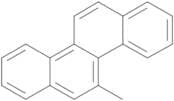
![Dibenzo[a,l]pyrene 10 µg/mL in Cyclohexane](/_next/image/?url=https%3A%2Fstatic.cymitquimica.com%2Fproducts%2F04%2Fthumb%2FL20725000CY.jpg&w=3840&q=75)
![Dibenzo[def,p]chrysene](/_next/image/?url=https%3A%2Fstatic.cymitquimica.com%2Fproducts%2FTR%2Fthumb%2FD416945.jpg&w=3840&q=75)

![Dibenzo[def,p]chrysene-d14 (Major)](/_next/image/?url=https%3A%2Fstatic.cymitquimica.com%2Fproducts%2FTR%2Fthumb%2FD416948.jpg&w=3840&q=75)
![Dibenzo[def,p]chrysene-d8 (Major)](/_next/image/?url=https%3A%2Fstatic.cymitquimica.com%2Fproducts%2FTR%2Fthumb%2FD416947.jpg&w=3840&q=75)
![Dibenzo[def,p]chrysene](/_next/image/?url=https%3A%2Fstatic.cymitquimica.com%2Fproducts%2F3D%2Fthumb%2FFD21528.jpg&w=3840&q=75)
