CAS 19184-65-7
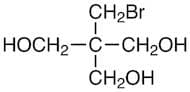
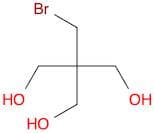
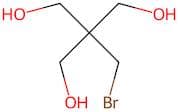
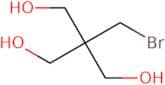
:2-(Bromomethyl)-2-(hydroxymethyl)-1,3-propandiol
Beschreibung:
2-(Bromomethyl)-2-(hydroxymethyl)-1,3-propandiol, mit der CAS-Nummer 19184-65-7, ist eine organische Verbindung, die durch das Vorhandensein von sowohl Bromomethyl- als auch Hydroxymethylfunktionalgruppen, die an ein Propangestell gebunden sind, gekennzeichnet ist. Diese Verbindung erscheint typischerweise als farblose bis blassgelbe Flüssigkeit oder Feststoff, abhängig von ihrer Reinheit und Form. Sie ist in Wasser und verschiedenen organischen Lösungsmitteln löslich, was ihre Nützlichkeit in der chemischen Synthese und Anwendungen erhöht. Die Bromomethylgruppe macht sie zu einem potenziellen Elektrophil, das es ihr ermöglicht, an nucleophilen Substitutionsreaktionen teilzunehmen, während die Hydroxymethylgruppe an Wasserstoffbrückenbindungen teilnehmen kann, was ihre Reaktivität und Wechselwirkungen mit anderen Molekülen beeinflusst. Diese Verbindung wird häufig in der Synthese komplexerer organischer Moleküle verwendet und kann als Zwischenprodukt in pharmazeutischen oder agrochemischen Anwendungen dienen. Sicherheitsvorkehrungen sollten beim Umgang mit dieser Verbindung getroffen werden, da sie gesundheitliche Risiken aufgrund des Vorhandenseins von Brom und ihrer Reaktivität darstellen kann.
Formel:C5H11BrO3
InChl:InChI=1S/C5H11BrO3/c6-1-5(2-7,3-8)4-9/h7-9H,1-4H2
InChI Key:InChIKey=MMHHBAUIJVTLFZ-UHFFFAOYSA-N
SMILES:C(CBr)(CO)(CO)CO
Synonyme:- 1,3-Propanediol, 2-(bromomethyl)-2-(hydroxymethyl)-
- 2,2-Bis(hydroxymethyl)-3-hydroxypropyl bromide
- 2-(Bromomethyl)-2-(hydroxymethyl)-1,3-propanediol
- Monobromoneopentyl triol
- Monobromopentaerythritol
- Nsc 151735
- Pentaerythritol monobromide
- Pentaerythritol monobromohydrin
- Tris(hydroxymethyl)(bromomethyl)methane
- 2-(Bromomethyl)-2-(hydroxymethyl)propane-1,3-diol
Sortieren nach
Reinheit (%)
0
100
|
0
|
50
|
90
|
95
|
100
5 Produkte.
2-(Bromomethyl)-2-(hydroxymethyl)-1,3-propanediol
CAS:Formel:C5H11BrO3Reinheit:>98.0%(GC)Farbe und Form:White to Almost white powder to crystalMolekulargewicht:199.041,3-Propanediol, 2-(bromomethyl)-2-(hydroxymethyl)-
CAS:Formel:C5H11BrO3Reinheit:97%Farbe und Form:SolidMolekulargewicht:199.04302-(Bromomethyl)-2-(hydroxymethyl)propane-1,3-diol
CAS:2-(Bromomethyl)-2-(hydroxymethyl)propane-1,3-diolFormel:C5H11BrO3Reinheit:98%Farbe und Form: white crystalline powderMolekulargewicht:199.04g/mol2-(Bromomethyl)-2-(hydroxymethyl)-1,3-propanediol
CAS:2-(Bromomethyl)-2-(hydroxymethyl)-1,3-propanediol is a synthetic compound that is used as a stabilizer in polymers. It has magnetic properties and crystallizes in an orthorhombic system. This substance also has an aryl group and a chlorine substituent. 2-(Bromomethyl)-2-(hydroxymethyl)-1,3-propanediol reacts with the phosphite trialkyl to form polyvalent phosphorus compounds, which are residues of the trialkyl. The insecticidal properties of this compound may be due to its ability to inhibit the growth of insects by affecting the metabolism of arthropods. The hydrocarbon residue may be due to its synthesis from bromoethane and methanol.Formel:C5H11BrO3Reinheit:Min. 95%Molekulargewicht:199.04 g/mol