CAS 1951-12-8
:3-Chlorbutansäure
Beschreibung:
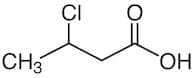
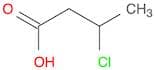
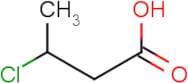
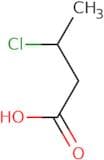
3-Chlorbutansäure ist eine chlorierte Carbonsäure, die durch das Vorhandensein eines Chloratoms am dritten Kohlenstoffatom einer vierkohlenstoffhaltigen Buttersäurekette gekennzeichnet ist. Seine chemische Formel ist C4H7ClO2, und es weist eine Carbonsäurefunktionalgruppe (-COOH) auf, die ihm saure Eigenschaften verleiht. Diese Verbindung ist typischerweise eine farblose bis blassgelbe Flüssigkeit mit einem stechenden Geruch. Sie ist in Wasser und organischen Lösungsmitteln löslich, was sie vielseitig für verschiedene chemische Reaktionen macht. Das Vorhandensein des Chloratoms erhöht ihre Reaktivität, sodass sie an nucleophilen Substitutionsreaktionen und anderen Umwandlungen teilnehmen kann. 3-Chlorbutansäure wird in der organischen Synthese verwendet, insbesondere in der Herstellung von Arzneimitteln, Agrochemikalien und anderen Spezialchemikalien. Sicherheitsüberlegungen umfassen den vorsichtigen Umgang damit aufgrund seiner ätzenden Natur und der potenziellen Gesundheitsrisiken, die mit der Exposition verbunden sind. Geeignete Lagerungs- und Entsorgungsmethoden sind entscheidend, um die Umweltauswirkungen zu mindern und die Sicherheit in Labor- und Industrieumgebungen zu gewährleisten.
Formel:C4H7ClO2
InChl:InChI=1S/C4H7ClO2/c1-3(5)2-4(6)7/h3H,2H2,1H3,(H,6,7)
InChI Key:InChIKey=XEEMVPPCXNTVNP-UHFFFAOYSA-N
SMILES:C(C(C)Cl)C(O)=O
Synonyme:- (3S)-3-chlorobutanoic acid
- 3-Chlorobutanoic acid
- 3-Chlorobutyric acid
- Brn 1720571
- Butanoic acid, 3-chloro-
- Butyric acid, 3-chloro-
- Butyric acid, β-chloro-
- Nsc 404459
- beta-Chlorobutyric acid
- β-Chlorobutyric acid
Sortieren nach
Reinheit (%)
0
100
|
0
|
50
|
90
|
95
|
100
5 Produkte.
3-Chlorobutyric Acid
CAS:Formel:C4H7ClO2Reinheit:>98.0%(GC)(T)Farbe und Form:Colorless to Almost colorless clear liquidMolekulargewicht:122.553-Chloro-n-butyric acid
CAS:Formel:C4H7ClO2Reinheit:98.0%Farbe und Form:LiquidMolekulargewicht:122.553-Chlorobutyric acid
CAS:3-Chlorobutyric acid is a chemical that has been shown to stabilize amines and other nucleophiles. It can be synthesized in the presence of 3-bromopropylamine hydrobromide, acyl halides, chloride, and aluminum. The reaction vessel must contain a carbon source for this synthesis to occur. The nmr spectra of 3-chlorobutyric acid show peaks at 2.00 ppm for the methylene hydrogen; 1.09 ppm for the methyl proton; 0.84 ppm for the methylene proton; and 0.65 ppm for the methyl proton of the carboxylic acid group. Hydrogen chloride gas is used as a reactant in this synthesis process and is released as a byproduct during the reaction process.Formel:C4H7ClO2Reinheit:Min. 95%Molekulargewicht:122.55 g/mol