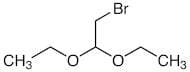
CAS 2032-35-1
:Diethylacetal von Bromoacetaldehyd
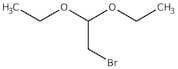
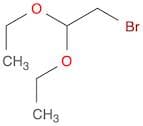
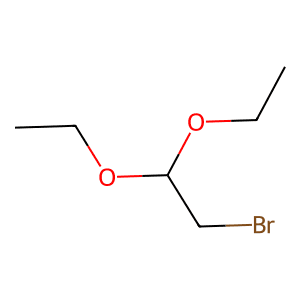
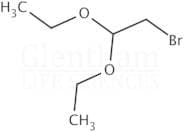
- 2-Bromo-1,1-diethoxyethane
- Bromoacetal
- Bromoacetal dehyde diethyl acetal
- Bromoacetaldehydediethylacetal
- Bromo acetaldehyde diethyl acetal
- Bromoacetaldehyde diethyl acetal
- 1,1-Diethoxy-2-bromoethane
- 1-Bromo-2,2-diethoxyethane
- 2,2-Diethoxyethyl bromide
- 2-Brom-1,1-diethoxyethan
- 2-Bromo-1,1-Dietoxietano
- 2-Bromoacetaldehyde diethyl acetal
- Acetaldehyde, bromo-, diethyl acetal
- Bromacetal
- Bromacetaldehyde diethyl acetal
- Diethyl bromoacetaldehyde acetal
- Ethane, 2-bromo-1,1-diethoxy-
- Nsc 8036
- Weitere Synonyme anzeigen
Bromoacetaldehyde diethyl acetal, 97%
CAS:Bromoacetaldehyde diethyl acetal, is used as a synthetic building block. It is mainly used for synthesis of antibiotics such as erythromycin and cephalosporins and to other drugs. It also can be used as pharmaceutical intermediates. Besides, this chemical can be used to pruduce drugs such as methylt
Formel:C6H13BrO2Reinheit:97%Farbe und Form:Clear colorless to pale yellow, LiquidMolekulargewicht:197.07Ethane, 2-bromo-1,1-diethoxy-
CAS:Formel:C6H13BrO2Reinheit:98%Farbe und Form:LiquidMolekulargewicht:197.0702Bromoacetaldehyde diethyl acetal
CAS:Bromoacetaldehyde diethyl acetalFormel:C6H13BrO2Reinheit:97%Farbe und Form: colourless liquidMolekulargewicht:197.07g/molBromoacetaldehyde Diethyl Acetal
CAS:Formel:C6H13BrO2Reinheit:>95.0%(GC)Farbe und Form:Colorless to Light yellow clear liquidMolekulargewicht:197.07Bromoacetaldehyde diethyl acetal
CAS:Formel:C6H13BrO2Reinheit:97.0%Farbe und Form:Liquid, OilMolekulargewicht:197.072Bromoacetaldehyde Diethyl Acetal
CAS:Kontrolliertes ProduktApplications Bromoacetaldehyde Diethyl Acetal (cas# 2032-35-1) is a compound useful in organic synthesis.
Formel:C6H13BrO2Farbe und Form:NeatMolekulargewicht:197.07Bromoacetaldehyde diethyl acetal
CAS:Bromoacetaldehyde diethyl acetal (BDAE) is an organic compound that has been shown to have receptor binding activity. BDAE binds to the ethylene diamine receptor and competes with ethylene diamine for binding sites. It also forms acid from sodium carbonate and hydrochloric acid, which may be due to its ability to act as a solid catalyst. BDAE has shown activity in hiv infection, with a potency comparable to that of dimethyl fumarate. The synthesis of BDAE can be accomplished by reacting monosodium malonate ester hydrochloride with adenine nucleotide and malonic acid. The reaction solution is heated until the desired product crystallizes out of solution.
Formel:C6H13BrO2Reinheit:Min. 95%Molekulargewicht:197.07 g/molRef: 3D-FB19177
Ausgelaufenes produkt