CAS 2035-66-7
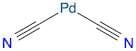
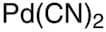
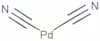
:Palladiumcyanid (Pd(CN)2)
Beschreibung:
Palladiumcyanid (Pd(CN)₂) ist eine anorganische Verbindung, die aus Palladium- und Cyanidionen besteht. Es erscheint typischerweise als gelbliches oder weißes Feststoff und ist bekannt für seine Koordinationschemie, bei der Palladium verschiedene Oxidationszustände aufweisen kann. Diese Verbindung wird häufig in der Galvanoplastik und Katalyse verwendet, da sie in der Lage ist, Reaktionen mit organischen Verbindungen zu erleichtern. Palladiumcyanid ist unter normalen Bedingungen relativ stabil, kann jedoch bei Kontakt mit starken Säuren oder Basen zerfallen und giftiges Cyanidgas freisetzen. Es ist wichtig, diese Verbindung mit Vorsicht zu behandeln, da sie giftig ist und potenzielle Umweltgefahren birgt. In Bezug auf die Löslichkeit ist Palladiumcyanid in der Regel unlöslich in Wasser, kann jedoch in bestimmten organischen Lösungsmitteln löslich sein. Die einzigartigen Eigenschaften der Verbindung machen sie in verschiedenen industriellen Anwendungen wertvoll, insbesondere in den Bereichen Materialwissenschaften und organische Synthese. Sicherheitsvorkehrungen sind unerlässlich, wenn man mit Palladiumcyanid arbeitet, angesichts seiner gefährlichen Natur und der Risiken, die mit der Exposition gegenüber Cyanid verbunden sind.
Formel:C2N2Pd
InChl:InChI=1S/2CN.Pd/c2*1-2;
InChI Key:InChIKey=WDXPAFYMKZQTHL-UHFFFAOYSA-N
SMILES:[Pd](C#N)C#N
Synonyme:- Dicyanopalladium
- Palladium cyanide (Pd(CN)<sub>2</sub>)
- Palladium dicyanide
- Palladium(2+) Dicyanide
- Palladiumcyanide
- Palladiumcyanideyellowpowder
- Palladium cyanide (Pd(CN)2)
- Palladium(II) cyanide
Sortieren nach
Reinheit (%)
0
100
|
0
|
50
|
90
|
95
|
100
4 Produkte.
Palladium(II) cyanide, 98+%
CAS:<p>Palladium(II) cyanide, 98+%</p>Formel:Pd(CN)2Reinheit:98+%Farbe und Form:yellow pwdr.Molekulargewicht:158.47Palladium(II) cyanide
CAS:Kontrolliertes Produkt<p>Palladium(II) cyanide (PdCl2CN) is a palladium-containing compound that has been shown to have antibacterial activity. The mechanism of action is not fully understood, but it is thought to be related to the formation of radicals. Palladium(II) cyanide can be synthesized by reacting an amine with hydrogen cyanide in an acidic solution. Palladium complexes are formed and then react with the amine to form PdCl2CN and ammonia. This reaction can also occur in the presence of reductive elimination and methylthiourea. Palladium(II) cyanide can be used as a catalyst for reactions involving amines, activated carbon, or reductive elimination reactions. It is also used as a reagent for the synthesis of organic compounds. Palladium(II) cyanide shows an NMR spectrum similar to those observed for other palladium salts.</p>Formel:C2N2PdReinheit:Min. 95%Molekulargewicht:158.45 g/mol