CAS 2051-90-3
:Dichlordiphenylmethan
Beschreibung:
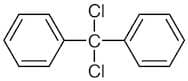
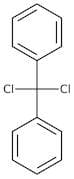
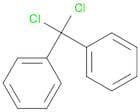
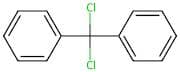
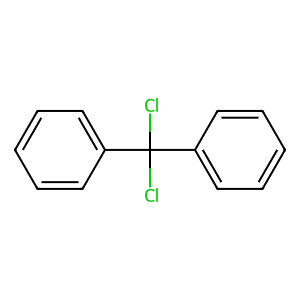
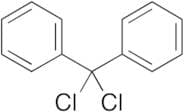
Dichlordiphenylmethan, auch bekannt als DDT, ist eine organische Verbindung, die durch ihre Struktur gekennzeichnet ist, die aus zwei Phenylringen besteht, die durch eine Methanbrücke verbunden sind, mit zwei Chloratomen, die an den aromatischen Ringen befestigt sind. Es handelt sich um einen farblosen bis weißen kristallinen Feststoff, der relativ unlöslich in Wasser, aber löslich in organischen Lösungsmitteln ist. DDT ist bekannt für seine insektiziden Eigenschaften und wurde aufgrund seiner Wirksamkeit gegen Mücken und andere Schädlinge in der Landwirtschaft und zur Vektorkontrolle im Gesundheitswesen weit verbreitet eingesetzt. Seine Persistenz in der Umwelt und das Potenzial zur Bioakkumulation in der Nahrungskette haben jedoch erhebliche ökologische und gesundheitliche Bedenken aufgeworfen, was zu einem Verbot in vielen Ländern führte. DDT wird als persistenter organischer Schadstoff (POP) eingestuft und unterliegt internationalen Vorschriften gemäß dem Stockholmer Übereinkommen. Seine chemische Stabilität und Lipophilie tragen zu seiner langen Halbwertszeit in der Umwelt bei, was es zu einem Gegenstand laufender Forschung über seine Umweltauswirkungen und potenzielle Alternativen zur Schädlingsbekämpfung macht.
Formel:C13H10Cl2
InChl:InChI=1S/C13H10Cl2/c14-13(15,11-7-3-1-4-8-11)12-9-5-2-6-10-12/h1-10H
InChI Key:InChIKey=OPTDDWCXQQYKGU-UHFFFAOYSA-N
SMILES:C(Cl)(Cl)(C1=CC=CC=C1)C2=CC=CC=C2
Synonyme:- Diphenyldichloromethane
- Benzene, 1,1′-(dichloromethylene)bis-
- Dichlorodiphenylmethane
- 1,1′-(Dichloromethylene)bis[benzene]
- Methane, dichlorodiphenyl-
Sortieren nach
Reinheit (%)
0
100
|
0
|
50
|
90
|
95
|
100
9 Produkte.
α,α-Dichlorodiphenylmethane
CAS:Formel:C13H10Cl2Reinheit:>98.0%(GC)Farbe und Form:Colorless to Light yellow clear liquidMolekulargewicht:237.12α,α-Dichlorodiphenylmethane, 97%
CAS:,-Dichlorodiphenylmethane is a degradation product of of polychloroaromatic insecticides such as Dicofol (D436700) and DDT. It is also used as a catalyst for photodegradation of plastics. It is an important raw material and intermediate used in Organic Synthesis, Pharmaceuticals, Agrochemicals. ThiFormel:C13H10Cl2Reinheit:97%Farbe und Form:Clear colorless to yellow, LiquidMolekulargewicht:237.12Benzene, 1,1'-(dichloromethylene)bis-
CAS:Formel:C13H10Cl2Reinheit:98%Farbe und Form:LiquidMolekulargewicht:237.1245Dichlorodiphenylmethane
CAS:Dichlorodiphenylmethane (Benzophenone dichloride) is used as pharmaceutical intermediates.Formel:C13H10Cl2Reinheit:97%Farbe und Form:Clear Light Yellow LiquidMolekulargewicht:237.12Dichlorodiphenylmethane
CAS:Formel:C13H10Cl2Reinheit:95.0%Farbe und Form:LiquidMolekulargewicht:237.12a,a-Dichlorodiphenylmethane
CAS:Kontrolliertes ProduktApplications α,α-Dichlorodiphenylmethane is a degradation product of polychloroaromatic insecticides such as Dicofol (D436700) and DDT. α,α-Dichlorodiphenylmethane is also used as a catalyst for photodegradation of plastics.
References Golovleva, L.A. et al.: Mikrobiologiya, 51, 973 (1982); Freedman, B.: J. Appl. Polym. Sci., 20, 911 (1976);Formel:C13H10Cl2Farbe und Form:NeatMolekulargewicht:237.12±,±-Dichlorodiphenylmethane
CAS:Dichlorodiphenylmethane is a chemical that is used as an insecticide and a herbicide. It is also used as an intermediate in the production of other chemicals. This chemical has a hydrogen bond with hydrochloric acid, which generates cross-linking agents for pharmaceutical preparations. Dichlorodiphenylmethane can be reacted with methyl ethyl or hydroxyl groups to form diphenyl ethers or stilbene derivatives, respectively. Carbonyl groups are formed when dichlorodiphenylmethane reacts with light emission to generate kinetic data about reaction intermediates and reaction mechanisms. Chlorine atoms are obtained by reacting dichlorodiphenylmethane with phosphorus pentachloride.Formel:C13H10Cl2Reinheit:Min. 95%Molekulargewicht:237.12 g/mol