CAS 21087-29-6
:Zimtalklorid
Beschreibung:
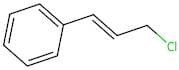
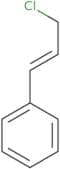
Zimtalklorid, mit der CAS-Nummer 21087-29-6, ist eine organische Verbindung, die durch ihre aromatische Struktur gekennzeichnet ist, die eine Zimtalkohylgruppe (abgeleitet von Zimtsäure) enthält, die an ein Chloratom gebunden ist. Sie erscheint typischerweise als farblose bis blassgelbe Flüssigkeit mit einem süßen, würzigen Geruch, der an Zimt erinnert. Zimtalklorid ist bekannt für seine Reaktivität, insbesondere in nucleophilen Substitutionsreaktionen, bei denen das Chloratom durch verschiedene Nucleophile ersetzt werden kann. Diese Verbindung ist in organischen Lösungsmitteln wie Ether und Alkohol löslich, hat jedoch eine begrenzte Löslichkeit in Wasser. Sie wird hauptsächlich in der organischen Synthese verwendet, insbesondere bei der Herstellung verschiedener Arzneimittel, Duftstoffe und Agrochemikalien. Aufgrund ihrer reaktiven Natur sollte Zimtalklorid mit Vorsicht behandelt werden, da sie reizend für Haut, Augen und Atemwege sein kann. Angemessene Sicherheitsvorkehrungen, einschließlich der Verwendung von persönlicher Schutzausrüstung, sind unerlässlich, wenn mit dieser Verbindung in einem Labor oder industriellen Umfeld gearbeitet wird.
Formel:C9H9Cl
InChl:InChI=1/C9H9Cl/c10-8-4-7-9-5-2-1-3-6-9/h1-7H,8H2
SMILES:c1ccc(cc1)C=CCCl
Synonyme:- (3-Chloro-1-propenyl)benzene
- 3-Chloro-1-phenyl-1-propene
- (3-Chloroprop-1-Enyl)Benzene
- (3-Chloroprop-1-En-1-Yl)Benzene
Sortieren nach
Reinheit (%)
0
100
|
0
|
50
|
90
|
95
|
100
4 Produkte.
Benzene, [(1E)-3-chloro-1-propen-1-yl]-
CAS:Formel:C9H9ClReinheit:95%Farbe und Form:LiquidMolekulargewicht:152.6208(E)-(3-Chloroprop-1-En-1-Yl)Benzene
CAS:(E)-(3-Chloroprop-1-En-1-Yl)BenzeneReinheit:95%Molekulargewicht:152.62g/molCINNAMYL CHLORIDE
CAS:The asymmetric synthesis of cinnamyl chloride is achieved using a palladium-catalyzed coupling reaction. Cinnamyl chloride is a chiral compound that has been shown to have anti-inflammatory properties and inhibit acetylcholinesterase (AChE) activity. The enzyme inhibition mechanism of cinnamyl chloride is not well-understood, but it may be attributed to the allylation of the nitrogen atoms in the molecule. Cinnamyl chloride inhibits AChE by binding to its active site, which prevents the hydrolysis of acetylcholine, an important neurotransmitter for memory and learning. This leads to increased levels of acetylcholine in the brain and increases neuron activity.Formel:C9H9ClReinheit:Min. 95%Molekulargewicht:152.62 g/mol
![Benzene, [(1E)-3-chloro-1-propen-1-yl]-](/_next/image/?url=https%3A%2Fstatic.cymitquimica.com%2Fproducts%2FIN%2Fthumb%2FDA002L0S.jpg&w=3840&q=75)