CAS 21709-90-0
:Propionylglycin
Beschreibung:
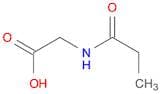
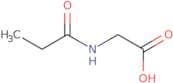
Propionylglycin, mit der CAS-Nummer 21709-90-0, ist ein Aminosäurederivat, das durch seine Struktur gekennzeichnet ist, die eine Propionylgruppe enthält, die an die Aminosäure Glycin gebunden ist. Diese Verbindung ist typischerweise ein weißer bis off-white kristalliner Feststoff und ist aufgrund der Anwesenheit der Amino- und Carboxylgruppen in Wasser löslich. Propionylglycin ist bekannt für seine Rolle in Stoffwechselprozessen, insbesondere im Kontext des Aminosäurestoffwechsels und der Energieproduktion. Es kann auch als Biomarker bei bestimmten Stoffwechselstörungen dienen. Die Verbindung ist unter Standardbedingungen relativ stabil, sollte jedoch mit Vorsicht behandelt werden, wie viele chemische Substanzen, um eine Zersetzung oder Reaktion mit anderen Verbindungen zu vermeiden. Ihre Anwendungen können sich auf die Forschung in der Biochemie und Pharmakologie erstrecken, wo sie auf ihre potenziellen therapeutischen Wirkungen oder als metabolisches Zwischenprodukt untersucht werden kann. Insgesamt ist Propionylglycin eine interessante Verbindung mit Relevanz sowohl in biologischen Systemen als auch in der chemischen Forschung.
Formel:C5H9NO3
InChl:InChI=1S/C5H9NO3/c1-2-4(7)6-3-5(8)9/h2-3H2,1H3,(H,6,7)(H,8,9)
InChI Key:InChIKey=WOMAZEJKVZLLFE-UHFFFAOYSA-N
SMILES:C(NCC(O)=O)(CC)=O
Synonyme:- (Propionylamino)acetic acid
- (Propionylamino)essigs?ure
- 2-(Propanoylamino)acetic acid
- 2-(Propionamido)acetic acid
- 2-Propanamidoacetic acid
- Acide (propionylamino)acétique
- Ethylformylglycine
- Glycine, N-propionyl-
- N-(1-Oxopropyl)glycine
- N-Propionylglycine
- N-propionyl-Glycine
- NSC 158539
- Propionylglycine
- Weitere Synonyme anzeigen
Sortieren nach
Reinheit (%)
0
100
|
0
|
50
|
90
|
95
|
100
10 Produkte.
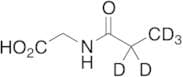
N-Propionyl-d5-glycine
CAS:Formel:CD3CD2CONHCH2COOHReinheit:99 atom % DFarbe und Form:White SolidMolekulargewicht:136.08963Propionyl Glycine
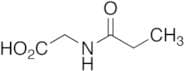
CAS:Kontrolliertes ProduktApplications A metabolite of methylmalonic acid and propionic acid in children with methylmalonic acid and propionic acid metabolic disorders.
References Duran, M., et al.: Clin. Chimica Acta, 82, 93 (1978), Thompson, G.N., et al.: Pediatric Res., 27, 413 (1990),Formel:C5H9NO3Farbe und Form:NeatMolekulargewicht:131.13Propionyl-d5 Glycine
CAS:Kontrolliertes ProduktApplications Propionyl-d5 Glycine is labelled Propionyl Glycine (P788500), a metabolite of methylmalonic acid and propionic acid in children with methylmalonic acid and propionic acid metabolic disorders.
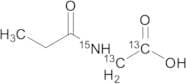
References Duran, M., et al.: Clin. Chimica Acta, 82, 93 (1978), Thompson, G.N., et al.: Pediatric Res., 27, 413 (1990),Formel:C5D5H4NO3Farbe und Form:NeatMolekulargewicht:136.16N-Propionylglycine-13C2,15N
CAS:Kontrolliertes ProduktFormel:C2C3H915NO3Farbe und Form:NeatMolekulargewicht:134.109Propionyl glycine
CAS:Propionyl glycine is a metabolite of the amino acid L-proline. It is produced by the enzyme propionyl-CoA carboxylase that converts propionate to propionyl glycine. This reaction is important in energy metabolism, as it provides the cell with a source of carbon for fatty acid synthesis. Propionyl glycine can be used in sample preparation procedures for diagnosis of metabolic disorders, such as propionic acidemia and fatty acid oxidation defects. It can also be used to detect dehydroandrograpolide (DHA), a molecule that has been shown to have antidiabetic activity. The detection sensitivity of propionyl glycine is lower than that of other metabolites, such as methylmalonic acid or ethylmalonic acid, which makes it more suitable for use in diagnostic tests where analytical methods are less sensitive.Formel:C5H9NO3Reinheit:(%) Min. 98%Farbe und Form:White PowderMolekulargewicht:131.13 g/mol