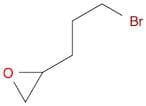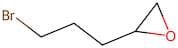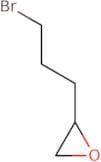
CAS 21746-87-2
:Oxiran, (3-brompropyl)-
Beschreibung:
Oxiran, (3-brompropyl)-, auch bekannt als 3-Brompropylenoxid, ist eine chemische Verbindung, die durch ihre Epoxidstruktur gekennzeichnet ist, die einen dreigliedrigen cyclischen Ether aufweist. Diese Verbindung enthält ein Bromatom, das an eine Propylgruppe gebunden ist, was sie zu einem halogenierten Epoxid macht. Ihre molekulare Formel umfasst typischerweise Kohlenstoff, Wasserstoff und Brom, was ihre Struktur widerspiegelt. Die Anwesenheit der Epoxidgruppe verleiht eine signifikante Reaktivität, insbesondere in nucleophilen Substitutionsreaktionen, was sie in der organischen Synthese und als Zwischenprodukt bei der Herstellung verschiedener Chemikalien nützlich macht. Der Bromsubstituent kann die Reaktivität der Verbindung erhöhen und eine weitere Funktionalisierung ermöglichen. Oxiran, (3-brompropyl)- ist im Allgemeinen eine farblose Flüssigkeit mit einem charakteristischen Geruch, und es ist wichtig, sie mit Vorsicht zu behandeln, da sie potenzielle Gesundheitsrisiken birgt, einschließlich Haut- und Atemwegsreizungen. Darüber hinaus ist es wichtig, ihre Umweltauswirkungen und Stabilität unter verschiedenen Bedingungen zu berücksichtigen, wenn man diese Verbindung in chemischen Prozessen verwendet.
Formel:C5H9BrO
Sortieren nach
Reinheit (%)
0
100
|
0
|
50
|
90
|
95
|
100
4 Produkte.
2-(3-Bromopropyl)oxirane
CAS:Formel:C5H9BrOReinheit:95%Farbe und Form:LiquidMolekulargewicht:165.02842-(3-Bromopropyl)oxirane
CAS:2-(3-Bromopropyl)oxirane is an organic compound that has been synthesized by a process called asymmetric synthesis. This synthetic route is based on the use of synthons (asymmetric compounds) and requires that the product be expressed with a high degree of stereoselectivity. The orientation of the molecule must also be controlled to ensure that it is in the desired configuration. 2-(3-Bromopropyl)oxirane can be used as a synthon to produce enantiopure metalloporphyrins, which are often used in biological systems for electron transfer reactions or for photosynthesis. The strain imposed on the molecule during its synthesis can also be mimicked during biomimetic reactions to obtain products that are otherwise difficult to access.Formel:C5H9BrOReinheit:Min. 95%Molekulargewicht:165.03 g/mol