CAS 21908-53-2
:Quecksilberoxid
Beschreibung:
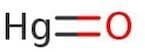
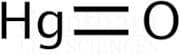
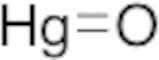
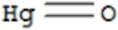
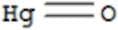
Quecksilberoxid, auch bekannt als Quecksilber(II)-oxid, ist eine anorganische Verbindung mit der chemischen Formel HgO. Es erscheint als ein leuchtend rotes oder gelbes Feststoff, abhängig von seiner kristallinen Form. Diese Verbindung ist bemerkenswert für ihre hohe Dichte und relativ geringe Löslichkeit in Wasser. Quecksilberoxid wird hauptsächlich in verschiedenen Anwendungen verwendet, einschließlich als Reagenz in Laboren, in der Herstellung von Quecksilbersalzen und historisch in der Batterieherstellung. Es ist auch bekannt für seine Rolle bei der Synthese anderer Quecksilberverbindungen. Aufgrund der Toxizität von Quecksilber und seinen Verbindungen stellt Quecksilberoxid jedoch erhebliche Gesundheits- und Umweltgefahren dar. Es kann beim Erhitzen giftige Quecksilberdämpfe freisetzen, und die Exposition kann zu schweren Gesundheitsproblemen führen, einschließlich neurologischer Schäden. Daher erfordert der Umgang mit Quecksilberoxid strenge Sicherheitsvorkehrungen, um die Exposition zu minimieren. In Bezug auf das chemische Verhalten kann es bei Erhitzung einer thermischen Zersetzung unterliegen, um elementares Quecksilber und Sauerstoff zu erzeugen, was es zu einer wichtigen Verbindung in Studien zur Thermodynamik und chemischen Reaktionen mit Quecksilber macht.
Formel:HgO
InChl:InChI=1S/Hg.O
InChI Key:InChIKey=UKWHYYKOEPRTIC-UHFFFAOYSA-N
SMILES:[Hg]=O
Synonyme:- Mercuric Oxygen(-2) Anion
- Mercuric monooxide
- Mercuric oxide
- Mercuric oxide (HgO)
- Mercury (II) oxide
- Mercury Monoxide
- Mercury oxide
- Mercury oxide (HgO)
- Mercury(2+) oxide
- Mercury(ii) oxide, yellow
- Monoxido De Mercurio
- Monoxyde de mercure
- Oxomercury
- Quecksilber(Ii)-Oxid
- Quecksilbermonoxid
- Red mercuric oxide
- Red mercury oxide
- Santar
- Santar M
- Yellow Mercuric Oxide
- Yellow precipitate
- C.I. 77760
- caswellno.544a
- gelbesquecksilberoxyd
- MERCURIC OXIDE, RED
- HgO
- MERCURY(+2)OXIDE, YELLOW
- epapesticidechemicalcode052102
- hydrargyrumoxidflav
- ai3-02738(usda)
- MERCURIC OXIDE, YELLOW
- MERCURIC OXIDE-RED AND YELLOW
- MERCURY(+2)OXIDE, RED
- MERCURY OXIDE RED
- ci77760
- MERCURY OXIDE YELLOW
- Weitere Synonyme anzeigen
Sortieren nach
Reinheit (%)
0
100
|
0
|
50
|
90
|
95
|
100
11 Produkte gefunden.
Mercury(II) oxide, red, 99%
CAS:Kontrolliertes ProduktMercury(II) oxide is used in marine and porcelain paints, dry batteries, chemical reagents, and topical antiseptics. It acts as a significant part in the production of mercury. It is utilitarian in the deduction of a mercury based superconductor. It is likewise employed, as a photo-oxidant for the pFormel:HgOReinheit:99%Farbe und Form:Orange to red, powderMolekulargewicht:216.59Mercury(II) oxide, red, 99+% (ACS)
CAS:Kontrolliertes ProduktMercury(II) oxide, red, 99+% (ACS)
Formel:HgOReinheit:99+%Farbe und Form:red pwdr.Molekulargewicht:216.59Reagecon Mercuric (II) Nitrate Test Solution according to Chinese Pharmacopoeia (ChP)
CAS:Kontrolliertes ProduktReagecon's Mercuric (II) Nitrate Test Solution is a high purity stable product developed and tested for several Chinese Pharmacopoeia (ChP) applications. - This Reagecon ChP reagent is accurate, stable and reproducible. Stability is proven (either opened or unopened) for the shelf life of this product.Farbe und Form:LiquidReagecon Mercuric Sulphate Test Solution according to Chinese Pharmacopoeia (ChP)
CAS:Kontrolliertes ProduktReagecon's Mercuric Sulphate Test Solution is a high purity stable product developed and tested for several Chinese Pharmacopoeia (ChP) applications. - This Reagecon ChP reagent is accurate, stable and reproducible. Stability is proven (either opened or unopened) for the shelf life of this product.Farbe und Form:LiquidMercury(II) oxide, yellow, 99+%
CAS:Kontrolliertes ProduktFormel:HgOReinheit:≥ 99.0%Farbe und Form:Yellow to orange powderMolekulargewicht:216.59Mercury(II)Oxide
CAS:Kontrolliertes ProduktApplications Mercury(II)Oxide is used in the synthesis of a mercury based superconductor.
Not a dangerous good if item is equal to or less than 1g/ml and there is less than 100g/ml in the package
References Shimoyama, J. et al.: Phys. Super. Appl., 224, 1 (1994); Maignan, A. et al.: Phys. C. Super., 243, 233 (1995);Formel:HgOFarbe und Form:NeatMolekulargewicht:216.589Mercury(II) oxide, yellow, 99+% (ACS)
CAS:Kontrolliertes ProduktMercury(II) oxide, yellow, 99+% (ACS)
Formel:HgOReinheit:99+%Farbe und Form:yellow to orange pwdr.Molekulargewicht:216.59Mercuric Oxide Yellow ACS, 99%
CAS:Kontrolliertes ProduktFormel:HgOReinheit:min. 99.0%Farbe und Form:Yellow or yellow-orange, Powder/solid, ClearMolekulargewicht:216.59Mercuric Oxide Red extrapure, 99%
CAS:Kontrolliertes ProduktFormel:HgOReinheit:min. 99%Farbe und Form:Orange - red, Crystalline powderMolekulargewicht:216.59Mercuric Oxide Red ACS, ExiPlus, Multi-Compendial, 99%
CAS:Kontrolliertes ProduktFormel:HgOReinheit:min. 99%Farbe und Form:Red to orange red, Powder, Clear, YellowMolekulargewicht:216.59Mercuric Oxide Yellow extrapure, 99%
CAS:Kontrolliertes ProduktFormel:HgOReinheit:min. 99%Farbe und Form:Yellow or yellow-orange, Powder, ClearMolekulargewicht:216.59