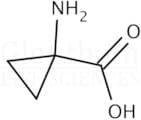
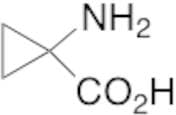
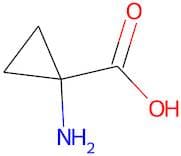
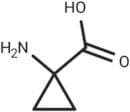
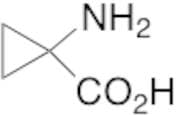
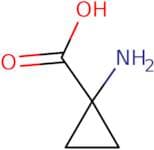
CAS 22059-21-8
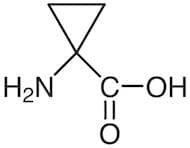
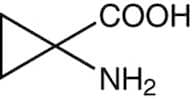
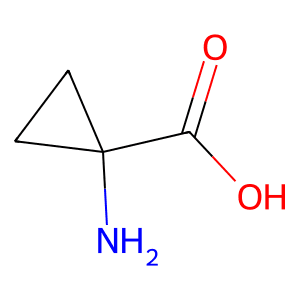
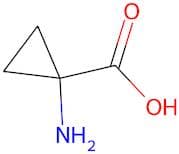
:1-Aminocyclopropan-1-carbonsäure
- 1-Amino-1-carboxycyclopropane
- 1-Amino-1-cyclopropanecarboxylic acid
- 1-Aminocyclopropane-1-carboxylate
- 1-Aminocyclopropane-1-carboxylic Acid
- Cyclopropanecarboxylic acid, 1-amino-
- NSC 98430
- α-Aminocyclopropanecarboxylic acid
- 1-Aminocyclopropanecarboxylic acid
1-Aminocyclopropanecarboxylic Acid
CAS:Formel:C4H7NO2Reinheit:>97.0%(T)Farbe und Form:White to Almost white powder to crystalMolekulargewicht:101.111-Amino-1-cyclopropanecarboxylic acid, 98%
CAS:A NMDA glutamate receptor agonist at glycine site
Formel:C4H7NO2Reinheit:98%Molekulargewicht:101.111-Aminocyclopropane-1-carboxylic acid
CAS:1-Aminocyclopropane-1-carboxylic acid
Formel:C4H7NO2Reinheit:95%Farbe und Form: white powderMolekulargewicht:101.10388g/mol1-Aminocyclopropane-1-carboxylic acid
CAS:1-Aminocyclopropane-1-carboxylic acidReinheit:≥95%Molekulargewicht:101.1g/mol1-Aminocyclopropanecarboxylic acid
CAS:Formel:C4H7NO2Reinheit:≥ 98.0%Farbe und Form:White to off-white powderMolekulargewicht:101.111-Aminocyclopropane-1-carboxylic acid
CAS:1-Aminocyclopropane-1-carboxylic acidFormel:C4H7NO2Reinheit:97%Farbe und Form: white powderMolekulargewicht:101.10g/mol1-Aminocyclopropane-1-carboxylic acid
CAS:1-Aminocyclopropane-1-carboxylic acid (ACC) is an intermediate in the synthesis of ethylene and protects against neuron cell death in vivo models of ischemia.Formel:C4H7NO2Reinheit:97.91% - 99.76%Farbe und Form:CrystallineMolekulargewicht:101.11-Aminocyclopropane-1-carboxylic Acid
CAS:Stability Store in freezer at -20°C
Applications 1-Aminocyclopropane-1-carboxylic Acid is a plant growth regulator and an NMDA agonist acting at the glycine site (1). It is also a useful compound to develop DNA-encoded small molecule libraries for screening enzyme inhibitors (2).
References (1) Botton, A., et al.: Plant Physiology, 155, 185 (2011)(2) Clark, M. A., et al.: Nat. Chem. Biol. 5, 647 (2009)Formel:C4H7NO2Farbe und Form:WhiteMolekulargewicht:101.11-Amino-1-cyclopropanecarboxylic acid
CAS:1-Amino-1-cyclopropanecarboxylic acid (ACC) is a precursor of ethylene, which is a plant hormone that regulates many aspects of plant growth and development. ACC can be converted to ethylene by the enzyme ACC synthase. The conversion of ACC to ethylene is facilitated by the enzymes ACC oxidase and ACC deaminase. Ethylene has been shown to regulate the expression of genes involved in photosynthesis, protein synthesis, and other metabolic pathways. Ethylene also modulates physiological processes such as fruit ripening, leaf senescence, and stomatal closure. This molecule participates in a variety of biological reactions including receptor activity and protein degradation via ubiquitin ligases. It also regulates calcium levels in cells through its role in signal transduction pathways.
Formel:C4H7NO2Reinheit:Min. 95%Farbe und Form:PowderMolekulargewicht:101.1 g/mol1-Aminocyclopropanecarboxylic acid
CAS:Formel:C4H7NO2Reinheit:95%Farbe und Form:Crystalline PowderMolekulargewicht:101.105